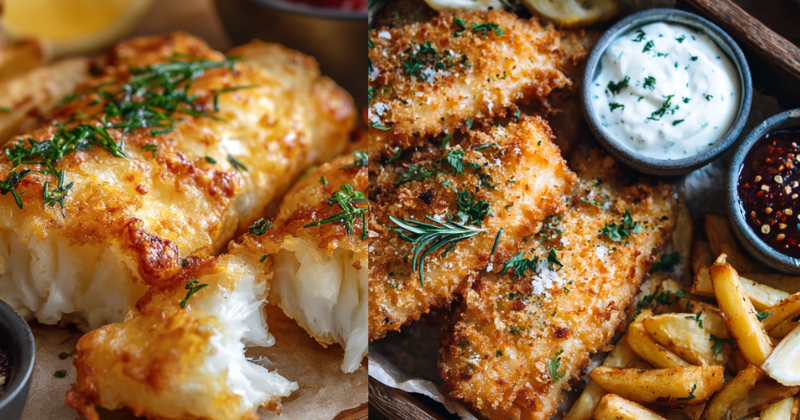
Some things are worth getting right. Fish and chips is one of them.
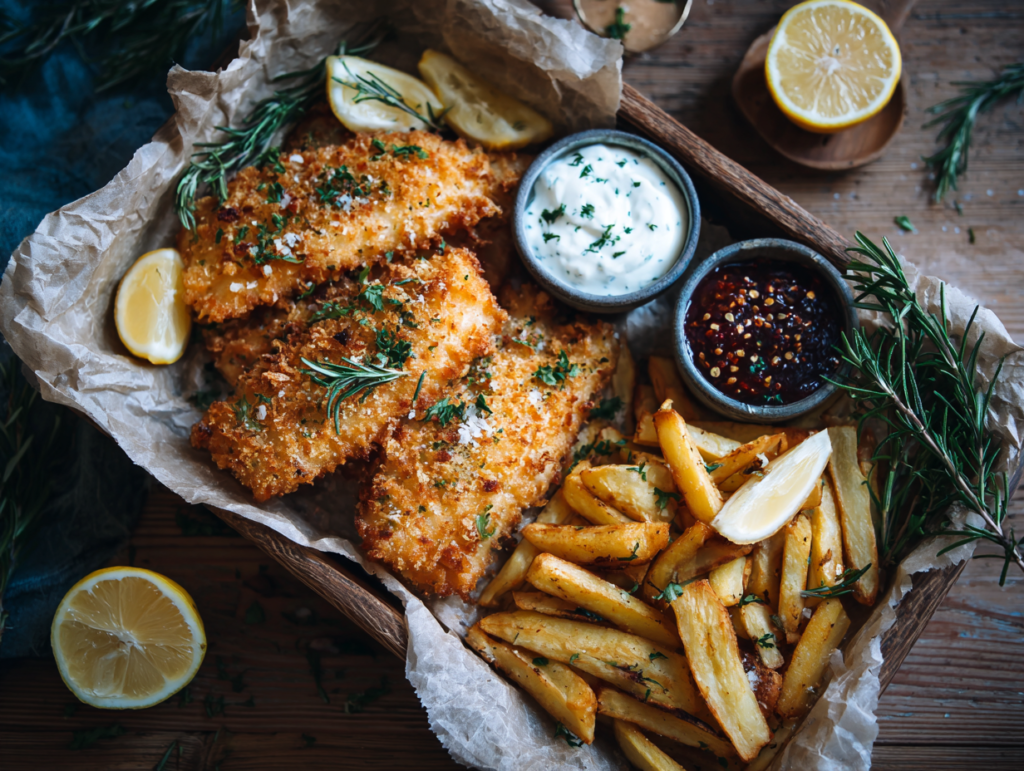
This fish and chips recipe is not complicated. But it rewards attention. When the batter is cold, the oil is hot, and the fish is fresh, the result is something close to perfect — a shatteringly crisp exterior, tender white fish inside, and chips that are golden all the way through. No shortcuts needed. No mystery either.
Prep Time: 20 minutes | Cook Time: 35 minutes | Total Time: 55 minutes | Servings: 4
What Makes It Worth Making
- The contrast is everything. Hot, crackling batter against soft, flaky fish.
- It scales. Two portions or eight — the method holds.
- The batter uses three pantry staples. Cold beer does most of the work.
- It tastes like the real thing. Not a approximation of it.
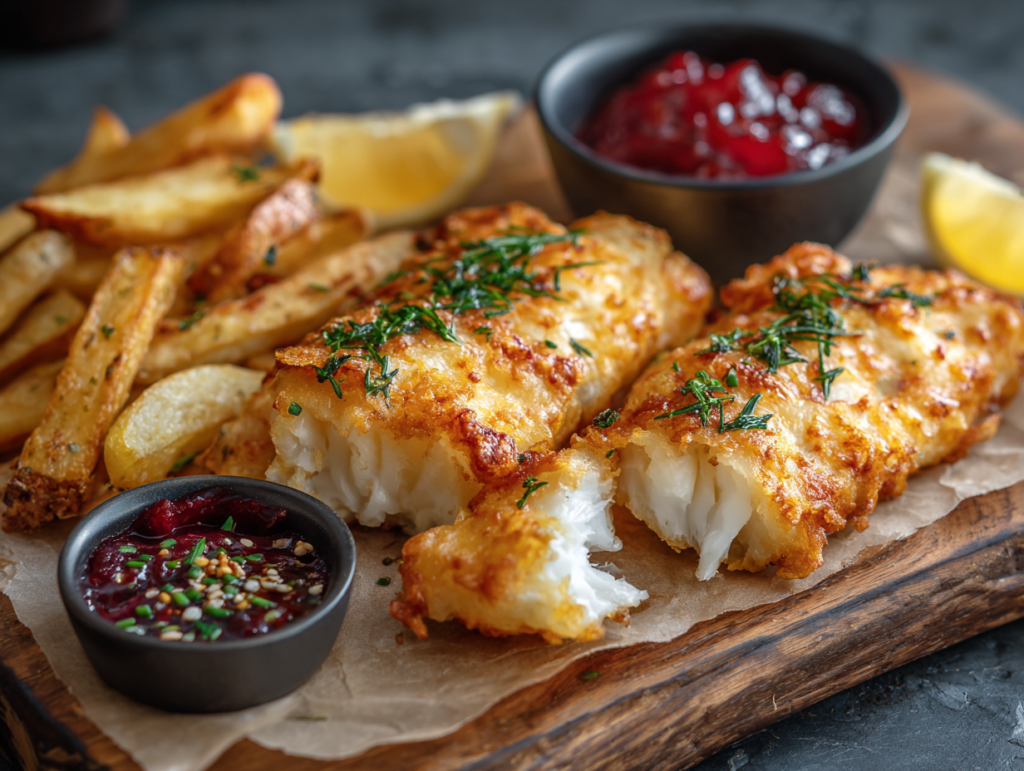
The Ingredients
For the Fish:
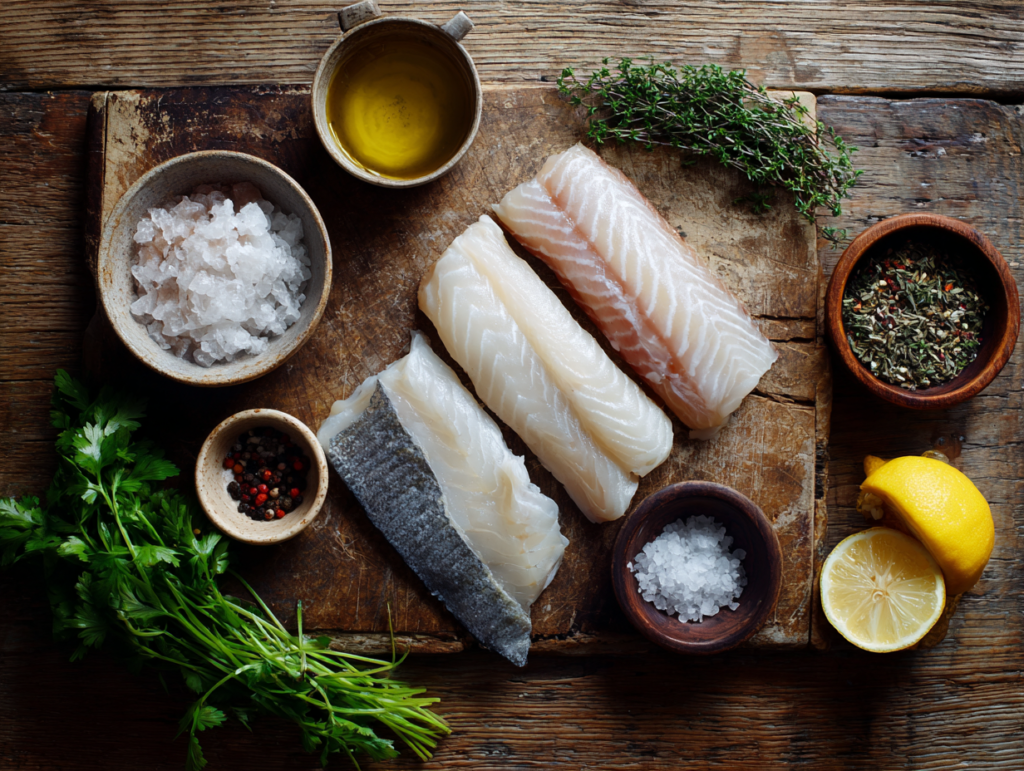
- 800g (1.75 lbs) white fish fillets — cod or haddock, skin off. Thick cuts hold up better in the oil. Thin fillets fall apart.
- 150g (1 cup) plain flour — for the batter. Plus extra for dredging the fish before it goes in.
- 1 tsp baking powder — lifts the batter, keeps it light.
- 1 tsp fine salt — in the batter, not after.
- ½ tsp white pepper — quieter than black. Doesn’t interrupt the crust.
- 330ml (1½ cups) cold beer — a lager works best. Cold matters. It slows gluten development and keeps the batter from getting heavy. A sparkling water substitute works if preferred.
- 1 tbsp malt vinegar — optional, added to the batter for depth.
For the Chips:
- 900g (2 lbs) Maris Piper or Russet potatoes — starchy varieties only. Waxy potatoes don’t crisp the same way.
- Vegetable oil — enough to fill your pot or fryer to 8cm (3 inches). Neutral flavour. High smoke point.
- Flaky sea salt — for finishing.
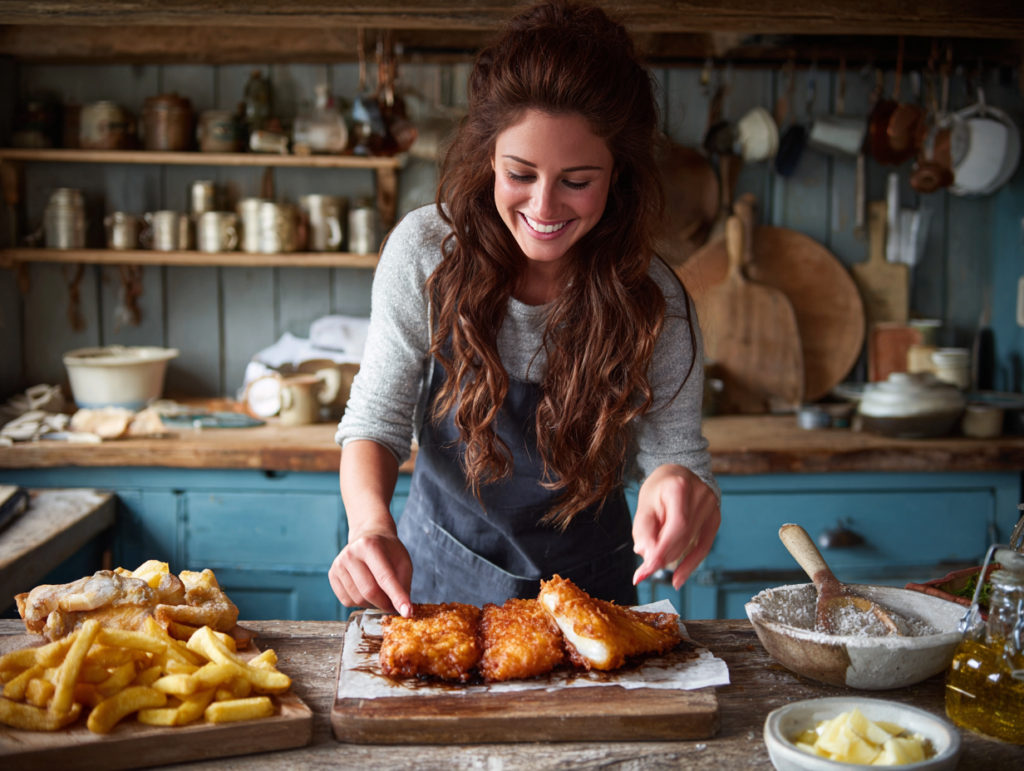
How to Make It — 9 Foolproof Steps
1. Prepare the potatoes. Peel and cut into thick batons — about 1.5cm wide. Rinse under cold water until the water runs clear. This removes surface starch and prevents sticking.
2. Parboil the chips. Place the potato batons in a pot of cold salted water. Bring to a boil and cook for 5 minutes — until just tender at the edges but firm in the center. Drain carefully and let them steam dry on a wire rack for 10 minutes. Dry chips fry better.
3. Make the batter. Whisk together the flour, baking powder, salt, and white pepper. Pour in the cold beer gradually, whisking until just combined. A few lumps are fine. Don’t overwork it. Put the bowl in the refrigerator while the oil heats.
4. Heat the oil — first fry. Heat oil in a heavy pot or deep fryer to 150°C (300°F). Fry the parboiled chips in batches for 4 to 5 minutes — until cooked through but not yet golden. Remove and drain on paper towels. This is the first fry. The colour comes later.
5. Raise the oil temperature. Increase the heat to 190°C (375°F). This is the working temperature for the fish. Use a thermometer. Guessing here costs you the crust.
6. Dredge the fish. Pat the fish fillets dry with paper towels. Dust each one in plain flour, shaking off the excess. This gives the batter something to grip.
7. Batter and fry the fish. Take the batter from the refrigerator. Dip each fillet fully, let the excess fall away for a moment, then lower it slowly into the hot oil. Fry two pieces at a time — crowding drops the temperature. Cook for 6 to 8 minutes, turning once, until deep golden and crisp. Drain on a wire rack, not paper towels. Paper traps steam. Wire keeps the crust.
8. Second fry the chips. With the fish resting, return the chips to the oil — now at 190°C — and fry for 3 to 4 minutes until golden and crisp. Drain, season immediately with flaky salt.
9. Serve without delay. Fish and chips waits for no one. Plate immediately.
A Few Things Worth Knowing
The batter must be cold. Room temperature batter absorbs oil. Cold batter hits the hot oil and reacts — that reaction is the crust. Keep it refrigerated until the moment it’s needed.
Dry the fish before battering. Moisture between the fillet and the batter causes it to slide off in the oil. A minute with paper towels prevents that entirely.
Don’t skip the double fry on the chips. The first fry cooks them through. The second fry makes them crisp. One fry alone produces a soft chip. Both are necessary.
Oil temperature is not a suggestion. Below 180°C, the batter absorbs oil and turns greasy. Above 200°C, the outside darkens before the fish cooks through. 190°C is where it works.
Rest the fish on a wire rack. Steam is the enemy of crust. A rack lets air circulate. A plate does not.
Don’t salt until the end. Salt draws moisture. Season the chips immediately after frying, while the surface is still hot enough to hold it.
How to Serve It
Malt vinegar, applied sparingly at the table. Tartare sauce alongside — not underneath. Mushy peas if that’s the direction. A wedge of lemon, though not everyone wants it.
For sides: a simple coleslaw cuts through the richness. Pickled onions, if available, are worth including.
To drink: a cold lager continues what the batter started. A dry cider works equally well. Both are honest choices.
Worth Noting Nutritionally
One serving of this fish and chips recipe provides approximately 580 to 650 calories, depending on portion size and oil absorption. White fish — cod or haddock — is lean, high in protein, and a reliable source of B vitamins and iodine.
For a lighter version, the fish can be oven-baked at 220°C (425°F) for 20 to 25 minutes after battering. The crust will be less dramatic but still worthwhile.
The batter as written contains gluten and alcohol. For a gluten-free adaptation, a rice flour and sparkling water batter produces a comparable result. For alcohol-free, cold sparkling water replaces the beer directly.
A Few Questions
Can I use frozen fish? Yes, but thaw it fully in the refrigerator overnight and pat it thoroughly dry before dredging. Frozen fish releases more moisture than fresh. If that moisture reaches the batter, the crust will separate. Drying is the fix.
Can the batter be made ahead? It can be mixed up to an hour ahead and kept cold. Beyond that, the baking powder loses some of its lift. Make it close to when you need it. The few minutes it takes are worth doing fresh.
How do I store and reheat leftovers? Leftovers keep in the refrigerator for up to two days. To reheat, place the fish on a wire rack over a baking tray in a 200°C (400°F) oven for 10 to 12 minutes. A microwave will soften the batter entirely. The oven restores most of the crust.
What oil is best for frying? Vegetable oil, sunflower oil, or groundnut oil. All have high smoke points and neutral flavour. Olive oil smokes too early and adds a flavour that competes with the fish. Keep it neutral.
Get the oil right, keep the batter cold, and the rest follows.