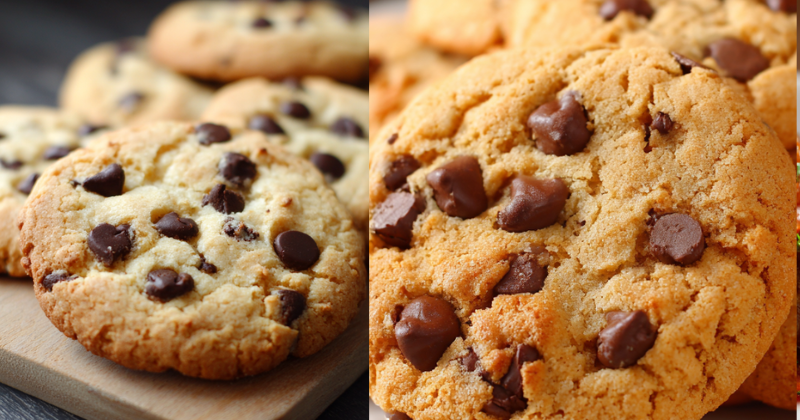
It starts with a reliable recipe and a willingness to make it repeatedly. The premise of baking cookies to sell is straightforward: low ingredient cost, high perceived value, consistent product. Over six months of weekly batches, the easy recipes cookies in this article became the foundation of a side income that covered real financial ground — not because the cookies were complicated, but because they were dependable. People buy what they trust, and they trust what tastes the same every time.
These are the six cookies that performed. All of them are simple enough to produce in volume. All of them hold well for several days. All of them are the kind of thing people order again.
What Makes It Worth Making
- These easy recipes cookies use pantry staples available at any grocery store, which keeps ingredient costs predictable and margins consistent.
- Every cookie here holds its texture for three to four days at room temperature — essential for gifting, shipping, and advance production.
- The recipes scale directly. Double or triple the batch with no adjustment to method or timing.
- Each one is visually distinct enough to sell as a set — six different cookies in a box covers every preference without requiring a large menu.
The Ingredients
The core pantry for all six cookie variations:
Unsalted butter: The fat base that determines flavor and texture. Room temperature for creamed cookies; browned and cooled for the brown butter variation. Unsalted allows precise control over total salt. Substitute: vegan butter one-for-one in most variations with minor texture differences.
Brown sugar and granulated sugar: Used in combination across most recipes. Brown sugar adds moisture, chew, and molasses depth. Granulated sugar promotes spreading and a crispier edge. The ratio between them determines the final texture more than almost anything else.
Eggs and egg yolks: Whole eggs provide structure; extra yolks add richness and chew. Room temperature eggs incorporate more evenly into creamed butter. Cold eggs can cause the butter to seize and the dough to look broken — it recovers during baking but the texture suffers slightly.
All-purpose flour: The standard for all six. Measured by spooning into the cup and leveling — not scooping, which compacts the flour and produces a dry, dense cookie. Substitute: one-to-one gluten-free flour blend with minor texture differences.
Baking soda: The leavening for most of these recipes. It reacts with the brown sugar and any acid present to produce spread and lift. Fresh baking soda matters — replace it every six months.
Salt: Added to the dough and sometimes as a finish on top. Flaky salt scattered over a cookie before baking is a finishing move that signals care and adds a professional quality that plain cookies lack.
Vanilla extract: One to two teaspoons per batch. Pure vanilla, not imitation — the flavor difference is real and people notice in a finished cookie.
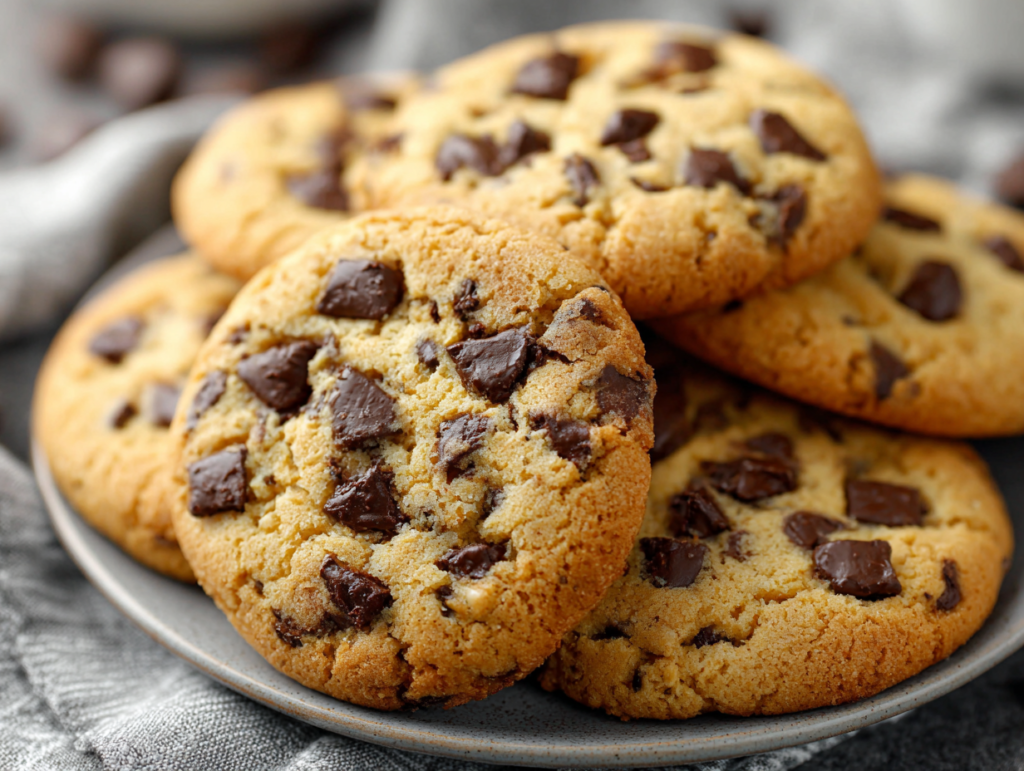
Chocolate — chips, chunks, or chopped bars: The difference between chocolate chips and chopped chocolate is meaningful. Chopped chocolate melts unevenly, creates puddles and streaks, and produces a more interesting visual result than uniform chips. For a product sold on appearance as much as taste, chopped chocolate is worth the extra step.
Rolled oats: Used in the oatmeal variation. Old-fashioned rolled oats produce a chewier cookie than quick oats, which dissolve into the dough and lose their texture during baking.
Peanut butter or almond butter: Used in the peanut butter cookie. Natural nut butter produces a slightly oilier, more tender cookie; commercial peanut butter (Jif, Skippy) produces a more consistent result that holds its shape better. For a product sold in quantity, consistency matters.
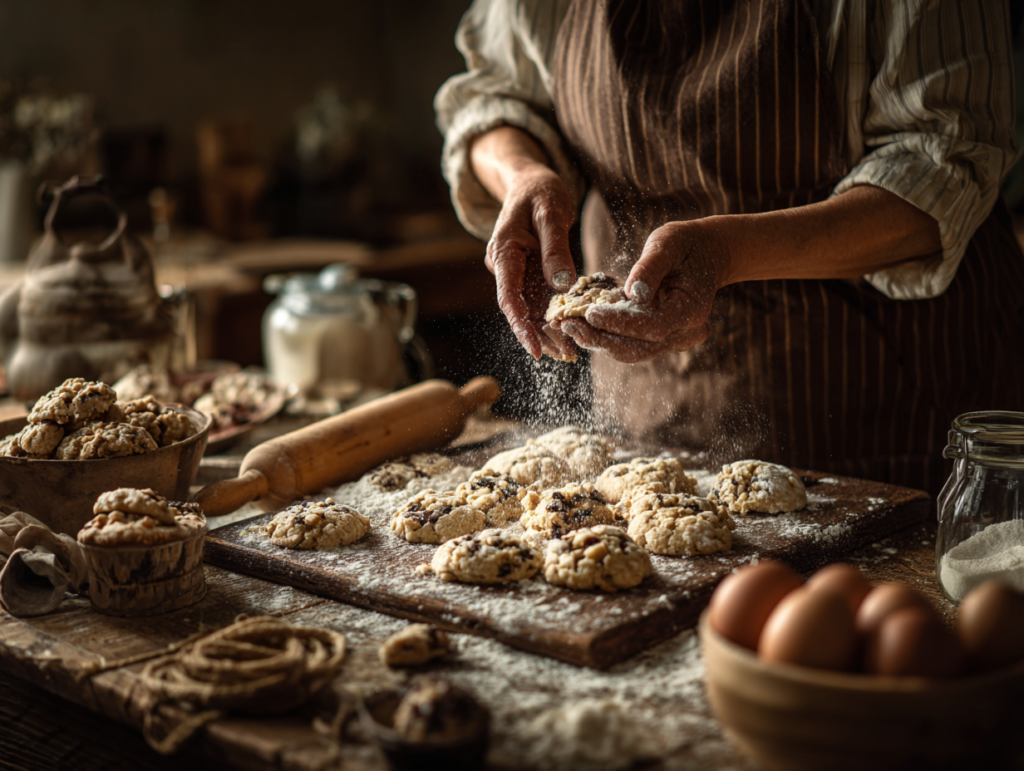
The 6 Easy Recipes Cookies: How to Make Each One
Cookie 1: Classic Brown Butter Chocolate Chip
Prep: 20 min | Chill: 30 min | Cook: 12 min | Total: 1 hour 2 min | Makes: 24 cookies
Ingredients:
- 2.25 cups all-purpose flour
- 1 tsp baking soda
- 1 tsp salt
- 1 cup unsalted butter (2 sticks)
- 1 cup brown sugar, packed
- 1/2 cup granulated sugar
- 2 large eggs, room temperature
- 2 tsp vanilla extract
- 8 oz good chocolate, roughly chopped
- Flaky salt, for finishing
- Brown the butter: melt in a light-colored saucepan over medium heat, stirring constantly, until milk solids turn golden and the butter smells nutty — about 5 minutes. Pour into a large bowl and cool 15 minutes.
- Whisk both sugars into the cooled brown butter until combined. Add eggs one at a time, whisking vigorously after each. Add vanilla. The mixture should look smooth and slightly glossy.
- Add flour, baking soda, and salt. Fold with a spatula until just combined. Fold in chocolate.
- Refrigerate dough 30 minutes. Cold dough spreads less and produces a thicker cookie.
- Preheat oven to 375°F. Scoop dough into balls, approximately 2 tablespoons each. Place on parchment-lined sheets, 2 inches apart.
- Press a few additional chocolate pieces on top of each ball — this is the detail that makes the finished cookie look intentional and worth paying for.
- Sprinkle with flaky salt. Bake 11–12 minutes until the edges are set and the centers look slightly underdone. They finish cooking on the pan.
- Cool on the pan 5 minutes before transferring. They will look perfect at room temperature.
Cookie 2: Chewy Oatmeal Raisin
Prep: 15 min | Cook: 11 min | Total: 26 min | Makes: 28 cookies
Ingredients:
- 1.5 cups all-purpose flour
- 1 tsp cinnamon
- 1 tsp baking soda
- 1/2 tsp salt
- 1 cup unsalted butter, room temperature
- 1 cup brown sugar, packed
- 1/2 cup granulated sugar
- 2 eggs
- 1 tsp vanilla
- 3 cups old-fashioned rolled oats
- 1.5 cups raisins
- Beat butter and both sugars until light and fluffy — 3 minutes. Add eggs and vanilla.
- Add flour, cinnamon, baking soda, and salt. Mix until just combined.
- Fold in oats and raisins.
- Scoop onto parchment-lined sheets. Flatten slightly — oatmeal cookies don’t spread as much as chocolate chip.
- Bake at 350°F for 10–11 minutes. They should look barely set in the center and will firm as they cool.
Cookie 3: Peanut Butter with Chocolate Center
Prep: 15 min | Cook: 12 min | Total: 27 min | Makes: 24 cookies
Ingredients:
- 1.5 cups all-purpose flour
- 1 tsp baking soda
- 1/2 tsp salt
- 1/2 cup unsalted butter, room temperature
- 1/2 cup granulated sugar
- 1/2 cup brown sugar
- 1 cup creamy peanut butter
- 1 egg
- 1 tsp vanilla
- 24 chocolate kiss candies or chocolate truffle balls, unwrapped
- Beat butter, both sugars, and peanut butter until smooth. Add egg and vanilla.
- Add flour, baking soda, and salt. Mix until just combined.
- Roll dough into 1.5-inch balls. Roll each in granulated sugar.
- Bake at 375°F for 10 minutes until just set.
- Remove from oven. Immediately press one chocolate piece into the center of each cookie. The heat of the cookie will soften the chocolate but not melt it completely. Cool fully before packaging — the chocolate needs time to reset.
Cookie 4: Snickerdoodles
Prep: 15 min | Cook: 10 min | Total: 25 min | Makes: 30 cookies
Ingredients:
- 2.75 cups all-purpose flour
- 2 tsp cream of tartar
- 1 tsp baking soda
- 1/2 tsp salt
- 1 cup unsalted butter, room temperature
- 1.5 cups granulated sugar
- 2 eggs
- 1 tsp vanilla
For rolling:
- 3 tbsp granulated sugar
- 1.5 tsp cinnamon
- Beat butter and sugar until light. Add eggs and vanilla.
- Add flour, cream of tartar, baking soda, and salt. The cream of tartar is what gives snickerdoodles their distinctive tang — don’t substitute baking powder.
- Roll dough into 1-inch balls. Roll each in the cinnamon-sugar mixture.
- Place on parchment-lined sheets, 2 inches apart. Do not flatten.
- Bake at 375°F for 9–10 minutes until the edges are set and the centers look slightly underdone. They will crack on top as they cool — those cracks are characteristic and desirable.
Cookie 5: Lemon Shortbread
Prep: 20 min | Chill: 1 hour | Cook: 14 min | Total: 1 hour 34 min | Makes: 30 cookies
Ingredients:
- 2.5 cups all-purpose flour
- 1/2 tsp salt
- 1 cup unsalted butter, room temperature
- 3/4 cup powdered sugar
- Zest of 2 lemons
- 1 tsp vanilla extract
- 1 tbsp fresh lemon juice
- Beat butter and powdered sugar until very light — 4 minutes. Add lemon zest, vanilla, and lemon juice.
- Add flour and salt. Mix until the dough just comes together.
- Shape into a log approximately 2 inches in diameter. Wrap in plastic and refrigerate 1 hour.
- Slice into 1/4-inch rounds. Place on parchment-lined sheets.
- Bake at 325°F for 13–15 minutes until the edges are barely golden. Shortbread should be pale — it sets as it cools, not as it bakes.
- Cool completely before handling. Shortbread is fragile when warm.
Cookie 6: Double Chocolate Fudge
Prep: 15 min | Cook: 11 min | Total: 26 min | Makes: 22 cookies
Ingredients:
- 1 cup all-purpose flour
- 1/2 cup Dutch-process cocoa powder
- 1 tsp baking soda
- 1/2 tsp salt
- 3/4 cup unsalted butter
- 1 cup brown sugar, packed
- 1/4 cup granulated sugar
- 2 eggs
- 1 tsp vanilla
- 1.5 cups chocolate chips or chopped chocolate
- Melt butter. Whisk in both sugars. Cool slightly.
- Add eggs and vanilla. Whisk until smooth.
- Add flour, cocoa, baking soda, and salt. Fold until just combined.
- Fold in chocolate.
- Scoop onto parchment-lined sheets. The dough will be soft — refrigerate 15 minutes if it seems too loose to scoop cleanly.
- Bake at 350°F for 10–11 minutes. The centers will look underdone. That’s correct.

A Few Things Worth Knowing
Chill the dough when the recipe calls for it. Cold dough spreads more slowly in the oven, which produces a thicker, more structured cookie. For a product sold by appearance, this matters. This step is easy to skip. Don’t.
Pull cookies before they look done. Every cookie in this list finishes cooking on the hot pan after it comes out of the oven. Cookies that look set in the oven will be overbaked at room temperature. The goal is edges set, center slightly underdone, bottom pale gold.
Consistent sizing is a professional signal. A cookie scoop — not a spoon — produces identical cookies that bake evenly and look intentional. Customers notice uniformity even when they can’t articulate why. A medium scoop (about 2 tablespoons) is the right size for most of these easy recipes cookies.
The result is better the second day for the chocolate chip and oatmeal raisin variations. The flavors consolidate overnight and the texture shifts from just-baked to the kind of chewy, settled cookie that people remember.
Packaging matters as much as flavor. A beautiful cookie in a plain bag underperforms a beautiful cookie in a clear bag with a label. The investment in presentation is small and the return is real.
Rotate the pans halfway through baking. Most home ovens have hot spots. Rotating the pan at the halfway mark ensures even browning across every cookie on the sheet.
How to Serve It
The brown butter chocolate chip and double chocolate fudge cookies for anyone who wants the standard — these are the bestsellers for good reason.
Snickerdoodles and oatmeal raisin together as a « classic » box — the combination appeals to people who grew up with both and want the nostalgia.
Lemon shortbread packaged individually in cellophane for gifting, where the pale, elegant cookie communicates restraint and care.
The peanut butter chocolate center cookie warm — the only one genuinely worth serving fresh from the oven rather than at room temperature.
For drinks: strong black coffee alongside the chocolate variations; milky tea alongside the shortbread and snickerdoodles; cold milk alongside the peanut butter, because some pairings are simply correct.
Worth Noting Nutritionally
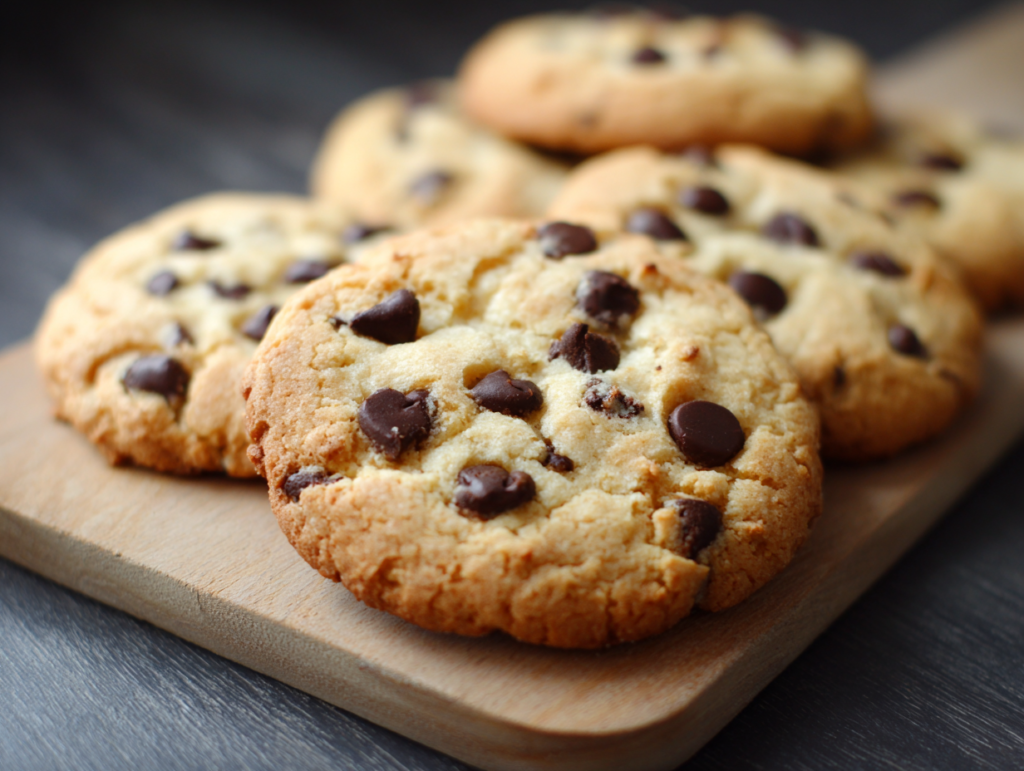
These are dessert cookies. Each contains butter, sugar, and flour in meaningful quantities — a standard two-tablespoon cookie runs roughly 150–200 calories depending on the variation and add-ins.
The oatmeal raisin variation has the most fiber of the six, contributed by the oats and raisins. The peanut butter variation has the most protein. The lemon shortbread has the fewest ingredients and the least complexity nutritionally.
All six adapt to gluten-free baking with a certified one-to-one gluten-free flour blend. Texture varies slightly by brand — look for blends that include xanthan gum, which provides the structure that gluten would otherwise supply.
For dairy-free versions: vegan butter substitutes directly in all six. The chocolate used in the chocolate chip and double chocolate variations should be dairy-free if needed — several good options are widely available.
A Few Questions
How long do these cookies keep? At room temperature in an airtight container, three to four days for most variations. The shortbread keeps up to a week because of its low moisture content. The oatmeal raisin keeps well for five days because the oats retain moisture. For longer storage, freeze baked cookies in an airtight container for up to three months and thaw at room temperature for one hour.
Can I freeze the dough? Yes, and it’s worth doing for production efficiency. Scoop portioned dough balls onto a sheet pan, freeze until solid, then transfer to a bag. Bake directly from frozen at the same temperature with 2–3 extra minutes added. This allows production of small batches from a larger base of dough made once.
My cookies spread too much. What went wrong? Usually one of three causes: butter was too warm, dough wasn’t chilled, or there was too little flour. Room-temperature butter should hold an indent when pressed but not feel greasy. If the kitchen is warm, chill the shaped cookies for 15 minutes before baking. Measure flour by spooning into the cup and leveling — not scooping.
How do I price cookies to sell? A reasonable starting point is three times the ingredient cost per cookie. Factor in packaging, time, and any delivery or platform fees. The brown butter chocolate chip cookie costs roughly 25–35 cents in ingredients per cookie at current grocery prices; selling at one dollar to one-fifty per cookie produces a meaningful margin at volume. Track actual costs for at least two batches before settling on a price.
These easy recipes cookies are the ones worth repeating — make them consistently, package them carefully, and let the product speak for itself.