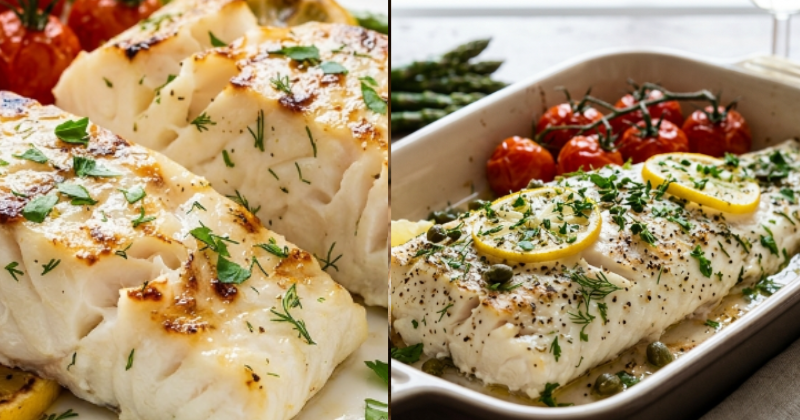
Cod is an honest fish. It does not hide behind strong flavor or complicated preparation. What it needs is good technique — and that is exactly what most home cooks are not taught.
These three fish recipes cod dishes are built around the methods that separate a restaurant plate from a forgettable weeknight fillet. The fish is the same. The approach is what changes everything.
What Makes It Worth Making
- Cod is forgiving enough to learn on and good enough to serve to anyone.
- Each of the three preparations uses a different technique — pan, oven, and poach — so the recipes teach as much as they feed.
- The ingredient lists are short. The results do not look it.
- Restaurant cod is not better fish. It is better timing and higher heat.
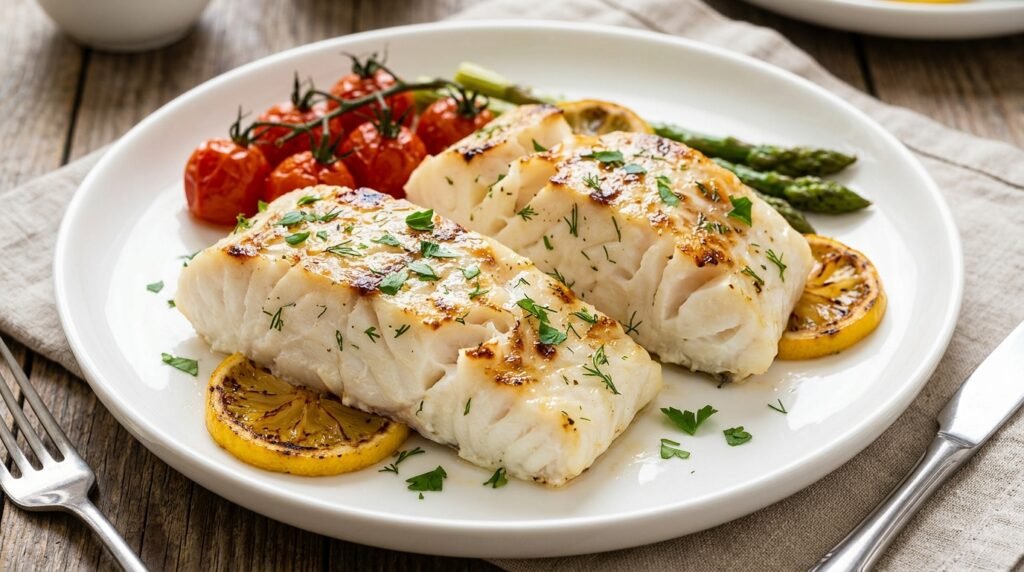
Recipe 1: Pan-Seared Cod with Brown Butter and Capers
Prep time: 5 minutes | Cook time: 10 minutes | Total time: 15 minutes | Servings: 2
The Ingredients
Cod fillets — 2, about 6 oz each, skin-on if possible Fresh or thawed from frozen, thoroughly patted dry. Moisture on the surface is what prevents a sear. Remove it completely.
Neutral oil — 1 tablespoon For the initial sear. Avocado or grapeseed oil handles high heat without burning. Not olive oil — it smokes too early.
Unsalted butter — 3 tablespoons Added after the initial sear. It browns in the residual heat of the pan, developing a nutty depth that ties everything together.
Capers — 2 tablespoons, drained Salt and acidity in one ingredient. They crisp slightly in the butter, which changes their texture from briny and soft to briny and firm.
Lemon — ½, juiced Brightness, added at the end. It lifts the butter and keeps the dish from feeling heavy.
Salt and black pepper Season the fish just before it hits the pan, not before. Salting too early draws moisture.
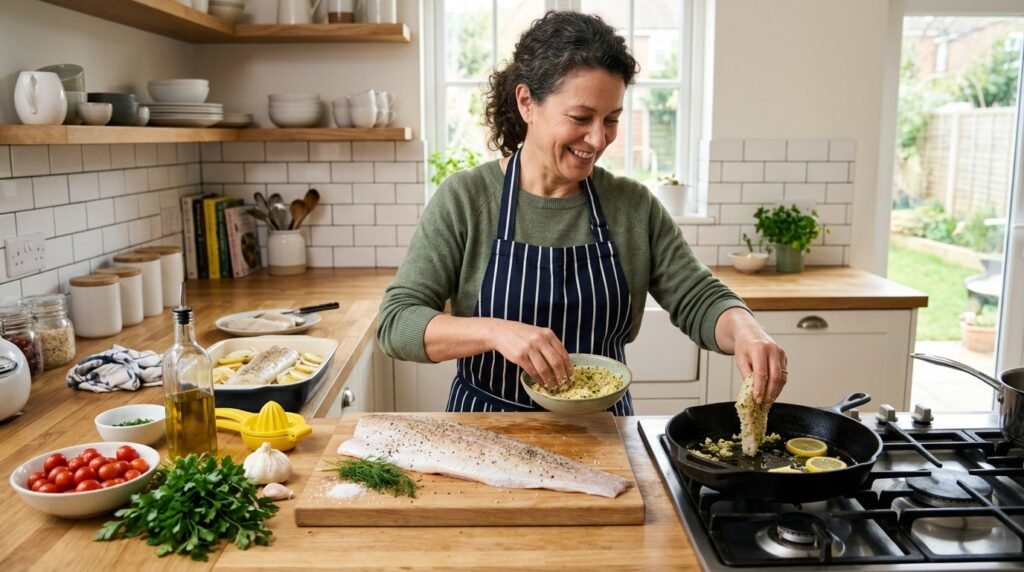
How to Make It
- Pat the cod fillets completely dry with paper towels. Season both sides with salt and pepper immediately before cooking.
- Heat a stainless steel or cast iron skillet over medium-high until a drop of water evaporates on contact. Add the oil and heat until shimmering.
- Place the fillets in the pan presentation-side down. Do not move them. Cook 3–4 minutes until the fish releases naturally from the pan and a golden crust has formed.
- Flip once. Cook 2–3 minutes more. The fish is done when it flakes at the thickest point with gentle pressure.
- Remove the fish to a plate. Reduce the heat to medium. Add the butter to the same pan.
- Swirl the pan as the butter melts and foams. Continue swirling until the foam subsides and the butter turns a deep golden brown and smells nutty — about 90 seconds.
- Add the capers. They will spit briefly. Let them cook 30 seconds.
- Remove from heat. Add the lemon juice. Pour immediately over the fish.
Recipe 2: Oven-Baked Cod with Garlic, Tomatoes, and White Wine
Prep time: 10 minutes | Cook time: 20 minutes | Total time: 30 minutes | Servings: 4
The Ingredients
Cod fillets — 4, about 6 oz each Skinless works well here. The fish braises gently in the liquid, so a crust is not the goal.
Olive oil — 3 tablespoons Used to build the base of the sauce. Use something with flavor — it matters in a short ingredient list.
Garlic — 4 cloves, thinly sliced Sliced rather than minced so it softens without burning in the oven.
Cherry tomatoes — 1 cup, halved They collapse in the heat and release liquid that combines with the wine to form a light, natural sauce.
Dry white wine — ⅓ cup Acidity and body. A wine you would drink — not cooking wine.
Fresh thyme — 4 sprigs Lay them over the fish. They perfume the dish without overpowering it.
Salt, pepper, red pepper flakes — to taste The flakes are optional. A small amount adds a background warmth that reads as depth rather than heat.
How to Make It
- Preheat the oven to 400°F.
- In an oven-safe skillet or baking dish, warm the olive oil over medium heat. Add the garlic and cook 1–2 minutes until fragrant but not colored.
- Add the tomatoes and a pinch of salt. Cook 3–4 minutes until they begin to soften and release juice.
- Add the white wine. Let it reduce by half — about 2 minutes.
- Season the cod fillets and nestle them into the pan. Spoon some of the sauce over the top. Lay the thyme sprigs over the fish.
- Transfer to the oven. Bake 12–15 minutes, depending on thickness. The fish is done when it flakes cleanly and has turned opaque throughout.
- Serve directly from the pan. Spoon the pan sauce generously over each fillet.
Recipe 3: Gently Poached Cod in Saffron Broth
Prep time: 10 minutes | Cook time: 15 minutes | Total time: 25 minutes | Servings: 2–3
The Ingredients
Cod fillets — 2–3, about 5 oz each Poaching is the most delicate of the three methods. Fresher fish shows most clearly here.
Chicken or fish stock — 2 cups The poaching liquid. Fish stock is more precise; chicken stock is more accessible. Both work.
Saffron — a small pinch (about ¼ teaspoon) Bloomed in the warm stock before the fish goes in. It turns the broth gold and adds a flavor that is difficult to describe but immediately recognizable.
Shallot — 1, thinly sliced Aromatic base. Milder than onion and more elegant in a delicate broth.
Heavy cream — 2 tablespoons Added at the end to enrich the broth slightly. Optional, but it rounds the saffron flavor cleanly.
Salt, white pepper White pepper keeps the broth visually clean.
How to Make It
- Warm the stock over medium heat in a wide, shallow pan. Add the saffron and shallot. Let it steep 5 minutes without boiling.
- Season the cod lightly on both sides.
- Reduce the heat to low. The liquid should be barely moving — no active simmer, no bubbles breaking the surface. Poaching at too high a temperature tightens the protein and toughens the fish.
- Lower the fillets into the broth. Cover the pan loosely. Cook 8–10 minutes per inch of thickness. The fish is done when it is just opaque throughout and yields gently to a fork.
- Remove the fish carefully to shallow bowls.
- Stir the cream into the broth. Taste and adjust salt. Pour over the fish and serve immediately.
A Few Things Worth Knowing
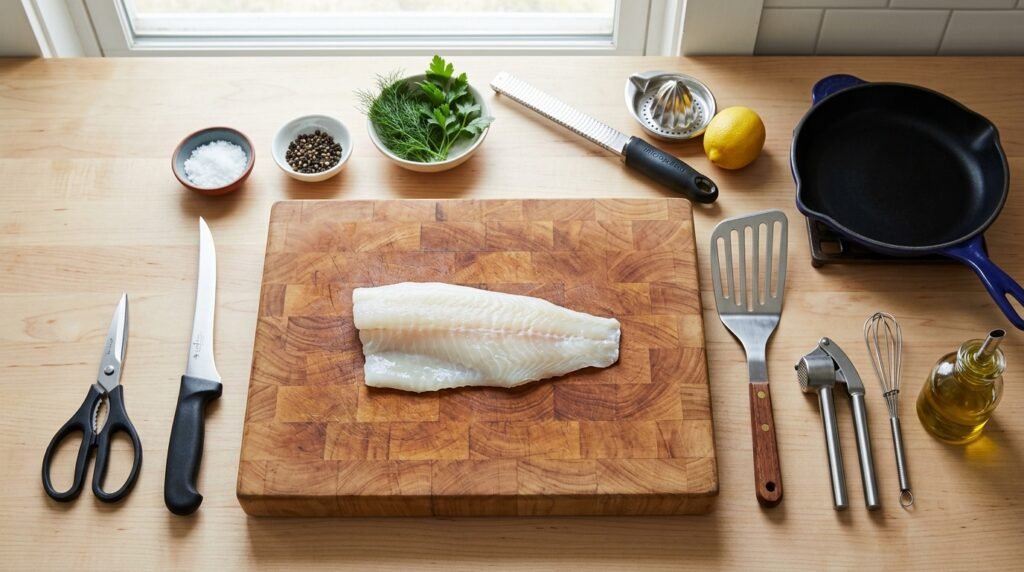
Dry fish sears. Wet fish steams. This applies to all three recipes but most visibly to the pan-seared version. Paper towels are not optional. Press firmly and repeat until the surface of the fillet feels almost tacky.
Cod is done earlier than you think. Because it is a lean, flaky fish, it continues to cook off the heat. Pull it at just-opaque rather than fully opaque, especially in the oven and poach preparations. The carry-over heat does the rest.
High heat for the pan, low heat for the poach. These fish recipes cod dishes work because each method respects what the technique requires. Applying high heat to a poach or low heat to a sear collapses the logic of the recipe entirely.
Do not crowd the pan in Recipe 1. Two fillets in a 10–12 inch skillet is the limit. More than that drops the pan temperature and the fish steams rather than sears. Cook in batches if needed.
The wine in Recipe 2 should be reduced before the fish goes in. Raw wine added to the pan at the same time as the fish does not have time to cook off its alcohol fully. The flavor stays sharp rather than integrated.
Frozen cod works. Thaw it overnight in the refrigerator, not in water. Pat it completely dry before using. The texture is slightly less firm than fresh but entirely serviceable in all three preparations.
How to Serve It
The pan-seared version needs very little alongside it. Crusty bread to absorb the brown butter. A green salad dressed with something acidic. Roasted potatoes if the occasion calls for more.
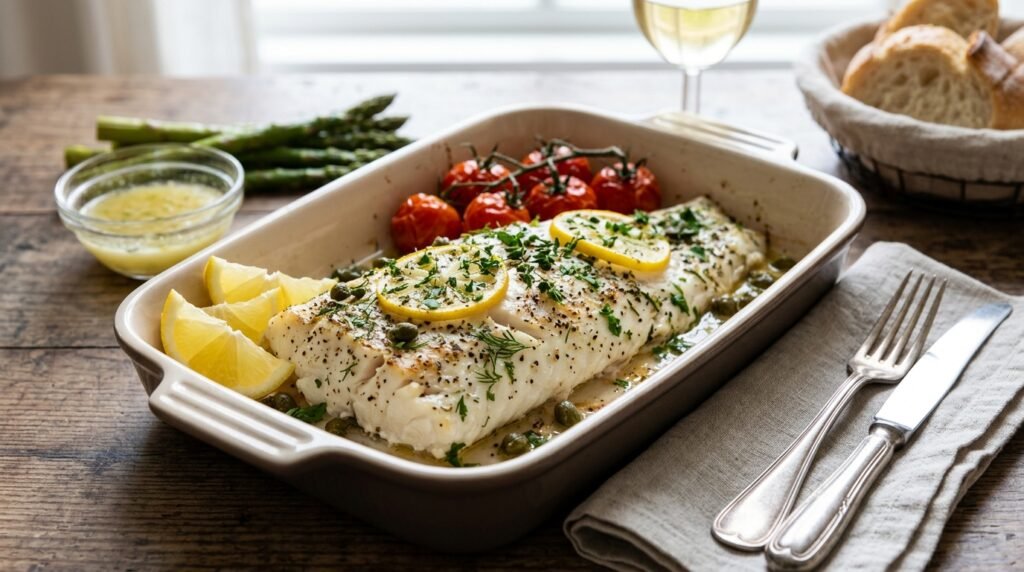
The oven-baked preparation is a full meal with good bread and something to drink. Serve it in the pan at the table.
The saffron poach is the most composed of the three. Serve it in shallow bowls with steamed white rice or thin pasta underneath. A piece of grilled bread on the side handles the broth.
Beverage: dry white wine with all three — a Muscadet with the poach, a white Burgundy or Chablis with the pan-sear, a Vermentino with the oven preparation. Sparkling water with lemon works just as well.
Worth Noting Nutritionally
Cod is a lean, high-protein fish. A 6-ounce fillet contains roughly 140 calories and 30 grams of protein with minimal fat before preparation. It is a good source of B12, phosphorus, and niacin.
The pan-seared version adds the most fat through butter. The poached version adds the least. The baked version sits between them.
For dairy-free preparation, omit the butter in Recipe 1 and finish with good olive oil and lemon instead. The cream in Recipe 3 can be left out entirely — the broth holds up on its own.
All three recipes are naturally gluten-free. None require modification for that purpose.
A Few Questions
How do I know when cod is fully cooked? The most reliable method is the flake test: press gently at the thickest point with a fork. If it separates into clean layers and has turned opaque white throughout, it is done. An instant-read thermometer reads 145°F at the center when fully cooked, though many restaurant cooks pull white fish slightly before that and let carry-over finish the job. Overcooked cod turns rubbery and dry — it is a more common problem than undercooked fish at home.
Can I use frozen cod for these recipes? Yes, and it is a reasonable choice for weeknight cooking. Thaw the fillets overnight in the refrigerator in their packaging. Before cooking, remove them from any packaging, place on a plate lined with paper towels, and blot firmly. Frozen-and-thawed cod releases more moisture than fresh, making the drying step more important. The flavor difference is minor. The texture difference is real but not prohibitive.
What other fish work in these preparations? All three methods suit other mild, flaky white fish. Haddock behaves nearly identically to cod and is interchangeable in all three recipes. Halibut works well in the pan-sear and oven preparations but requires slightly longer cooking due to its density. Tilapia is thinner and cooks faster — reduce the oven time by 3–4 minutes and watch the pan-sear carefully. Salmon is not a substitute here; it is a different fish with different fat content, texture, and flavor.
Can I make any of these ahead of time? These fish recipes cod dishes are best made and served immediately. Fish does not hold well. The oven-baked preparation is the most forgiving — the sauce can be made an hour ahead and the fish added and baked when ready to eat. The brown butter sauce in Recipe 1 can be made ahead and rewarmed gently, though it is better made fresh. The saffron broth in Recipe 3 actually benefits from an extra five minutes of steeping, so starting it slightly early is a reasonable approach.
Three methods, one fish, and the kind of results that make a home kitchen feel like somewhere worth cooking in.