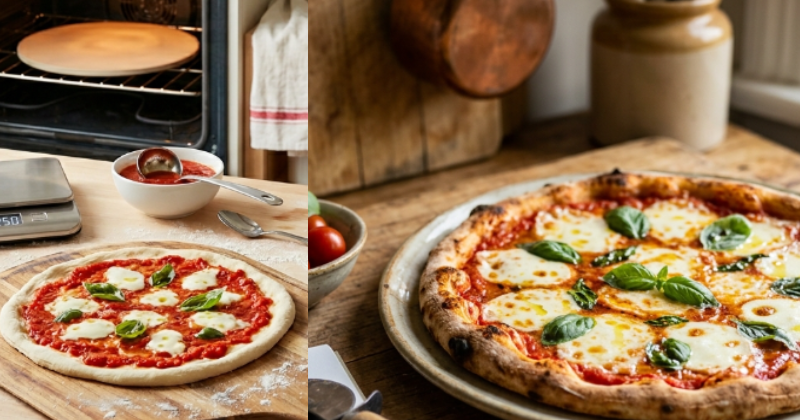
Some dishes earn their reputation through complexity. Margherita pizza earns its through restraint. Three toppings. One crust. The quality of each ingredient visible in every bite because there is nowhere to hide.
These five authentic Margherita pizza recipes cover the full range — from a classic Neapolitan version baked at high heat to a slower, pan-style interpretation for home ovens without a pizza stone. Each one is worth making. Each one will impress your guests, not through spectacle, but through something more durable than that.
What Makes It Worth Making
- The simplicity is not a limitation. San Marzano tomatoes, fresh mozzarella, good basil — three things doing the work of ten.
- It scales without losing anything. Make one pizza or six. The recipe holds.
- The crust is the variable. Learn to handle the dough well and every version improves immediately.
- It is honest food. What you put in is exactly what comes out. That is the point.
The Ingredients
Prep Time: 20 minutes active | Rest Time: 1–24 hours (dough) | Cook Time: 8–12 minutes per pizza | Servings: 5 pizzas, each serving 2
The Dough (for all five variations)
- 00 flour (500g): The fine grind creates a supple, extensible dough that blisters properly under high heat. All-purpose flour works as a substitute — the crust will be slightly chewier, slightly less airy.
- Active dry yeast (7g / one packet): Instant yeast works equally well. Add it directly to the flour without proofing first.
- Warm water (325ml): Between 100–110°F. Too hot kills the yeast. Too cold slows it past usefulness.
- Salt (10g): Added after the yeast is incorporated. Salt and yeast added together at the start inhibit fermentation.
- Olive oil (2 tablespoons): Adds a slight richness to the dough. Skip it for a more traditional Neapolitan texture.
The Toppings (per pizza)
- San Marzano tomatoes, crushed by hand (½ cup): Their low acidity and natural sweetness make them the standard for a reason. Canned whole tomatoes in juice are a workable substitute; drain them well.
- Fresh mozzarella (4 oz, torn): Low-moisture mozzarella melts more evenly and produces less water. Fresh buffalo mozzarella is more traditional but requires drying on paper towels for 20 minutes first.
- Fresh basil (6–8 leaves): Added after baking. Heat destroys both the color and the volatile oils that make it fragrant.
- Extra-virgin olive oil (1 tablespoon, to finish): Drizzled on just before serving. This is not decorative.
- Sea salt (a pinch): On the finished pizza, not the raw one.
How to Make It
The Dough
- Combine flour and salt in a large bowl. In a separate small bowl, dissolve yeast in warm water and let sit for five minutes until slightly foamy.
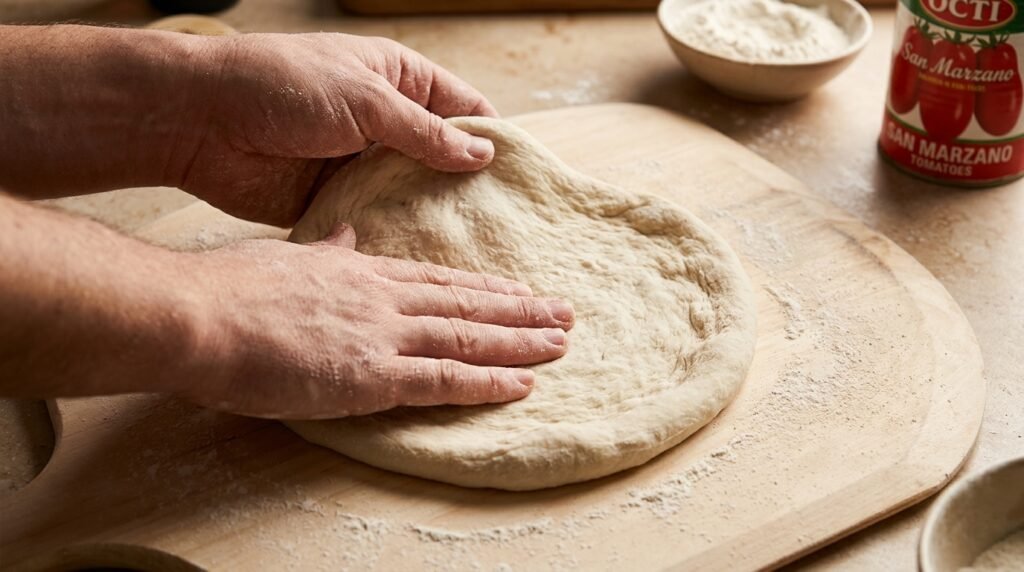
- Pour the yeast mixture and olive oil into the flour. Mix until a shaggy dough forms, then turn out onto a lightly floured surface.
- Knead for eight to ten minutes until the dough is smooth, elastic, and springs back slowly when pressed. It should not stick to your hands.
- Divide into five equal portions (roughly 165g each). Shape into balls, coat lightly in olive oil, and place in separate covered bowls or a floured tray covered with plastic wrap.
- Rest at room temperature for one to two hours, or refrigerate overnight. The cold ferment produces a more complex flavor. Both work.
The Five Authentic Margherita Pizza Recipes
Recipe 1: Classic Neapolitan (High Heat)
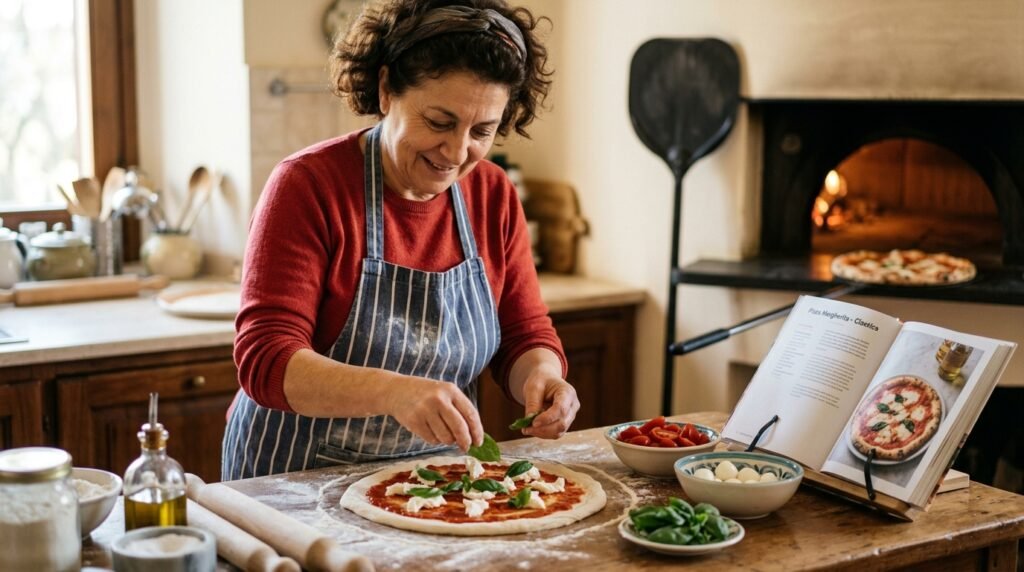
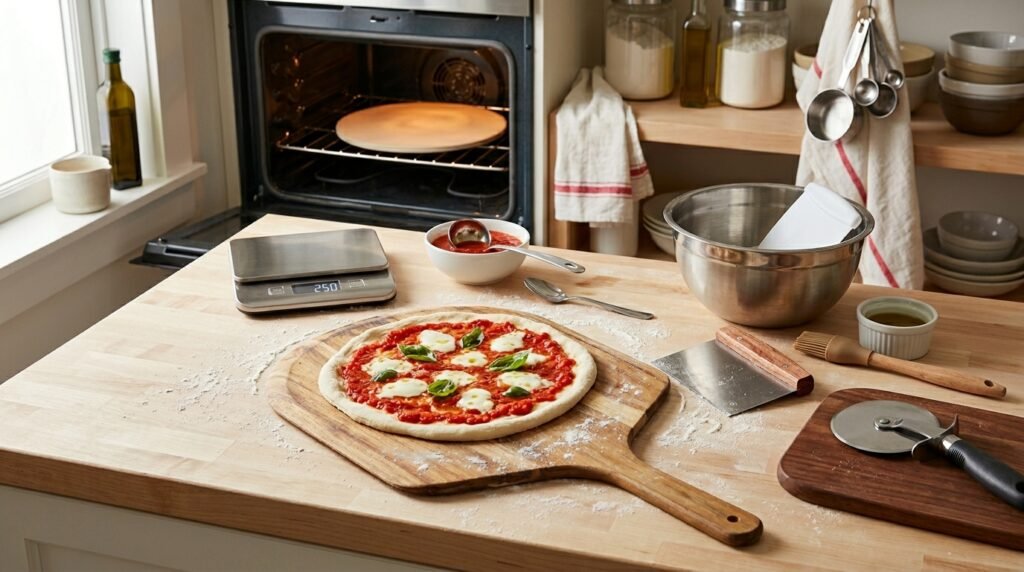
Preheat your oven to its maximum temperature — ideally 500–550°F — with a pizza stone or steel inside for at least 45 minutes. Stretch one dough ball by hand into a roughly 10-inch round. Spread three tablespoons of crushed San Marzano tomatoes to within half an inch of the edge. Tear fresh mozzarella across the surface. Slide onto the stone and bake for six to eight minutes, until the crust is charred in spots and the cheese is bubbling. Remove. Add basil and a drizzle of olive oil.
Recipe 2: Pan Margherita (Thick, Crisp-Bottomed)
Coat a 12-inch cast iron skillet or heavy oven-safe pan generously with olive oil. Press the dough into the pan and let it rest for 30 minutes — it will relax and fill the pan. Top with tomato sauce, mozzarella, and a pinch of salt. Place the pan over medium-high heat on the stovetop for three minutes to set the bottom crust, then transfer to a 450°F oven for 12–15 minutes. The underside will be golden and crisp. Finish with basil.
Recipe 3: Overnight Cold-Ferment Margherita
Use dough that has rested in the refrigerator for 18–24 hours. Remove it 30 minutes before shaping to allow it to come to room temperature. Shape, top, and bake at 500°F on a preheated stone for seven to nine minutes. The cold ferment produces a more complex, slightly tangy crust with better open crumb structure. The difference is noticeable.
Recipe 4: Thin Roman-Style Margherita
Roll the dough ball with a rolling pin — thinner than you think is necessary. The goal is a cracker-like crust, not a chewy one. Place on parchment on a baking sheet. Top sparingly. Too much sauce on a thin crust creates steam; the crust goes soft. Bake at 475°F for nine to eleven minutes, rotating once halfway through. The edges should be deeply golden.
Recipe 5: Margherita Bianca (White Variation)
Skip the tomato. Brush the stretched dough lightly with olive oil and two minced garlic cloves. Layer fresh mozzarella and bake at 500°F for seven minutes. Remove from the oven and immediately add a handful of fresh cherry tomatoes halved, torn basil, and a finish of good olive oil and sea salt. The tomatoes stay bright and acidic rather than cooking down.
A Few Things Worth Knowing
Wet mozzarella is the most common problem. Pat fresh mozzarella dry before it goes on the pizza. A paper towel and twenty minutes of patience prevent a watery crust.
Do not overload the sauce. Three to four tablespoons per pizza is enough. More than that and the center of the crust steams instead of bakes.
The oven must be fully preheated. Forty-five minutes with a pizza stone, not fifteen. This step is easy to abbreviate. The crust suffers for it.
Cold dough tears. If the dough resists stretching and keeps snapping back, it needs more rest. Cover it and wait ten minutes. It will cooperate.
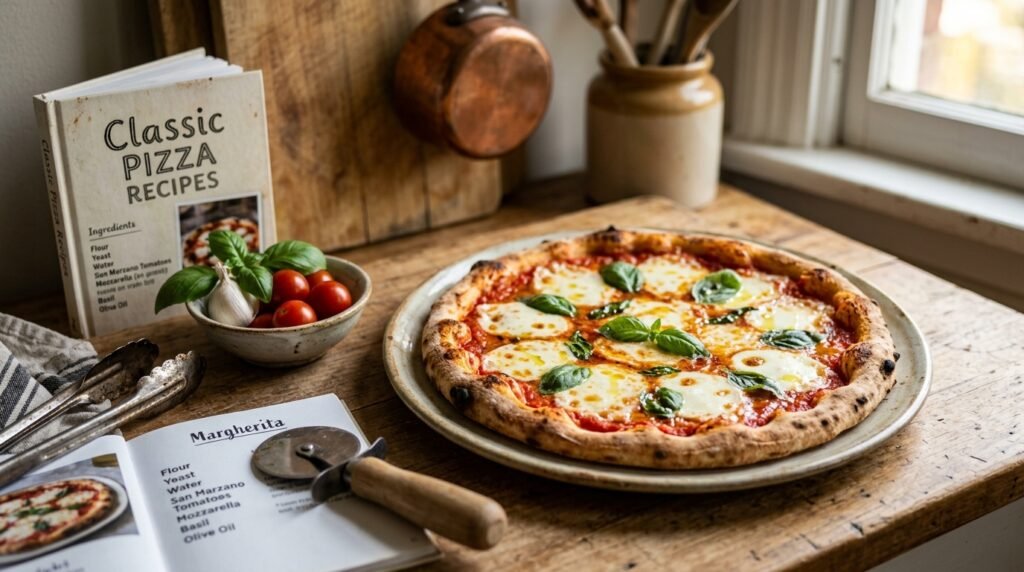
Basil goes on last. Every time. Without exception.
The finish of olive oil is not optional. A tablespoon of good extra-virgin olive oil over a hot pizza changes it from adequate to correct.
How to Serve It
- Serve whole and cut at the table — the visual matters
- A simple arugula salad dressed with lemon and olive oil alongside
- Nothing elaborate for drinks: a light Italian red, a cold lager, or sparkling water with lemon
- Serve immediately; Margherita pizza does not improve with waiting
Worth Noting Nutritionally
One slice of authentic Margherita pizza — approximately one-sixth of a 10-inch pie — contains roughly 220–260 calories, depending on dough thickness and the amount of cheese used. The primary macronutrients are carbohydrates from the crust and fat from mozzarella and olive oil. Fresh mozzarella provides calcium and protein. The tomato sauce, particularly from San Marzano tomatoes, is a source of lycopene.
For a gluten-free version, a blend of rice flour and tapioca starch produces a workable crust — the texture differs but holds the toppings well. Dairy-free mozzarella alternatives vary widely in quality; look for one that melts rather than just softens. Reducing the cheese and increasing the tomato layer lowers the fat content without meaningfully changing the character of the pizza.
A Few Questions
Can I make the dough ahead of time? Yes. After dividing into balls, refrigerate for up to 48 hours. The longer cold ferment improves flavor and makes the dough easier to stretch. Remove from the refrigerator 30 minutes before you plan to shape it.
What if I do not have a pizza stone? A heavy baking sheet, preheated in the oven for 30 minutes, is a reasonable substitute. A cast iron skillet, as in Recipe 2, is even better. The goal in all cases is a hot surface that immediately begins cooking the underside of the crust.
Can I use store-bought dough? You can. Most grocery store fresh pizza dough is adequate and will produce a decent result with good toppings. The crust will lack the complexity of a fermented homemade dough, but the fundamentals of these five authentic Margherita pizza recipes still apply.
How do I store leftovers? Refrigerate in an airtight container for up to two days. Reheat in a dry skillet over medium heat for three to four minutes — this restores the crust’s crispness in a way that a microwave cannot.
Start with the classic Neapolitan, then work through the others at your own pace — each one teaches you something different about what this pizza can be.