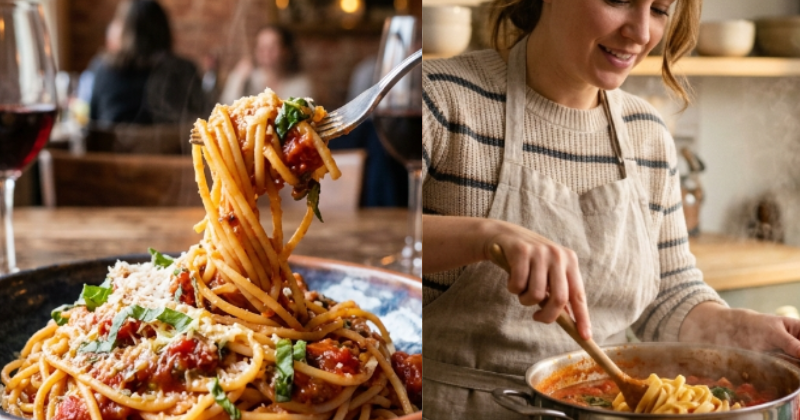
It starts with salted water and a hot pan. Most great pasta does.
These 13 cheap pasta recipes that taste like a 5-star restaurant share a common logic: restraint over abundance, technique over expense. The ingredients across all thirteen are ordinary — dried pasta, canned tomatoes, eggs, garlic, hard cheese, olive oil. What changes is how they are handled. That handling is the entire point, and it costs nothing extra to learn.
Prep time: 5–10 minutes | Cook time: 10–20 minutes | Total time: under 30 minutes | Servings: 4 per recipe
What Makes It Worth Making
- Pasta water is the sauce. Every recipe here treats it that way.
- The cost per serving across all thirteen is under three dollars. Nothing about the results reflects that number.
- Technique is transferable. Learn one of these well and the others follow naturally.
- Thirteen genuinely different dinners from a pantry that costs less than one restaurant meal.
The Ingredients
Dried pasta, 1 lb per recipe (shape specified per dish): Long shapes — spaghetti, linguine, bucatini — suit thin, oil-based, and light tomato sauces. Short shapes — rigatoni, penne, orecchiette — hold chunky sauces in their ridges and cavities. The shape is not decorative. It is functional.
Kosher salt, for pasta water: Use more than feels right. One tablespoon per quart of water is the baseline. The water should taste faintly of the sea. Under-salted water produces under-seasoned pasta that no amount of sauce can correct after the fact.
Olive oil, good quality, 3–4 tbsp: In oil-based recipes, olive oil is the sauce. Its quality is load-bearing in those dishes. For tomato-based recipes, a decent everyday bottle is sufficient.
Garlic, 4–6 cloves: Sliced thin for most applications, not minced. Thin slices infuse oil slowly and evenly. Minced garlic burns before it has time to flavor. The distinction produces different results.
Canned whole San Marzano tomatoes, 28 oz: Lower acid, higher sweetness than generic canned tomatoes. Crush them by hand directly into the pan. Substitution: any good-quality whole canned tomato — avoid pre-seasoned or diced, which contain additives that affect texture.
Pecorino Romano or Parmigiano-Reggiano, half cup finely grated: The emulsifier in cream-free sauces. Added off heat with pasta water, it melts into a coating. Pre-grated cheese from a shaker does not behave the same way. Buy a small wedge. Grate it yourself with a microplane.
Eggs, 2–4 depending on recipe: Room temperature for carbonara and egg-based sauces. Cold eggs scramble on contact with hot pasta. Room-temperature eggs emulsify.
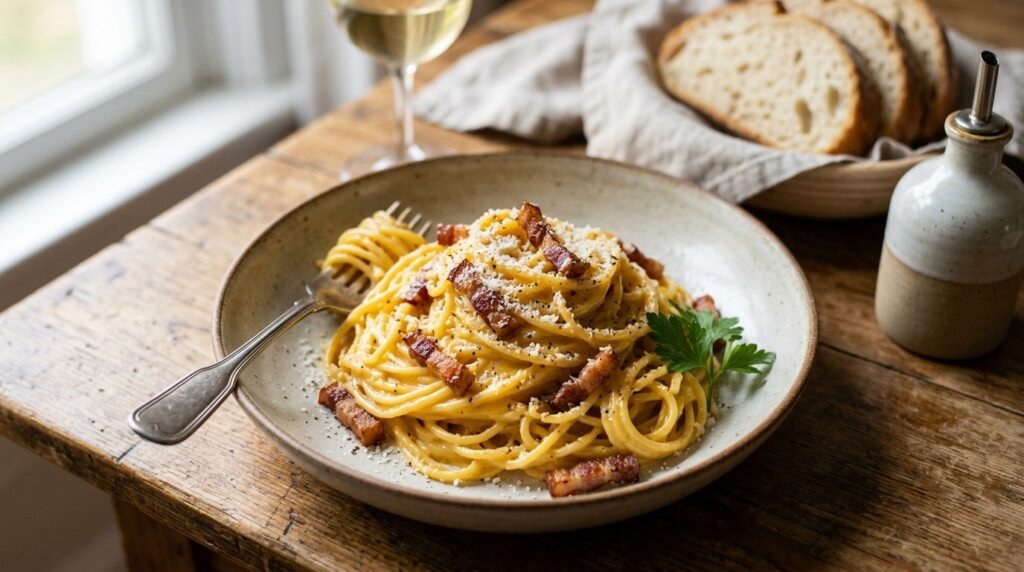
Guanciale, pancetta, or bacon, 4 oz: Rendered until the fat is liquid and the meat is crisp. The rendered fat becomes the cooking medium for the rest of the sauce. Guanciale is traditional; pancetta is accessible; bacon adds smoke that shifts the flavor slightly but works.
Pasta water, minimum 1 cup reserved per recipe: The ingredient most people pour down the drain. It is salted, starchy, and hot — exactly what every sauce here needs to emulsify and coat. Reserve it before draining without exception.
Unsalted butter, 2–3 tbsp: Added off heat as a finishing element. It rounds sharp flavors and adds a gloss that olive oil alone does not produce. Used in six of the thirteen recipes.
Anchovies, 4–6 fillets: Umami base, not fish flavor. They dissolve completely in hot olive oil and become undetectable as anchovies. Do not omit them in recipes that call for them out of concern about fishiness. The concern is unfounded.
Breadcrumbs, plain, half cup: Toasted in olive oil until golden. Used in Sicilian-style pastas as a textural and flavor substitute for cheese. They provide crunch and a savory, nutty quality that works differently from Parmesan but just as deliberately.
How to Make It
The sequence below applies to all thirteen recipes. Ingredient-specific details follow in the recipe list.
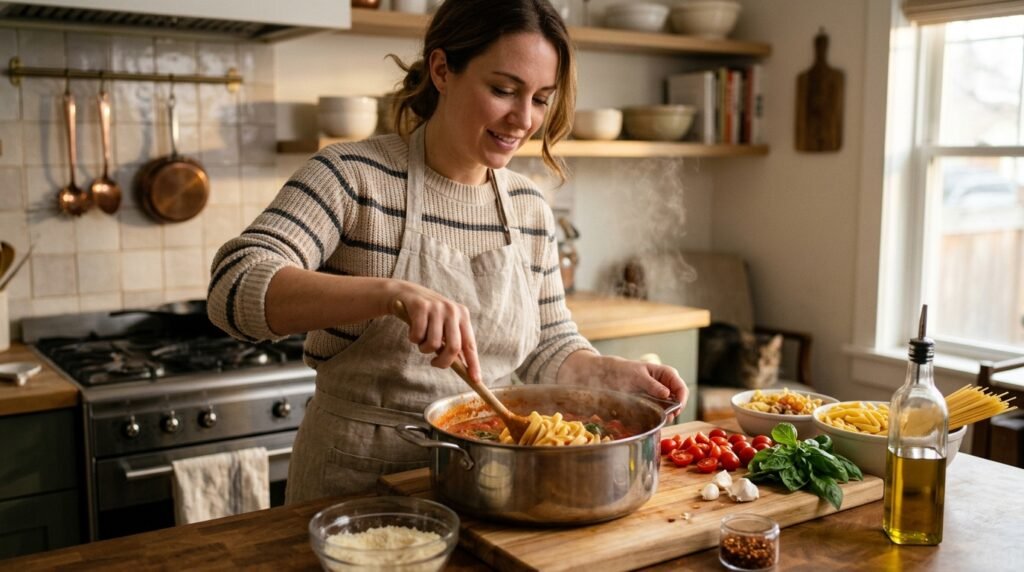
- Bring a large pot of water to a full rolling boil. Salt it generously. Add pasta and stir immediately to prevent sticking. Cook until two minutes short of the package’s suggested time — it finishes in the sauce.
- Start the sauce when the pasta enters the water. The timing is designed so both are ready simultaneously. Most sauces here take eight to twelve minutes — the same window.
- Reserve at least one full cup of pasta water before draining. Set it beside the stove within reach. You will use it before the sauce is finished.
- Drain the pasta. Do not rinse it. Rinsing removes surface starch. That starch is what allows sauce to adhere to the pasta rather than pool beneath it.
- Transfer pasta directly into the sauce over medium heat. Add pasta water in small increments — two to three tablespoons at a time — while tossing continuously. The starch, heat, and motion create an emulsion. This is the step that produces restaurant-quality results from inexpensive ingredients. It takes two minutes and changes everything.
- Add cheese, butter, or eggs off heat. Residual warmth is sufficient. Direct heat at this stage breaks the emulsion and scrambles eggs.
- Plate immediately into warmed bowls. Pasta loses temperature fast. Warm bowls — filled with hot tap water for thirty seconds, then dried — extend the eating window meaningfully.
The Thirteen Recipes:
- Cacio e Pepe: Spaghetti, Pecorino Romano, Parmigiano-Reggiano, black pepper toasted and cracked fresh. Four ingredients. The technique is everything.
- Aglio e Olio: Spaghetti, six cloves thinly sliced garlic, olive oil, red pepper flakes, flat-leaf parsley. The definitive pantry pasta — nothing hidden, nothing extra.
- Pasta al Pomodoro: Rigatoni, canned San Marzano tomatoes crushed by hand, garlic, olive oil, fresh basil torn at the end. The tomato is the point; do not complicate it.
- Spaghetti Carbonara: Spaghetti, guanciale, eggs plus two extra yolks, Pecorino Romano, black pepper. No cream. The yolks and cheese are the sauce.
- Pasta e Fagioli: Ditalini, canned cannellini beans partially mashed, canned tomatoes, garlic, rosemary, Parmesan rind simmered throughout. Borderline soup. Completely satisfying.
- Bucatini all’Amatriciana: Bucatini, guanciale, canned tomatoes, Pecorino Romano, red pepper flakes. One of the four great Roman pastas. Do not substitute the bucatini.
- Pasta alla Norma: Rigatoni, eggplant roasted separately until deeply caramelized, canned tomatoes, ricotta salata, basil. The eggplant must be properly cooked before it meets the sauce. Do not rush it.
- Lemon Butter Pasta: Linguine, unsalted butter, lemon zest and juice, Parmigiano-Reggiano, black pepper, pasta water to emulsify. Light, glossy, and faster than any other recipe here.
- Pasta with Anchovies and Breadcrumbs: Spaghetti, anchovies dissolved in olive oil, garlic, toasted breadcrumbs, parsley, lemon zest. A Sicilian tradition. The breadcrumbs replace cheese entirely.
- Pasta Puttanesca: Spaghetti, canned tomatoes, anchovies, capers, Kalamata olives, red pepper flakes, garlic. Made entirely from shelf-stable ingredients. No fresh components required.
- White Bean and Garlic Pasta: Orecchiette, canned cannellini beans partially mashed into a rough sauce, garlic, olive oil, fresh sage, lemon. Protein and starch in one bowl at minimal cost.
- Brown Butter and Sage Pasta: Pappardelle, butter browned until nutty and amber, sage leaves crisped in the same butter, Parmigiano-Reggiano, black pepper. Simple to execute, specific in result.
- Caramelized Onion and Ricotta Pasta: Rigatoni, two large onions cooked low and slow for forty minutes until deeply sweet, whole-milk ricotta, lemon zest, black pepper. The onions are the sauce. The time is non-negotiable.
A Few Things Worth Knowing
This step is easy to skip. Don’t: finishing the pasta in the sauce. Pasta drained and plated directly beneath sauce is a different dish — the starch has not integrated, the sauce has not thickened, and the pasta has not absorbed any flavor. Two minutes of tossing in the pan is the difference between assembled and cooked.
Salt the water more than feels comfortable. This instruction appears twice because it is the most commonly under-applied advice in pasta cooking. Bland pasta cannot be seasoned after the fact. The window is the water.
Caramelized onions take forty minutes. Recipes suggesting ten minutes are describing softened onions, which are a different ingredient. Low heat, occasional stirring, patience — the onions should be deeply amber and almost jammy before the pasta goes in.
The result of carbonara is better understood as a sauce, not a coating. If the eggs are clumping rather than flowing, the pan is too hot or the eggs were cold. Pull the pan fully off heat, wait thirty seconds, add pasta water in a slow stream while tossing. The motion and steam do the work.
Finely grated cheese emulsifies. Coarsely grated cheese clumps. A microplane produces the right texture for cacio e pepe and carbonara. A box grater on its finest side is the next best option. The shaker canister on the grocery shelf is not an option for these recipes.
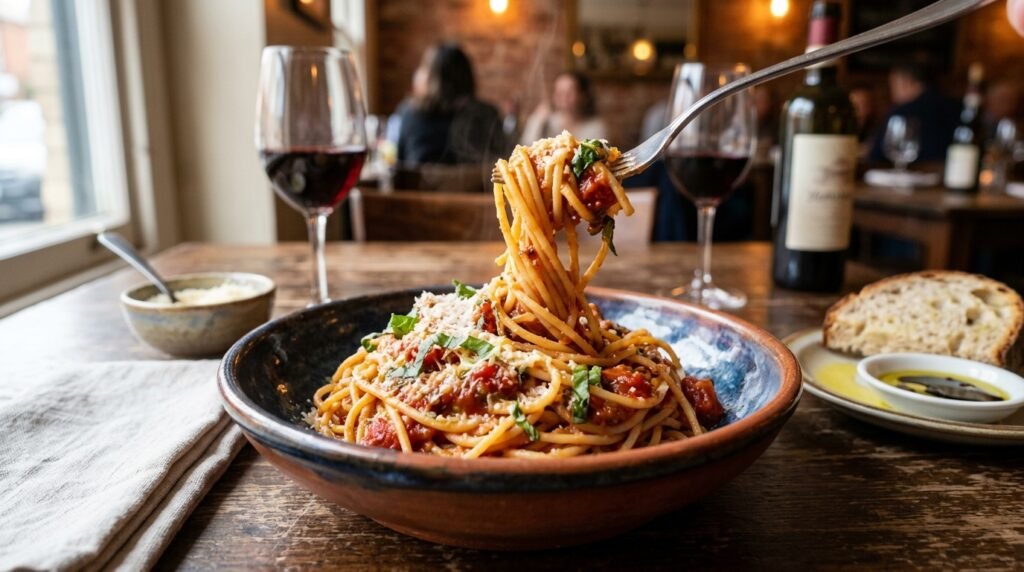
Warm the bowls. It costs thirty seconds and extends how long the pasta eats properly by several minutes. Fill with hot tap water while the pasta finishes. Dry and plate immediately.
How to Serve It
In wide, shallow bowls — pasta in a deep vessel loses visual clarity and cools unevenly.
A small finish of olive oil over aglio e olio or pomodoro just before serving. It refreshes the dish and adds sheen.
Simple green salad alongside, dressed with lemon and olive oil only. It does not compete.
Crusty bread for the bowl at the end. In Italian households this is not a suggestion.
Drink: Montepulciano d’Abruzzo alongside tomato-based pastas — inexpensive and correct. Pinot grigio with lighter oil and lemon-based dishes. Sparkling water with everything, always.
Worth Noting Nutritionally
Dried pasta provides complex carbohydrates and, in semolina form, modest protein. Whole wheat pasta substitutes directly in every recipe here — slightly denser, nuttier in flavor, higher in fiber. It suits heartier sauces particularly well and overcooks at roughly the same rate as standard pasta.
The olive oil across these recipes contributes monounsaturated fat. The cured pork, cheese, and anchovies add sodium — present in meaningful amounts across several recipes and worth knowing for those managing intake.
For gluten-free preparation, chickpea pasta performs best across the widest range of sauces — it has more protein and fiber than wheat pasta and holds its shape reasonably well. Begin tasting two minutes before the package suggests; it overcooks faster than wheat. Rice pasta works but softens quickly and suits broth-based and lighter oil sauces better than heavy ones.
For dairy-free, replace cheese with toasted breadcrumbs plus nutritional yeast in a roughly equal ratio. Replace butter with olive oil. The texture of emulsion-based sauces shifts; the flavor remains coherent and satisfying.
A Few Questions
Why does restaurant pasta taste different from mine even when I use the same ingredients? Three reasons, almost always in this order: under-salted pasta water, pasta that was not finished in the sauce, and pasta that sat in a cold bowl before it was eaten. Correct all three and the gap closes substantially. A fourth common cause is olive oil without flavor in a recipe where oil is the primary sauce — aglio e olio made with tasteless oil tastes like tasteless oil regardless of technique.
Can I make any of these ahead of time? Tomato-based sauces — pomodoro, amatriciana, puttanesca, norma — store well for up to four days refrigerated and improve slightly by day two. Store sauce separately from pasta; combine with fresh pasta water when reheating. Oil-based pastas do not hold — the pasta absorbs the oil and tightens as it cools. Carbonara should never be made ahead. It is a present-tense dish.
My pasta always sticks together after draining. How do I prevent it? Do not rinse it, and do not let it sit. Pasta should move from colander to sauce pan within thirty seconds of draining. If there is a gap — because the sauce needs another minute — toss the drained pasta with a small ladle of pasta water to keep it moving and prevent clumping. A drizzle of olive oil also works as a temporary measure, though it slightly reduces how well the sauce adheres.
How do I scale these recipes for two people instead of four? Use half the pasta and half the sauce ingredients. The only adjustment worth noting is pasta water — keep the same large pot of water and the same amount of salt. Cooking a half pound of pasta in a full pot of properly salted water produces better results than cooking it in a smaller, less-salted pot. Reserve the same amount of pasta water regardless of batch size; you will use less of it, but having it available matters.
Start with aglio e olio tonight. Everything these cheap pasta recipes teach is already inside that one dish.