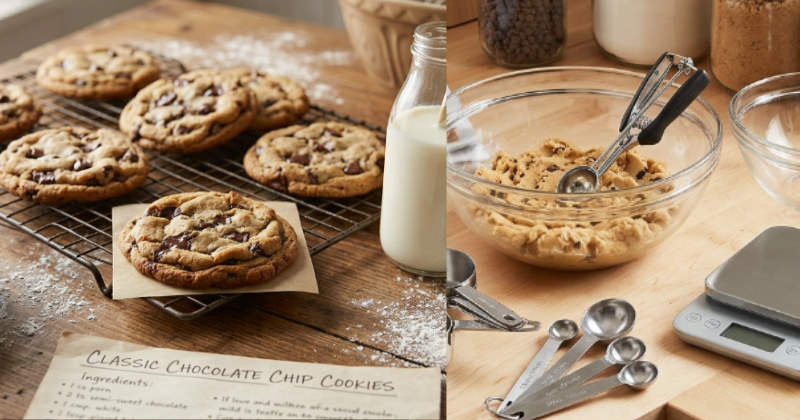
Some things don’t need a season. Chocolate chip cookies are one of them. Summer just gives you a better reason to make them at night.
These must-have chocolate chip cookie recipes are built for the warmer months — when the oven goes on after dark, when you want something that travels to the beach or the backyard without falling apart, when a good cookie is the easiest thing you can bring to a gathering and still have it be the thing people reach for first. Four recipes, four distinct results. One is thin and crispy. One is thick and fudgy. One is browned-butter and sea salt. One is a one-bowl version for the nights when the effort needs to be minimal. All four are worth knowing.
What Makes It Worth Making
- Chocolate chip cookies are the one baked good most people already have the ingredients for. The pantry is usually already there.
- The texture varies significantly by method. Small adjustments — an extra yolk, browned butter, resting the dough — produce entirely different cookies from the same base.
- These recipes keep well for four days at room temperature. The dough freezes for two months.
- Summer baking is better at night. These come together in under 30 minutes of active time.
The Ingredients
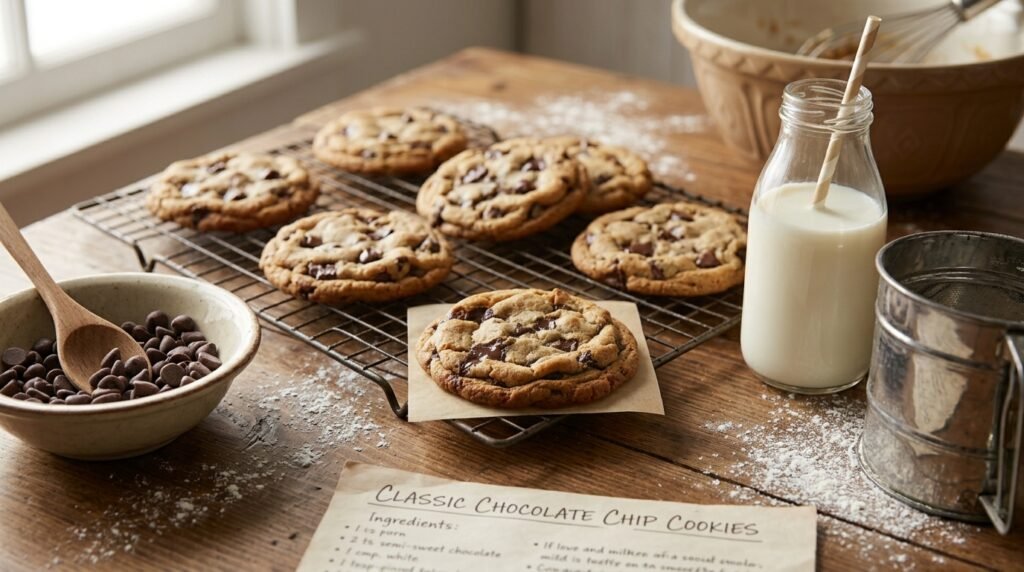
The four recipes draw from the same short list. The ratios and techniques diverge.
All-purpose flour: The structure. Measure by weight when possible — 1 cup can vary by 20 to 30 grams depending on how it is scooped. Too much flour produces dry, cakey cookies. A kitchen scale removes the variable.
Unsalted butter: Used at different states across the four recipes. Room temperature for the classic and one-bowl versions. Browned and cooled for the sea salt version. Melted and cooled for the fudgy version. Each state produces a different spread rate and texture. The temperature is not interchangeable.
Brown sugar: Moisture, chew, and a molasses depth that white sugar does not provide. Dark brown sugar intensifies both. The ratio of brown to white sugar is one of the primary levers controlling texture — more brown sugar produces chewier cookies.
Granulated white sugar: Crispness at the edges. Helps cookies spread. Reduce it for a puffier, softer result. Increase it for more spread and crunch.
Eggs and egg yolks: Whole eggs add structure and moisture. Extra yolks add richness and chew without additional leavening. The fudgy recipe uses two yolks and no whites — a deliberate choice that produces a denser, more brownie-like result.
Baking soda: Lift and spread. One teaspoon per standard batch is the baseline. More produces a puffier cookie with more spread. Old baking soda is the most common reason cookies do not rise — test it in hot water before using.
Kosher salt: Added to the dough and, in the sea salt version, to the top of each cookie before baking. The finishing salt is functional — it sharpens sweetness and makes the chocolate more pronounced.
Pure vanilla extract: One to two teaspoons depending on the recipe. Real extract, not imitation. The difference is detectable in a cookie with this few ingredients.
Dark chocolate (60 to 70%), chopped from a bar: The point. Chopped chocolate produces irregular pieces that melt into pools of varying sizes — some larger, some smaller, some barely there. Chips are designed to hold their shape, which produces a different eating experience. Both are correct choices; they are not the same choice.
Flaky sea salt: Used only in the brown butter sea salt version. Maldon or similar. Applied immediately before the pan goes into the oven. This step is easy to skip. Don’t.
How to Make It
Recipe 1: Classic Chocolate Chip Cookies (The Reliable One)
Prep time: 15 minutes | Chill time: 30 minutes | Cook time: 11 minutes | Total: ~1 hour | Makes: 18 cookies
Ingredients:
- 280g (2 1/4 cups) all-purpose flour
- 1 teaspoon baking soda
- 1 teaspoon kosher salt
- 225g (1 cup) unsalted butter, room temperature
- 200g (1 cup) granulated sugar
- 165g (3/4 cup packed) brown sugar
- 2 large eggs, room temperature
- 2 teaspoons vanilla extract
- 340g (2 cups) chocolate chips or chopped dark chocolate
- Whisk flour, baking soda, and salt together in a bowl. Set aside.
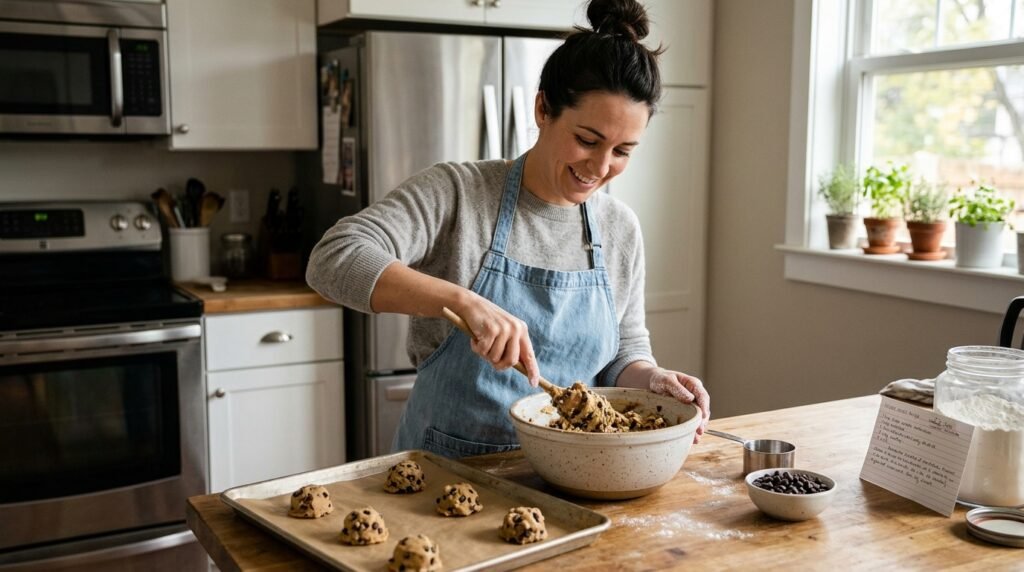
- Beat butter and both sugars on medium speed for 3 full minutes until pale and noticeably fluffy. The creaming step builds air into the dough — do not shorten it.
- Add eggs one at a time, beating well after each. Add vanilla.
- Add flour mixture on low speed until just combined. Fold in chocolate.
- Chill dough 30 minutes. Cold dough spreads more slowly and produces a thicker cookie.
- Preheat oven to 375°F. Scoop dough into 50g balls. Place 6 per parchment-lined sheet.
- Bake 10 to 12 minutes until edges are set and golden. Centers should look slightly underdone — they finish on the pan.
- Cool 5 minutes on the sheet before moving.
Recipe 2: Fudgy One-Bowl Chocolate Chip Cookies (The Easy One)
Prep time: 10 minutes | Cook time: 11 minutes | Total: 21 minutes | Makes: 16 cookies
Ingredients:
- 225g (1 cup) unsalted butter, melted and cooled
- 300g (1 1/2 cups packed) brown sugar
- 2 egg yolks
- 1 teaspoon vanilla extract
- 240g (1 3/4 cups plus 2 tbsp) all-purpose flour
- 1/2 teaspoon baking soda
- 3/4 teaspoon kosher salt
- 200g (1 1/3 cups) chopped dark chocolate
- Whisk melted butter and brown sugar together in a large bowl until smooth.
- Add egg yolks and vanilla. Whisk until combined — about 30 seconds.
- Add flour, baking soda, and salt directly to the bowl. Stir with a spatula until just combined. Fold in chocolate.
- No chilling required. The melted butter means the dough does not need to be cold to control spread — it is already denser than a creamed butter dough.
- Preheat oven to 350°F. Scoop into 45g balls. Bake 10 to 12 minutes.
- The result is fudgier and denser than the classic. More brownie than cookie at the center. That is the point.
Recipe 3: Brown Butter Sea Salt Chocolate Chip Cookies (The Considered One)
Prep time: 20 minutes | Chill time: 1 hour | Cook time: 11 minutes | Total: ~1 hour 35 minutes | Makes: 18 cookies
Ingredients:
- 225g (1 cup) unsalted butter
- 200g (1 cup packed) brown sugar
- 100g (1/2 cup) granulated sugar
- 1 large egg plus 1 egg yolk, room temperature
- 2 teaspoons vanilla extract
- 280g (2 1/4 cups) all-purpose flour
- 1 teaspoon baking soda
- 1 teaspoon kosher salt
- 250g (9 oz) dark chocolate, roughly chopped
- Flaky sea salt for topping
- Brown the butter. Melt in a light-colored saucepan over medium heat, swirling occasionally, until foam subsides and milk solids turn deep amber. Pour into a large bowl immediately. Cool 15 minutes until no longer warm to the touch.
- Whisk both sugars into cooled brown butter until smooth. Add egg, yolk, and vanilla. Whisk vigorously for 60 seconds until the mixture lightens slightly.
- Add flour, baking soda, and salt. Fold until just combined. Fold in chocolate.
- Chill 1 hour minimum. Browned butter dough is softer than standard dough and needs longer to firm.
- Preheat oven to 375°F. Scoop into 50g balls. Press a few extra chocolate pieces into the tops. Add a pinch of flaky salt to each.
- Bake 10 to 12 minutes. The edges will be set and golden. The centers will look underdone. Pull them there.
- Cool on the pan 8 minutes. The sea salt on top will have melted slightly into the surface.
Recipe 4: Thin and Crispy Chocolate Chip Cookies (The One for Dunking)
Prep time: 15 minutes | Cook time: 14 minutes | Total: 30 minutes | Makes: 24 cookies
Ingredients:
- 225g (1 cup) unsalted butter, room temperature
- 250g (1 1/4 cups) granulated sugar
- 50g (1/4 cup) brown sugar
- 1 large egg plus 1 egg white
- 1 teaspoon vanilla extract
- 240g (1 3/4 cups plus 2 tbsp) all-purpose flour
- 1/2 teaspoon baking soda
- 1 teaspoon kosher salt
- 170g (1 cup) chocolate chips
- Beat butter and both sugars for 4 full minutes — longer than the classic version. More air means more spread.
- Add egg, egg white, and vanilla. The extra white adds structure without richness, which keeps these cookies from becoming too thick.
- Add flour, baking soda, and salt. Mix until just combined. Fold in chips.
- No chilling. Room temperature dough spreads faster, which is the goal here.
- Preheat oven to 350°F. Scoop into 35g balls — smaller than the other recipes. Space them 3 inches apart. They will spread significantly.
- Bake 13 to 15 minutes until uniformly golden across the entire surface, not just the edges. Pull them when they look done — they will crisp fully as they cool.
- Cool completely on the pan before moving. They are fragile warm.
A Few Things Worth Knowing
Room temperature ingredients matter in the creamed butter recipes. Cold butter does not cream properly — it stays in chunks rather than incorporating air. Cold eggs can cause the batter to break. Set both out an hour before baking. If you forget, warm the eggs in a bowl of hot water for 5 minutes.
Pull cookies before they look done. Every recipe here should come out of the oven with centers that look slightly underbaked. Carryover heat and pan cooling finish the job. A cookie that looks done in the oven will be overbaked and dry by the time it is cool enough to eat.
This step is easy to skip. Don’t. Chilling the dough — in the recipes that call for it — is the difference between cookies that spread into thin, crispy pools and cookies that hold their shape and stay thick. Browned butter dough especially needs the full hour. Set a timer and do something else.
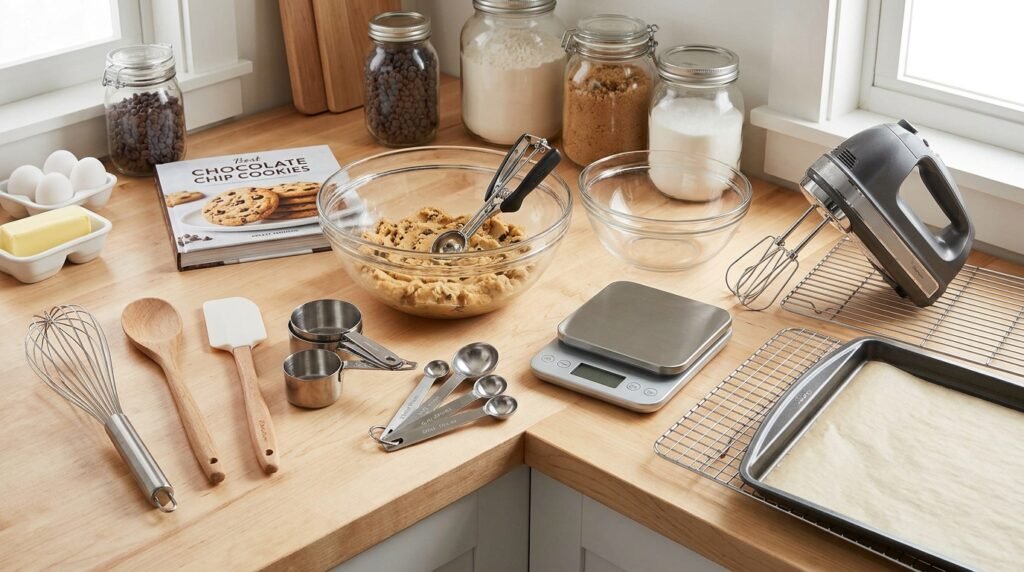
Weigh the flour. One cup of all-purpose flour measured by spooning into the cup versus scooping directly can vary by as much as 30 grams. That difference produces noticeably drier, denser cookies. A scale costs less than a bag of chocolate and solves the most common baking problem entirely.
The result is better the second day. Chocolate chip cookies peak in flavor at room temperature, 24 hours after baking, when the sugar has had time to settle and the chocolate to firm. Bake the night before if you can.
Store with a slice of bread in the container. The bread gives up its moisture to the cookies and keeps them soft for days longer than they would last otherwise. Replace the bread when it dries out.
How to Serve It
The classic version belongs at room temperature, eaten as-is. Nothing required.
The fudgy one-bowl cookie is the version to serve slightly warm — 20 seconds in the microwave and the chocolate center softens into something closer to ganache. A cold glass of whole milk alongside is the correct pairing.
The brown butter sea salt version is the one for a plate at a dinner party. Set them out simply on a board or white plate, nothing added. The flaky salt on top is presentation enough.
The thin and crispy version is built for dunking. Coffee, cold milk, or a glass of cold brew. The snap of the cookie against the liquid is the point.
For gifting: stack the brown butter or classic versions in a small box or jar with parchment between layers. They hold their shape and texture well for three days packaged.
Worth Noting Nutritionally
These are cookies. They contain butter, sugar, and chocolate in quantities that place them in the treat category. That framing is accurate and sufficient.
All four recipes can be made gluten-free using a 1:1 gluten-free flour blend. Bob’s Red Mill 1-to-1 performs consistently across all versions. The texture of the thin and crispy version changes most noticeably — it will be slightly more crumbly at the edges.
For dairy-free versions, a plant-based butter with high fat content — Miyoko’s or Kerrygold plant-based — works in all four. Use dairy-free chocolate. The brown butter version cannot be made dairy-free, as browning requires milk solids.
For reduced sugar, the classic and brown butter recipes tolerate a 15 to 20 percent reduction without significantly affecting texture. The thin and crispy version is more sensitive — sugar controls spread in that recipe and reducing it changes the result noticeably.
A Few Questions
Why did my cookies spread too much? The most common causes are butter that was too warm, dough that was not chilled when the recipe calls for it, or baking sheets that were still warm from a previous batch. Let pans cool completely between rounds. Chill the dough as directed. If the kitchen is very warm, refrigerate the dough between batches rather than leaving it on the counter.
Can I freeze the dough? All four doughs freeze well. Scoop into balls before freezing and store in a sealed bag for up to two months. Bake directly from frozen — add 2 to 3 minutes to the bake time and watch for the visual cues rather than relying on timing alone. Frozen dough is useful for single cookies baked on demand, which is its own kind of practical.
Why are my cookies cakey instead of chewy? Usually too much flour, too many whole eggs, or too much baking soda. Measure flour by weight. Swap one whole egg for an extra yolk. Reduce baking soda slightly. The fudgy one-bowl recipe is specifically engineered against cakeyness — if that texture has been a persistent problem, start there.
How long do baked cookies keep? At room temperature in an airtight container, three to four days for the classic, brown butter, and fudgy versions. The thin and crispy version keeps up to a week because lower moisture content means less to go stale. All four freeze well after baking — wrap individually and thaw at room temperature for an hour, or warm in a 300°F oven for 5 minutes.
Start with whichever recipe matches what you have in the kitchen tonight, and work through the rest before summer ends.