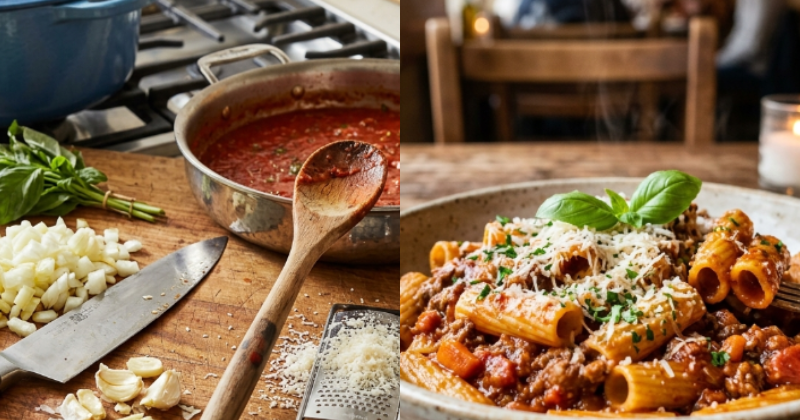
It starts with a hot pan and good olive oil. Most pasta worth eating does.
These 7 effortless sauce recipes pasta lovers can make in under 15 minutes are built on a simple premise: the best weeknight pasta does not require a long simmer or a complicated technique. It requires understanding what each ingredient does and giving it enough heat and time to do it well. Seven sauces, all distinct, all ready before the pasta finishes cooking. The pasta water does as much work as the sauce in several of these — which is the detail most home cooks learn late and wish they had known sooner.
What Makes It Worth Making
- Every sauce here is built from pantry staples. The shopping list is short or nonexistent on most weeknights.
- Pasta water is the hidden ingredient in six of the seven recipes. Reserve it before draining, every time.
- The active cooking time across all seven is genuinely under 15 minutes — not 15 minutes plus prep quietly omitted from the count.
- These sauce recipes scale without effort. Two servings or six, the method does not change.
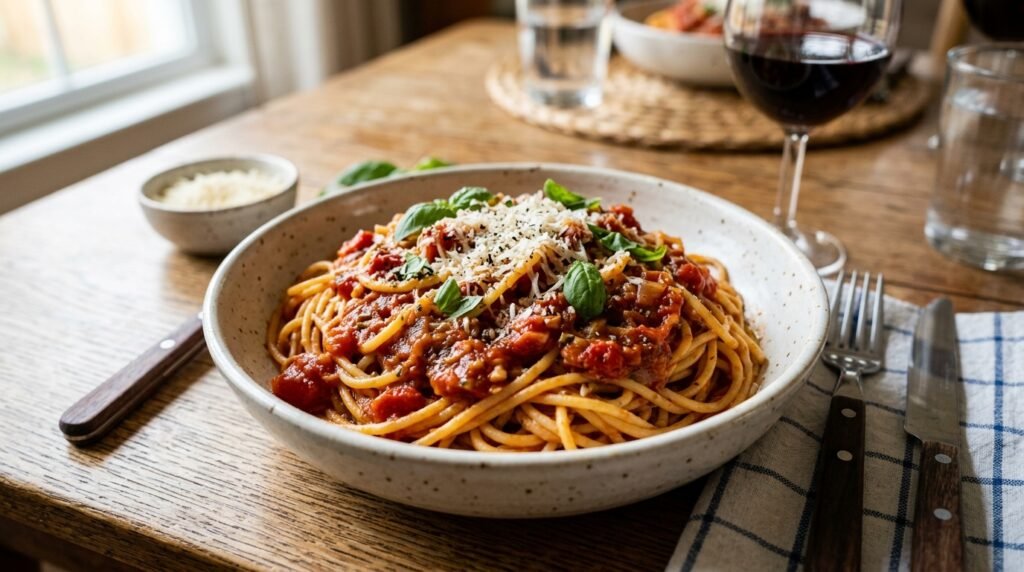
The Ingredients
The seven recipes share a core pantry. A few specialty items appear in individual sauces.
Olive oil: The foundation of almost every sauce here. Used both as cooking fat and as a finishing drizzle. They are not interchangeable — the cooking oil takes heat, the finishing oil provides flavor. Keep both in reach.
Garlic: The constant. Sliced thin for a sweeter, more mellow result. Minced for intensity. Grated for maximum distribution in a sauce. Know which cut the sauce needs before it hits the pan.
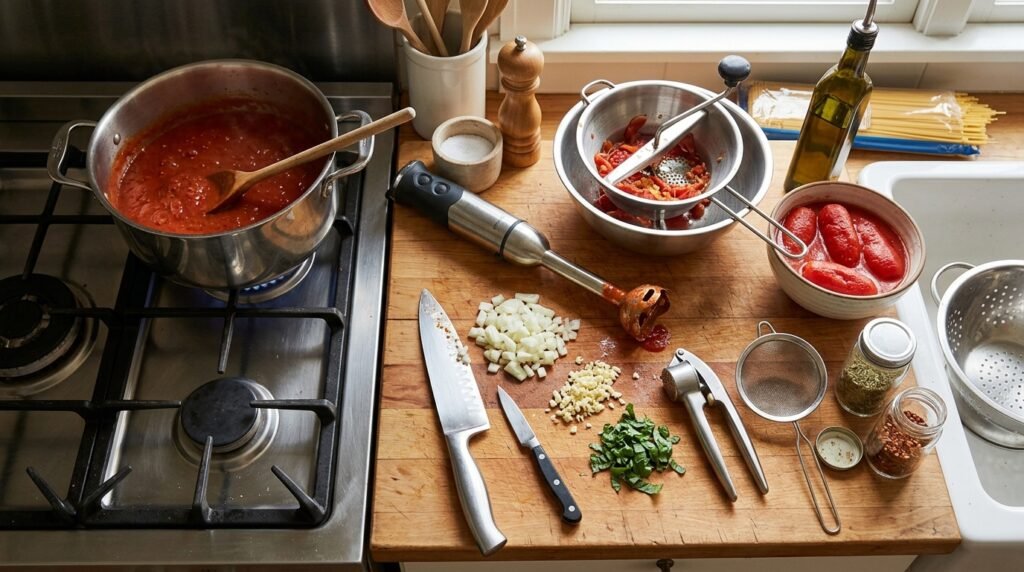
Canned whole tomatoes (28 oz): Crushed by hand before they go in. The texture is better than pre-crushed, and the liquid releases more slowly. San Marzano when available. Any good-quality brand otherwise.
Pasta cooking water: Reserved before draining, every time. The starch content emulsifies fat and acid into a cohesive sauce. A full cup is the minimum to have on hand.
Unsalted butter: Used in three recipes as a finishing fat. Added off heat, swirled in cold, it creates a glossy emulsification that olive oil alone does not. Salted butter works — reduce added salt accordingly.
Heavy cream: Used sparingly in the vodka and mushroom sauces. A quarter cup changes texture without making the dish feel heavy. Half-and-half substitutes at a slightly less rich result.
Parmesan (finely grated): Stirred into sauce off heat. Coarsely grated parmesan clumps. A Microplane or the fine side of a box grater produces the texture that melts smoothly.
Anchovies (oil-packed): Used in the puttanesca and the brown butter sage sauce. They dissolve completely in hot oil and leave only depth — no fishiness. Omit for vegetarian versions; add a teaspoon of capers for similar brine.
Capers: Brine and salt. Used in the puttanesca. Rinse briefly if they are very salty. Do not rinse if you want the full effect.
Kalamata olives: Added to puttanesca. Roughly chopped. Their oil and salt contribute to the sauce without additional seasoning needed.
Vodka (2 oz): Used in one sauce. It extracts flavor compounds from tomatoes that neither water nor oil can alone. The alcohol cooks off completely. Substitute with a splash of white wine or simply omit — the sauce is still good, just different.
Fresh sage: Used in the brown butter sage sauce. Fried briefly in butter until crisp. The heat transforms it from mildly bitter to nutty and aromatic.
Lemon (zest and juice): Used in the ricotta and the brown butter sauces. Zest for aroma, juice for acid. Both added off heat.
Whole milk ricotta: The base of one sauce — no cooking required. Thinned with pasta water to a pourable consistency. Stir in lemon zest and parmesan. Done.
Cremini mushrooms: Used in the mushroom cream sauce. Sliced and cooked without stirring for the first 3 minutes to achieve browning rather than steaming.
How to Make It
Sauce 1: Aglio e Olio (Garlic and Oil)
Prep time: 3 minutes | Cook time: 10 minutes | Total: 13 minutes | Serves: 4
Ingredients:
- 400g spaghetti
- 6 tablespoons good olive oil
- 6 garlic cloves, thinly sliced
- 1/2 teaspoon red pepper flakes
- 1/2 cup pasta cooking water
- Salt
- Flat-leaf parsley, finely chopped
- Parmesan to finish
- Cook pasta in heavily salted water. Reserve 1 full cup of cooking water before draining.
- While pasta cooks, warm olive oil in a wide skillet over medium-low. Add garlic. Cook slowly 4 to 5 minutes until pale gold. Watch it — the window between golden and bitter is 30 seconds.
- Add pepper flakes. Stir once. Add half the pasta water. Let it bubble 30 seconds.
- Add drained pasta directly to the skillet. Toss continuously, adding pasta water in small splashes until the sauce coats every strand and looks emulsified rather than oily.
- Off heat: add parsley and a final drizzle of raw olive oil. Parmesan at the table.
Sauce 2: Fast Tomato Sauce
Prep time: 3 minutes | Cook time: 12 minutes | Total: 15 minutes | Serves: 4
Ingredients:
- 400g rigatoni or penne
- 3 tablespoons olive oil
- 4 garlic cloves, thinly sliced
- 1 can (28 oz) whole tomatoes, crushed by hand
- 1/2 teaspoon red pepper flakes
- Salt and black pepper
- Fresh basil
- Parmesan to finish
- Cook pasta. Reserve pasta water.
- Warm olive oil over medium heat. Add garlic. Cook 2 minutes until fragrant and just beginning to color.
- Add tomatoes and pepper flakes. Season with salt. Simmer 10 minutes, stirring occasionally. The sauce will thicken and deepen in color.
- Taste. Adjust salt. Add a splash of pasta water if it looks tight.
- Add drained pasta. Toss 1 minute over medium heat. Finish with torn basil and parmesan.
Sauce 3: Vodka Sauce
Prep time: 3 minutes | Cook time: 14 minutes | Total: 17 minutes | Serves: 4
Ingredients:
- 400g rigatoni
- 3 tablespoons olive oil
- 4 garlic cloves, minced
- 1/4 teaspoon red pepper flakes
- 2 oz vodka
- 1 can (28 oz) whole tomatoes, crushed by hand
- 1/4 cup heavy cream
- Salt
- Parmesan to finish
- Cook pasta. Reserve water.
- Warm olive oil over medium heat. Add garlic and pepper flakes. Cook 1 minute.
- Add vodka. It will bubble immediately. Cook 1 minute until mostly evaporated.
- Add tomatoes. Season with salt. Simmer 10 minutes.
- Stir in cream. Simmer 2 minutes until the sauce turns from red to a pale coral. Taste for salt.
- Add pasta and toss, adding pasta water as needed. Finish with parmesan.
Sauce 4: Puttanesca
Prep time: 5 minutes | Cook time: 12 minutes | Total: 17 minutes | Serves: 4
Ingredients:
- 400g spaghetti or linguine
- 3 tablespoons olive oil
- 4 garlic cloves, sliced
- 4 oil-packed anchovy fillets
- 1/2 teaspoon red pepper flakes
- 1 can (28 oz) whole tomatoes, crushed by hand
- 1/3 cup kalamata olives, roughly chopped
- 2 tablespoons capers, rinsed
- Fresh parsley to finish
- Cook pasta. Reserve water.
- Warm olive oil over medium heat. Add garlic and anchovies. Stir until anchovies dissolve into the oil — about 2 minutes. This is the base of the sauce’s depth.
- Add pepper flakes, then tomatoes. Season lightly — the anchovies, olives, and capers carry significant salt already.
- Simmer 8 minutes. Add olives and capers. Simmer 2 minutes more.
- Add pasta. Toss. Adjust with pasta water if needed. Finish with parsley. No parmesan — the sauce does not need it and the combination is traditionally avoided.
Sauce 5: Lemon Ricotta Pasta
Prep time: 5 minutes | Cook time: 10 minutes | Total: 15 minutes | Serves: 4
Ingredients:
- 400g spaghetti or linguine
- 1 cup whole milk ricotta
- Zest of 2 lemons
- 2 tablespoons fresh lemon juice
- 1/2 cup parmesan, finely grated
- Salt and black pepper
- 1/2 cup pasta cooking water
- Fresh basil or parsley
- Extra olive oil to finish
- Cook pasta. Reserve a full cup of cooking water.
- While pasta cooks, combine ricotta, lemon zest, lemon juice, parmesan, salt, and pepper in a large bowl. Stir until smooth.
- Add 1/4 cup pasta water to the ricotta mixture. Stir — it will loosen to a pourable, creamy consistency.
- Drain pasta and add immediately to the bowl with the ricotta. Toss quickly, adding more pasta water in small amounts until the sauce coats every strand.
- No heat required after the pasta goes in. The warmth of the pasta cooks the sauce gently without curdling the ricotta.
- Finish with fresh herbs and a drizzle of olive oil.
Sauce 6: Brown Butter and Sage
Prep time: 3 minutes | Cook time: 10 minutes | Total: 13 minutes | Serves: 4
Ingredients:
- 400g pappardelle or tagliatelle
- 6 tablespoons unsalted butter
- 12 fresh sage leaves
- 2 garlic cloves, thinly sliced
- Salt and black pepper
- 1/4 cup pasta cooking water
- Parmesan and lemon zest to finish
- Cook pasta. Reserve water.
- Melt butter in a wide skillet over medium heat. Add sage leaves. Cook, swirling occasionally, until butter turns amber and smells nutty and the sage leaves are crisp — about 4 to 5 minutes total. Watch closely.
- Add garlic immediately. Cook 30 seconds.
- Add a splash of pasta water — it will bubble and help emulsify the brown butter into a sauce rather than a pure fat.
- Add drained pasta. Toss to coat. Season with salt and pepper.
- Plate and finish with lemon zest and parmesan. The crispy sage leaves are the garnish and the point.
Sauce 7: Mushroom Cream Sauce
Prep time: 5 minutes | Cook time: 13 minutes | Total: 18 minutes | Serves: 4
Ingredients:
- 400g tagliatelle or fettuccine
- 3 tablespoons butter
- 250g cremini mushrooms, sliced
- 2 shallots, finely diced
- 3 garlic cloves, minced
- 1/2 cup dry white wine
- 1/4 cup heavy cream
- Salt and black pepper
- Fresh parsley and parmesan to finish
- Cook pasta. Reserve water.
- Melt butter in a wide skillet over medium-high. Add mushrooms in a single layer. Do not stir for 3 full minutes. Browning requires contact time and no steam. A crowded pan produces neither.
- Stir and cook 2 minutes more until golden. Season. Push mushrooms to the side.
- Add shallots to the empty side of the pan. Cook 2 minutes. Add garlic. Cook 1 minute.
- Add wine. Scrape up every brown bit from the pan floor — that layer is the sauce’s backbone. Simmer 2 minutes.
- Add cream. Simmer 2 minutes until slightly thickened.
- Add pasta. Toss, adding pasta water as needed. Finish with parsley and parmesan.
A Few Things Worth Knowing
Reserve pasta water before anything else. The moment to remember is before you drain — not after. One cup minimum. Two if the recipe is new and you are uncertain how much the sauce will need. The starch content of that water is what turns a collection of ingredients into a cohesive sauce.
This step is easy to skip. Don’t. Salting the pasta water until it tastes like mild seawater is the only opportunity to season the pasta itself. A well-seasoned sauce on under-seasoned pasta produces a flat result. Salt the water before it boils, not after.
Cook pasta one minute less than the package says. It will finish cooking in the sauce. Pasta added to a hot pan with sauce and a splash of pasta water continues to absorb both. Pulling it early gives you control over the final texture.
Brown butter moves fast. Four minutes of patient swirling and then 30 seconds of inattention can cross from perfect to burnt. Stay at the stove. Have the sage leaves ready. Pull the pan the moment the smell shifts from butter to toasted nuts.
The lemon ricotta sauce requires no heat after the pasta is added. Adding it back to the stove risks curdling the ricotta. Toss in the bowl, add pasta water to loosen, and serve immediately.
The result of puttanesca is better the next day. The flavors from the anchovies, olives, and capers settle and integrate overnight. Make extra sauce and refrigerate it — reheat gently with a splash of water and toss with fresh pasta.
How to Serve It
Aglio e olio belongs in a warm bowl, eaten immediately, with nothing alongside. It does not wait and does not need company.
The fast tomato sauce and vodka sauce pair with a simple green salad and good bread. A glass of Chianti or any medium-bodied Italian red sits beside both without competing.
Puttanesca is a full meal on its own. The olives, capers, and anchovies make a side dish redundant. A glass of something cold and slightly acidic — a dry white or sparkling water with lemon — cuts through the brine.
The lemon ricotta pasta is the lightest of the seven. Serve it in warmer weather with nothing alongside, or with grilled vegetables if the table needs more.
Brown butter and sage deserves a wider bowl and a generous hand with the parmesan. A glass of white Burgundy or any good unoaked Chardonnay is the right pairing.
The mushroom cream sauce is the richest of the seven. Serve in smaller portions with a sharp arugula salad alongside to balance the weight of the cream.
For presentation across all seven: warm the bowls before serving. Cold bowls cool the sauce immediately and the texture suffers before the first bite.
Worth Noting Nutritionally
These sauce recipes pasta lovers reach for regularly are olive oil and vegetable-forward for the most part. The aglio e olio, tomato, puttanesca, and lemon ricotta versions are relatively light — the primary fat is olive oil in moderate quantities, and the pasta provides the bulk of the calories per serving.
The cream-based sauces — vodka, mushroom cream — are higher in saturated fat. Reducing cream by half and substituting pasta water produces a lighter result that retains most of the texture at a lower fat content.
All seven recipes are vegetarian-adaptable: the anchovies in puttanesca and brown butter sage can be omitted and replaced with a tablespoon of capers or a teaspoon of miso for similar depth.
For gluten-free versions, any of the seven sauces works with a good gluten-free pasta. The sauce itself in each recipe contains no gluten. Cook the pasta slightly less than the package suggests — gluten-free pasta overcooks quickly and becomes gummy in the final toss.
For dairy-free versions, the aglio e olio, tomato, and puttanesca recipes are already dairy-free as written. The lemon ricotta sauce substitutes well with a cashew ricotta. The cream in the vodka and mushroom sauces can be replaced with full-fat oat cream — the texture is comparable at a slight sacrifice of richness.
A Few Questions
Can I make these sauces ahead of time? The tomato, vodka, puttanesca, and mushroom cream sauces all keep well in the refrigerator for up to four days and reheat easily in a skillet over medium-low heat with a splash of water. The aglio e olio and brown butter sage are best made fresh — both are built on fat that separates when refrigerated and does not return to the right consistency when reheated. The lemon ricotta sauce does not store well; make it to order.
What pasta shape works best with each sauce? Long, thin pasta — spaghetti, linguine — suits the aglio e olio, tomato, and puttanesca, where the sauce coats rather than clings. Tubes and ridged shapes like rigatoni and penne catch the chunkier vodka and fast tomato sauces. Wider ribbons — tagliatelle, pappardelle, fettuccine — work best with the cream-based sauces and brown butter, where the sauce needs surface area to cling to. These are not rules, but they produce the best results.
My sauce tastes flat. What is wrong? Usually one of three things: under-seasoned pasta water, not enough acid, or the sauce was not tasted before serving. Add a squeeze of lemon juice or a splash of white wine vinegar to any savory pasta sauce and taste again — acid is frequently what is missing when a dish tastes complete but not quite right. Salt added at the end also helps, but acid is the more likely solution.
How much pasta water should I actually save? More than you think you will use. A full cup is the minimum. Two cups is better for dishes like aglio e olio, where the water is building the sauce. The water cools quickly once removed from the pot — use it within a few minutes of reserving it, while it is still hot enough to emulsify fats and loosen the sauce effectively.
Make one tonight, keep the pasta water, and the rest follows naturally.