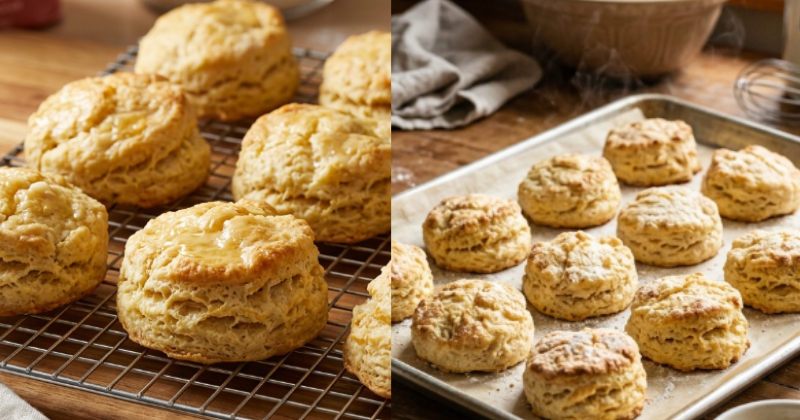
Some recipes earn their place through complexity. This one earns it through simplicity. The easy biscuit recipe most home bakers never learn is not complicated — it just requires knowing what not to do.
Prep time: 10 minutes | Cook time: 12–15 minutes | Total time: 25–30 minutes | Servings: 10–12 biscuits
What Makes It Worth Making
- The cold butter is the whole point. Everything else supports it.
- No yeast, no waiting. The biscuits are done before most breads have proofed.
- Three pantry staples do real work here. Nothing is decorative.
- The layers happen naturally, if you let them.
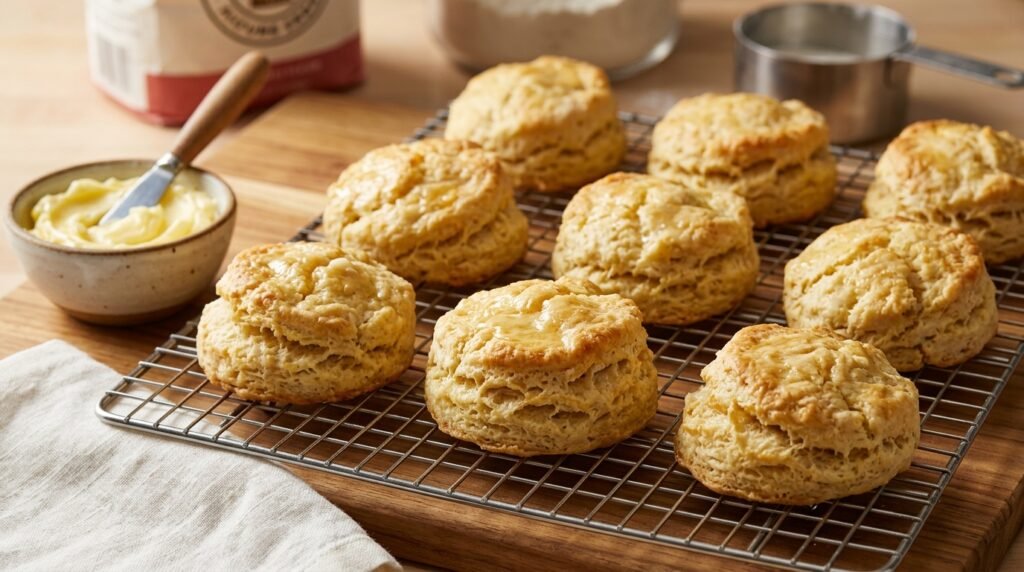
The Ingredients
All-purpose flour — 2 cups Structure. Spoon it into the measuring cup rather than scooping. The difference is a lighter biscuit.
Baking powder — 1 tablespoon The lift. Use aluminum-free if you have it — the flavor is cleaner.
Salt — 1 teaspoon Not optional. Unsalted biscuits taste flat in a way you notice immediately.
Sugar — 1 teaspoon Not for sweetness exactly. It helps browning and rounds the edges of the flavor.
Cold unsalted butter — 8 tablespoons (1 stick) This is the secret. It has to be cold — frozen is fine, even better. Cold butter releases steam as it bakes, and that steam creates the layers. Room-temperature butter creates a crumbly, dense result. Do not soften it.
Whole buttermilk — ¾ cup Acidity activates the baking powder and adds a quiet tang. No buttermilk: add one tablespoon of white vinegar to regular milk, let it sit two minutes, use as directed.
Substitution note: plant-based butter works. Use full-fat oat milk with vinegar for a dairy-free version. The texture is slightly less flaky, but still good.

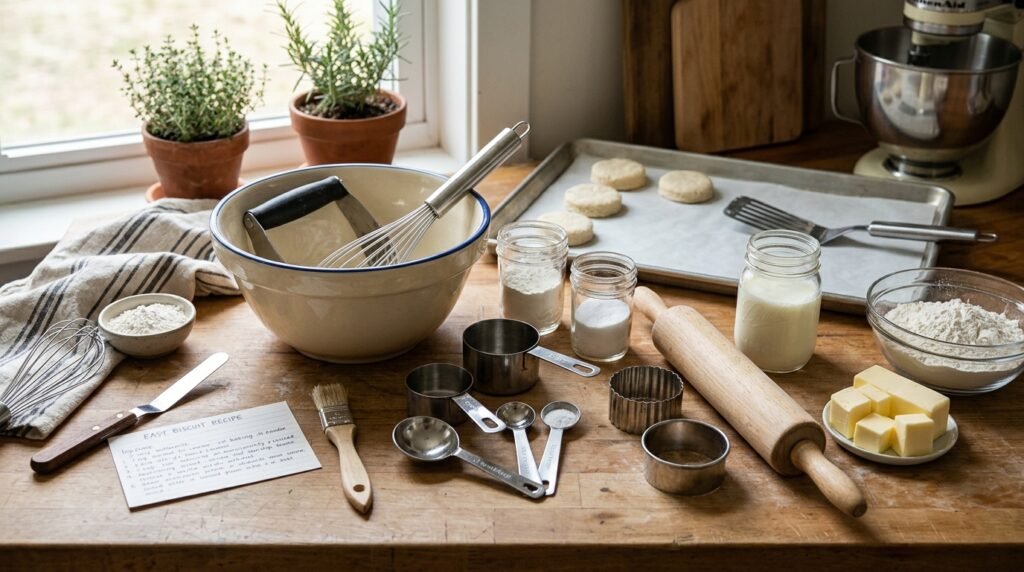
How to Make It
- Heat the oven to 450°F. Place a rack in the upper third. Line a baking sheet with parchment.
- Whisk together the flour, baking powder, salt, and sugar in a large bowl.
- Grate the frozen butter directly into the flour using a box grater. Work quickly. Toss the butter shreds into the flour with your fingers until they’re lightly coated. The mixture should look shaggy and uneven — that is correct.
- Pour in the cold buttermilk all at once. Stir with a fork just until the dough comes together. Stop before it looks smooth. Overworking is the most common mistake in easy biscuits recipes, and it produces a tough result.
- Turn the dough out onto a lightly floured surface. Pat it into a rectangle about ¾-inch thick. Fold it in thirds like a letter. Rotate, pat flat again, fold again. Do this once more — three folds total. This is what builds the layers.
- Pat the dough to ¾ inch thick. Cut with a floured 2½-inch round cutter. Press straight down without twisting. Twisting seals the edges and the biscuits won’t rise cleanly.
- Arrange biscuits on the prepared sheet so they are just touching. This helps them rise upward rather than spreading out.
- Brush the tops with buttermilk or melted butter.
- Bake 12–15 minutes until the tops are deep golden and the sides have set. Rotate the pan once at the halfway mark.
- Cool for five minutes on the pan. Serve warm.
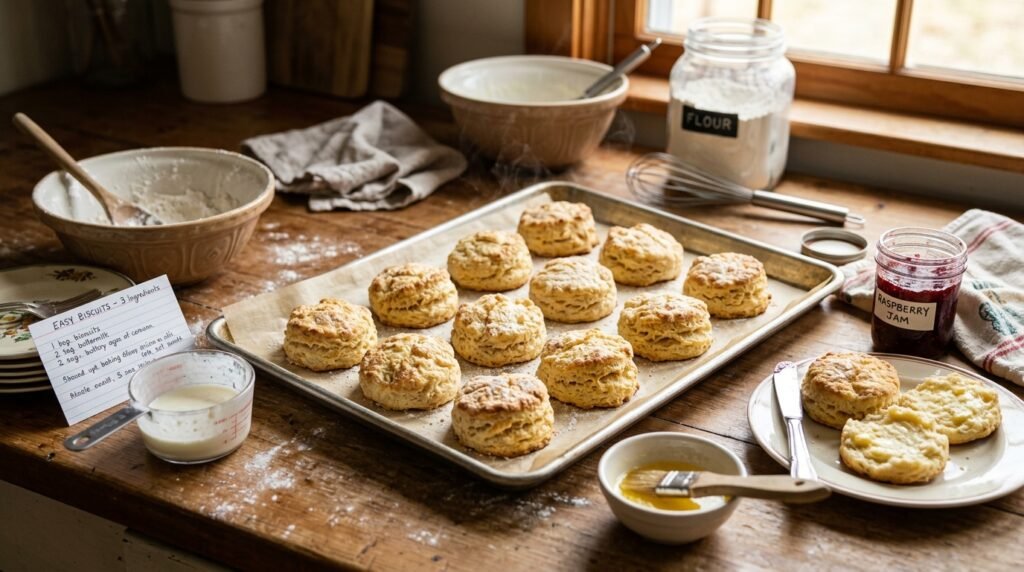
A Few Things Worth Knowing
The butter temperature is not a suggestion. If the butter softens before the biscuits go into the oven, the whole recipe changes. Work fast and keep everything cold. On warm days, chill the mixing bowl too.
Don’t skip the folding. It seems fussy. It isn’t. Those three letter-folds are what produce the pull-apart layers that make a biscuit worth eating. Skipping them gives you a puck.
Cutting without twisting is a technique, not a preference. A twisted cutter compresses the layers at the edge and the biscuit rises unevenly or not at all. Straight down, lift clean.
The scraps are usable but different. Gather them gently, pat once, and cut again. The second-round biscuits will be slightly less layered. Still good. Just know what you’re getting.
They are better the day they are made. Store leftovers in an airtight container at room temperature. Reheat in a 350°F oven for five minutes. Do not microwave them — the texture suffers.
This recipe scales up without adjustment. Double or triple it and the method holds. Useful to know before a crowd arrives.
How to Serve It
Split and spread with salted butter while still warm. That is the baseline.
Beyond that: serve alongside a bowl of soup, under a pile of sausage gravy, or as the base of a breakfast sandwich with a fried egg and sharp cheddar.
They work as a dinner roll alongside roasted chicken or braised greens. The slight tang from the buttermilk plays well with rich, fatty dishes.
To serve as a dessert: split, add sliced strawberries and a spoonful of lightly sweetened cream. Nothing else required.
If you are pairing a beverage: hot coffee for breakfast, a light sparkling wine for something more composed.
Worth Noting Nutritionally
Each biscuit contains approximately 160–180 calories, depending on size. They provide carbohydrates for energy and a moderate amount of fat from the butter.
To reduce saturated fat, substitute half the butter with cold coconut oil. The layers are less distinct but the result is still tender.
For a lower-sodium version, reduce the salt to half a teaspoon and use unsalted butter. The flavor is milder.
Gluten-free flour blends work reasonably well here. Use a blend with xanthan gum already included and add one extra tablespoon of buttermilk to compensate for absorbency.
These biscuits do not contain eggs, making them adaptable for egg-free diets with minimal adjustment.
A Few Questions
Can I make the dough ahead of time? Yes. Cut the biscuits, place them on a parchment-lined sheet, and freeze until solid — about an hour. Transfer to a zip bag and store frozen up to one month. Bake from frozen at 450°F, adding three to four minutes to the bake time. Do not thaw first; the butter needs to stay cold going into the oven.
Why are my biscuits not rising? The most common cause is old baking powder. Test it by dropping a teaspoon into hot water — it should bubble immediately and vigorously. If it doesn’t, replace it. The second cause is overworked dough. The third is butter that was too warm when it went into the oven.
Can I use salted butter? You can, but reduce the added salt by half. The flavor is slightly less controlled, but it works. The bigger factor is still temperature — salted or not, the butter must be cold.
What flour works best? Standard all-purpose flour produces the most reliable result in this easy biscuits recipe. Lower-protein flours like cake flour produce a more tender crumb with less structure. Some bakers prefer a blend — half all-purpose, half cake flour. It’s a valid approach if you want something that pulls apart more gently.
Make them once and you’ll understand why this is the easy biscuits recipe experienced bakers return to. The method is simple. The result is not average.