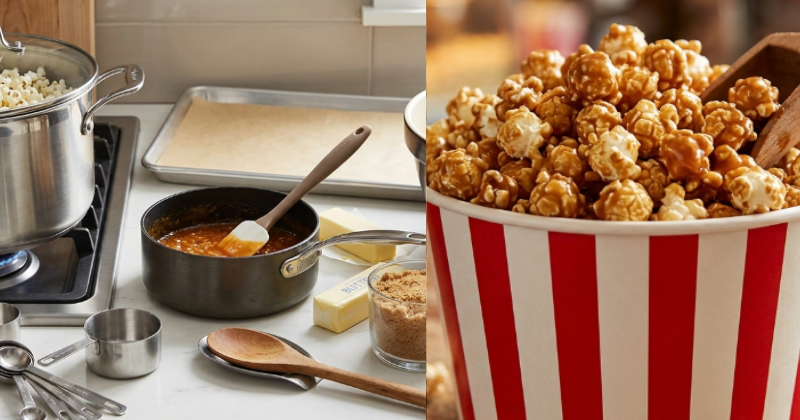
Caramel and popcorn have been together long enough that the pairing barely needs explaining. What does need explaining is why most versions fall short — and how a few deliberate choices fix that.
These popcorn recipes caramel treats are the kind of thing you make on a slow summer afternoon and finish before the evening is over. The method is straightforward. The result is better than anything that comes in a bag.
Prep time: 10 minutes | Cook time: 20 minutes | Total time: 30 minutes | Servings: 8–10
What Makes It Worth Making
- The caramel sets to a crisp shell, not a sticky mess.
- It keeps well for days sealed in a tin — if it lasts that long.
- The ratio of salt to sweet is the difference between good and genuinely hard to stop eating.
- No candy thermometer required. Visual cues are enough.
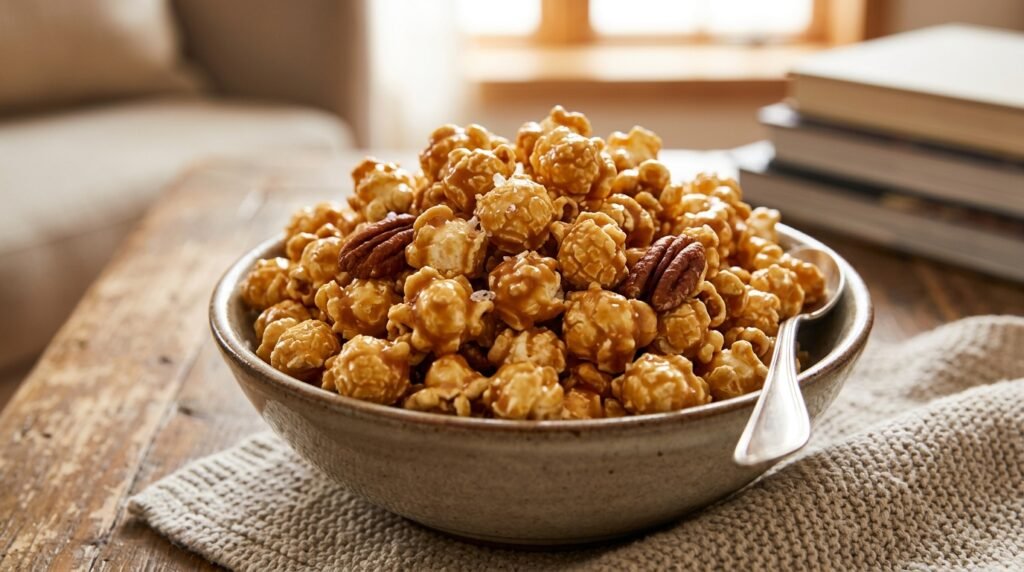
The Ingredients
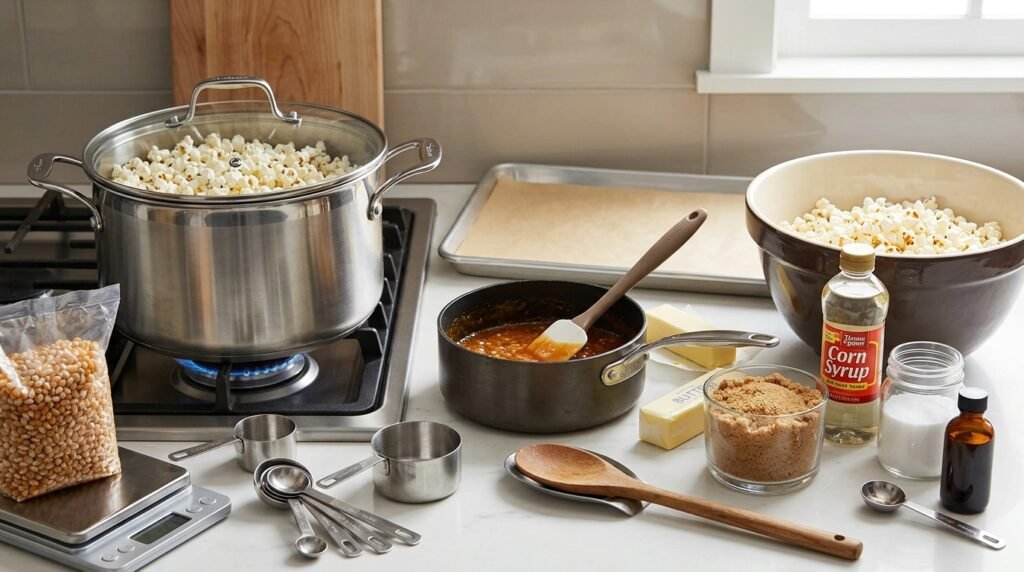
Plain popcorn — 10 cups (popped) The base. Pop it fresh from kernels on the stovetop or use plain air-popped corn. Avoid pre-seasoned or buttered varieties — they interfere with how the caramel adheres and can make the final texture greasy.
Yield note: approximately ½ cup unpopped kernels produces 10 cups popped.
Unsalted butter — ½ cup (1 stick) Fat and richness. Unsalted gives you control over the final salt level. The butter browns slightly as the caramel cooks, which adds depth.
Light brown sugar — 1 cup, packed The caramel foundation. Light brown sugar produces a clean, warm caramel flavor. Dark brown sugar works and adds a more molasses-forward note — worth trying if you prefer a deeper result.
Light corn syrup — ¼ cup Prevents crystallization. Without it, the caramel can turn grainy as it cools. There is no perfect substitute, but golden syrup comes close and adds a mild honey flavor.
Salt — 1 teaspoon Not a finishing touch. Salt goes into the caramel itself, distributing through every kernel. This is what separates caramel corn from candy corn.
Baking soda — ½ teaspoon Added at the end, off the heat. It reacts with the hot caramel to create tiny bubbles, making the coating lighter and crispier when it sets. Do not skip it.
Vanilla extract — 1 teaspoon Optional, but it rounds the flavor. Add it at the same time as the baking soda.
Variation: add ½ teaspoon of smoked paprika or cayenne for a sweet-heat version. It works particularly well as a late-summer snack.
How to Make It
- Preheat the oven to 250°F. Line two large rimmed baking sheets with parchment or a silicone mat. Place the popped popcorn in a very large bowl — bigger than you think you need.
- In a medium heavy-bottomed saucepan, melt the butter over medium heat. Add the brown sugar, corn syrup, and salt. Stir to combine.
- Bring the mixture to a boil, stirring constantly. Once it reaches a full boil, stop stirring. Let it boil undisturbed for exactly 4 minutes. The caramel will deepen in color slightly and smell toasty.
- Remove from the heat. Working quickly, add the baking soda and vanilla. Stir — the mixture will foam and expand. This is correct. Stir just until combined, about 15 seconds.
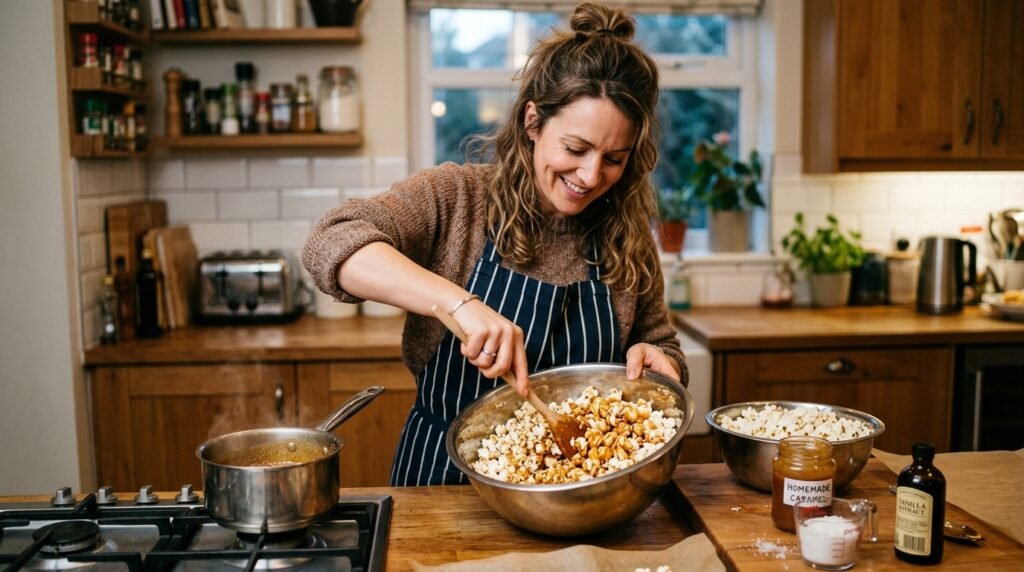
- Pour the caramel over the popcorn immediately. Use a large rubber spatula to fold and coat, working from the bottom of the bowl upward. The caramel begins to set as it cools, so move with purpose but not panic.
- Spread the coated popcorn onto the prepared baking sheets in as even a layer as possible.
- Bake for 45 minutes, stirring every 15 minutes. The caramel will look glossy and soft coming out — it crisps as it cools.
- Remove from the oven. Spread onto clean parchment to cool completely, about 20–30 minutes. Break apart any large clusters once cooled.
- Store in an airtight container at room temperature.
A Few Things Worth Knowing
The baking step is not optional. Pouring caramel over popcorn and letting it cool without baking produces a sticky, uneven result. The low oven dries the caramel evenly and produces the crisp shell that makes these popcorn caramel treats worth eating.
Stirring the pan every 15 minutes matters. The pieces on the edges of the pan cook faster. Moving them toward the center keeps everything uniform. This step is easy to skip. Don’t.
Let it cool fully before tasting for texture. The caramel coating looks done before it is. Give it the full 20–30 minutes on the parchment. What feels soft at five minutes will be properly crisp at twenty-five.
Humidity is the enemy of caramel corn. On a hot, muggy summer day, the coating may absorb moisture from the air and soften. Store in a well-sealed tin rather than loosely covered. This is worth knowing before you make a batch for an outdoor event.
Burned caramel is bitter, not salvageable. If the caramel darkens beyond a deep amber or begins to smell acrid, start over. The line between deep caramel and burned caramel is about thirty seconds. Stay close to the pan.
The bowl size affects the coating. A bowl that is too small makes it impossible to fold the caramel evenly through the popcorn. Use the largest bowl you own — this is one of the few cases where equipment size genuinely changes the outcome.
How to Serve It
Serve in a large bowl at the center of a table and let people take from it. That is the right approach.
For a more composed presentation, portion into paper cones or small kraft bags — useful for outdoor gatherings or anything that calls for individual servings.
These popcorn recipes caramel treats pair well alongside other summer snacks: thin-sliced cured meats, sharp aged cheese, fresh stone fruit. The contrast of sweet and savory is worth exploring.
For a dessert table, serve next to dark chocolate bark or salted shortbread. The textures complement each other.
Beverage pairing: cold brew coffee, sparkling water with citrus, or a light amber ale. All work. All cut through the sweetness cleanly.
Worth Noting Nutritionally
A standard serving of roughly one cup contains approximately 200–230 calories, with the majority coming from carbohydrates and fat. The caramel contributes significant added sugar — this is a treat, and the nutritional profile reflects that plainly.
For a dairy-free version, substitute refined coconut oil for the butter. The caramel flavor is slightly less rich but the method holds.
To reduce sugar, cut the brown sugar to ¾ cup. The caramel will be thinner and less sweet, but still functional. The crisp set may be less pronounced.
There is no straightforward low-sugar substitution that produces the same caramel result — sugar is structural here, not just flavor.
For those avoiding corn syrup, golden syrup is the closest functional substitute. Honey can work but may burn more easily at the same temperature.
A Few Questions
How long does caramel popcorn keep? Stored in an airtight container at room temperature, it holds well for up to two weeks. The texture is best in the first three to four days. After that it remains good but may soften slightly, especially in humid conditions. Do not refrigerate — the moisture will make it sticky faster than leaving it at room temperature.
Can I make it without an oven? Technically yes, but the result is different. Without baking, the caramel coating stays tacky rather than crisping into a shell. Some people prefer that texture — it is chewier and more candy-like. If that is the goal, pour the caramel over the popcorn, stir to coat, and let it cool on parchment at room temperature without any oven time.
What kind of popcorn works best? Plain stovetop-popped kernels are the most reliable base for caramel popcorn recipes. They are dry, unflavored, and hold the coating without competing with it. Air-popped corn works equally well. Microwave popcorn — even the plain varieties — often contains added oils and flavoring agents that affect how the caramel adheres and how the finished snack tastes.
Can I add mix-ins? Yes. Toasted nuts are the most common addition — pecans and peanuts are both traditional. Add them to the bowl with the popcorn before pouring the caramel so they get coated along with everything else. Chocolate drizzle works too, but add it after the popcorn has fully cooled and set, not before.
Before summer closes out, these popcorn recipes caramel treats are worth an afternoon of your time — and they will not last long once made.