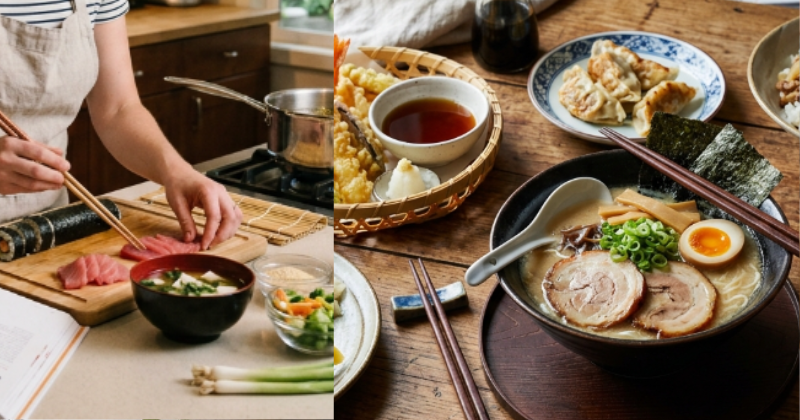
Japanese cooking rewards patience and precision. It also rewards simplicity — most of these dishes are built on a handful of pantry staples handled correctly, which is why they taste better at home than you expect them to. These 11 foolproof Japanese recipes cover the range: weeknight dinners, slow weekend projects, things that come together in twenty minutes and things that improve overnight. All of them are worth knowing.
What Makes It Worth Making
- Japanese home cooking is built on a short list of foundational ingredients — soy sauce, mirin, sake, dashi — that combine into something greater than their parts every time.
- Most of these recipes are faster than takeout once you’ve made them once and know where you’re going.
- The balance of salt, sweet, and umami in Japanese cooking is calibrated in a way that makes the food feel complete without effort.
- These are dishes that keep well, scale easily, and improve the longer they sit — which makes them among the most practical things you can learn to cook.
The Ingredients
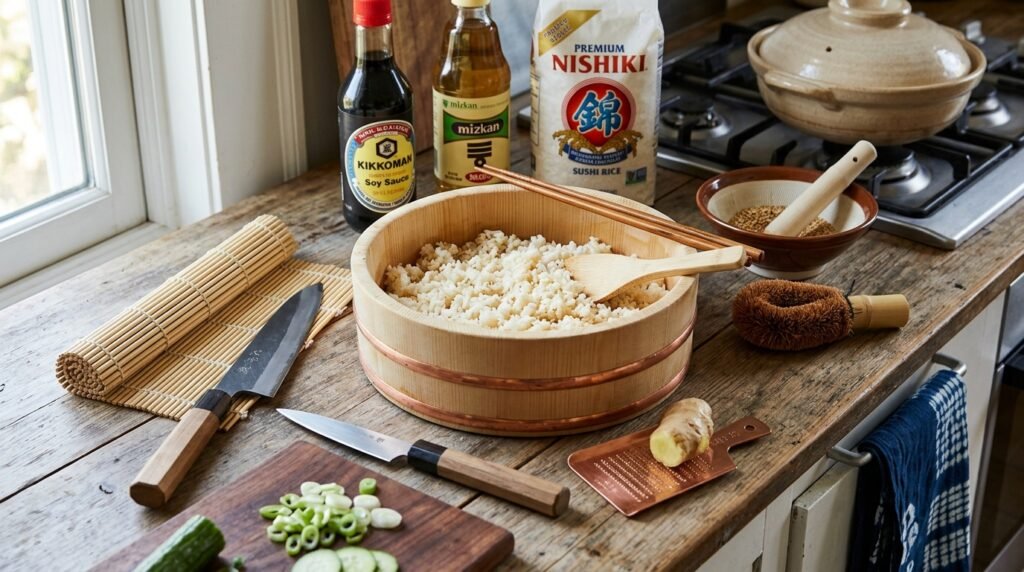
Before the recipes: the pantry. Stock these once and most Japanese recipes open up to you.
Soy sauce: The backbone. Use Japanese soy sauce (Kikkoman is widely available and reliable). Light soy sauce for delicate dishes; regular for everything else.
Mirin: Sweet rice wine used in cooking. It adds gloss and a mild sweetness that sugar alone doesn’t replicate. Substitute: dry sherry plus a small amount of sugar, though the result is slightly less complex.
Sake: Cooking sake works fine. It tenderizes proteins and lifts flavor. Substitute: dry white wine in a pinch.
Dashi: The foundational Japanese stock, made from kombu (dried kelp) and katsuobushi (bonito flakes). Instant dashi powder (hondashi) is an honest shortcut and what many Japanese home cooks use.
Sesame oil: Used as a finishing oil, not for cooking. A few drops at the end of a dish changes it.
Rice vinegar: Milder than other vinegars. Essential for sushi rice and dressings.
Short-grain Japanese rice: Non-negotiable for most of these dishes. The starch content is different and the texture is the point.
Togarashi and shichimi: Spice blends used as table condiments. Optional but worth having.
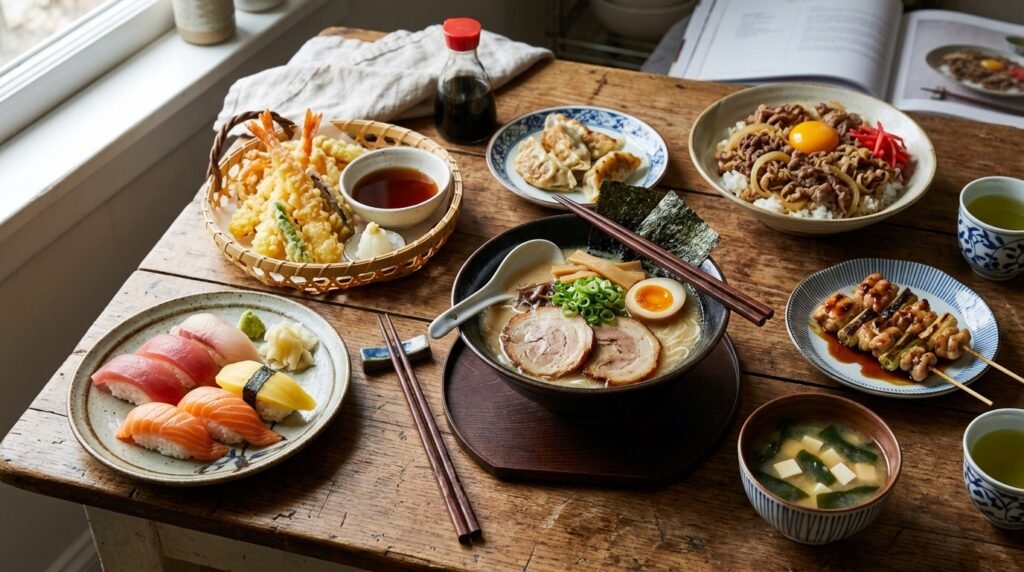
The 11 Recipes: How to Make Them
1. Chicken Teriyaki
Prep: 10 min | Cook: 15 min | Serves: 4
Ingredients:
- 4 bone-in, skin-on chicken thighs
- 3 tbsp soy sauce
- 3 tbsp mirin
- 2 tbsp sake
- 1 tbsp sugar
- 1 tsp sesame oil
- Mix soy sauce, mirin, sake, and sugar in a small bowl. Set aside.
- Place chicken thighs skin-side down in a cold skillet. Turn heat to medium. Cook 8–10 minutes until the skin is deep brown and releases easily.
- Flip. Cook 5 minutes more.
- Pour off excess fat. Add sauce to the pan. It will bubble immediately.
- Reduce heat to low. Turn chicken several times as the sauce thickens and coats — about 3 minutes. Finish with sesame oil.
2. Gyudon (Beef Rice Bowl)
Prep: 10 min | Cook: 15 min | Serves: 4
Ingredients:
- 1 lb thinly sliced beef (ribeye or chuck roll)
- 1 large onion, thinly sliced
- 1 cup dashi
- 3 tbsp soy sauce
- 3 tbsp mirin
- 1 tbsp sake
- 1 tsp sugar
- Steamed rice, for serving
- Pickled ginger, to garnish
- Combine dashi, soy sauce, mirin, sake, and sugar in a wide pan. Bring to a simmer.
- Add onion. Cook 5 minutes until softened and translucent.
- Add beef in a single layer. It cooks quickly — 2 minutes, turning once.
- Serve over rice. Add pickled ginger at the table.
3. Miso Soup
Prep: 5 min | Cook: 10 min | Serves: 4
Ingredients:
- 4 cups dashi
- 3 tbsp white or red miso paste
- 1 cup silken tofu, cubed
- 2 tbsp dried wakame seaweed, rehydrated
- 2 green onions, sliced
- Bring dashi to a gentle simmer. Do not boil.
- Place miso in a small bowl. Ladle a spoonful of hot dashi over it and whisk to dissolve before adding to the pot. This prevents clumping.
- Add tofu and wakame. Heat through — about 2 minutes.
- Serve immediately, topped with green onions. Miso soup does not reheat well; make what you’ll use.
4. Katsu (Crispy Breaded Pork Cutlet)
Prep: 15 min | Cook: 12 min | Serves: 4
Ingredients:
- 4 pork loin chops, pounded to 1/2-inch thickness
- Salt and pepper
- 1/2 cup flour
- 2 eggs, beaten
- 1.5 cups panko breadcrumbs
- Neutral oil, for frying
- Tonkatsu sauce and shredded cabbage, for serving
- Season pork with salt and pepper. Set up three shallow bowls: flour, egg, panko.
- Coat each piece in flour (shake off excess), then egg, then press firmly into panko.
- Heat 1/2 inch of oil in a heavy skillet to 350°F. A piece of panko dropped in should sizzle immediately.
- Fry 3–4 minutes per side until deeply golden. The crust should be set before you flip — resist the urge to move it early.
- Drain on a rack, not paper towels. Rest 2 minutes before slicing.
5. Salmon Onigiri (Rice Balls)
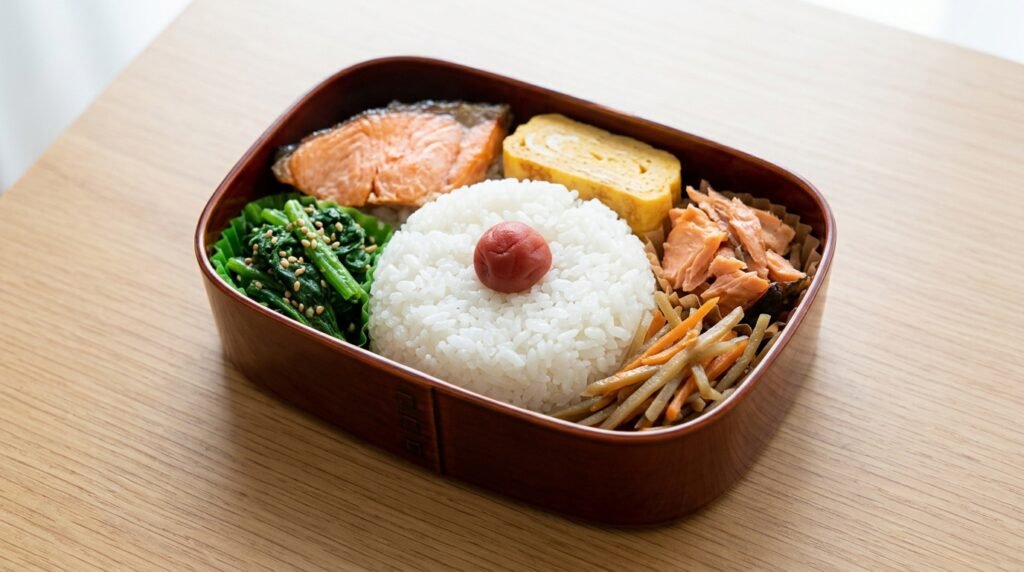
Prep: 20 min | Cook: 10 min | Serves: 4 (8 rice balls)
Ingredients:
- 3 cups cooked short-grain rice, warm
- 1 tbsp rice vinegar
- 1/2 tsp salt
- 2 salmon fillets, cooked and flaked
- 2 tbsp soy sauce
- 1 tsp sesame oil
- Nori sheets, for wrapping
- Sesame seeds, to finish
- Season rice with vinegar and salt. Mix gently and let cool slightly — it should be warm, not hot.
- Toss flaked salmon with soy sauce and sesame oil.
- Wet your hands with lightly salted water. Take a handful of rice, press a well in the center, add a spoonful of salmon, and close the rice around it. Shape into a triangle by pressing firmly with cupped hands.
- Wrap the base with a strip of nori. Sprinkle with sesame seeds. Eat within a few hours or refrigerate without the nori, which goes soft.
6. Japanese Curry (Kare Raisu)
Prep: 15 min | Cook: 40 min | Serves: 4–6
Ingredients:
- 1.5 lbs chicken thighs or beef chuck, cut into 1-inch pieces
- 2 carrots, chunked
- 2 potatoes, chunked
- 1 large onion, diced
- 2 tbsp neutral oil
- 3.5 cups water or chicken stock
- 1 package Japanese curry roux (S&B Golden Curry, medium)
- Steamed rice, for serving
- Brown meat in oil over medium-high heat. Remove and set aside.
- Cook onion in the same pot until soft and beginning to color — about 8 minutes.
- Return meat. Add carrots, potatoes, and water. Bring to a simmer.
- Cook 20 minutes until vegetables are tender. Remove from heat.
- Break curry roux into pieces and stir in until fully dissolved.
- Return to low heat and simmer 5 minutes, stirring often. The sauce will thicken visibly. Serve over rice.
7. Agedashi Tofu
Prep: 15 min | Cook: 10 min | Serves: 4
Ingredients:
- 1 block firm tofu, pressed and cut into 8 pieces
- 1/4 cup potato starch or cornstarch
- Neutral oil, for frying
- 1 cup dashi
- 3 tbsp soy sauce
- 3 tbsp mirin
- Grated daikon, grated ginger, and green onion, for garnish
- Press tofu between towels for 20 minutes. Pat completely dry.
- Dust each piece in starch. Shake off the excess.
- Fry in 1 inch of oil at 375°F until the coating is pale gold and just crisp — about 2 minutes per side. The coating is thin and delicate; don’t expect the crust of a katsu.
- Combine dashi, soy sauce, and mirin in a small saucepan. Bring to a brief simmer.
- Place tofu in bowls. Pour broth around (not over) the pieces. Top with daikon, ginger, and green onion.
8. Yakitori (Grilled Chicken Skewers)
Prep: 20 min | Cook: 15 min | Serves: 4
Ingredients:
- 1.5 lbs chicken thighs, cut into 1-inch pieces
- 4 green onions, cut into 1-inch pieces
- 1/4 cup soy sauce
- 1/4 cup mirin
- 2 tbsp sake
- 1 tbsp sugar
- Wooden skewers, soaked in water 30 minutes
- Simmer soy sauce, mirin, sake, and sugar together until slightly reduced — about 5 minutes. This is the tare sauce.
- Thread chicken and green onion alternately onto skewers.
- Grill over medium-high heat, turning every 2 minutes. Brush with tare during the last 2 minutes of cooking. The sauce will char slightly at the edges. That’s correct.
- Total cook time: 10–12 minutes. Internal temperature should reach 165°F.
9. Chawanmushi (Steamed Egg Custard)
Prep: 15 min | Cook: 20 min | Serves: 4
Ingredients:
- 3 eggs
- 1.5 cups dashi, cooled
- 1 tbsp soy sauce
- 1 tbsp mirin
- 4 shrimp, peeled
- 4 shiitake mushrooms, sliced
- 2 green onions, for garnish
- Whisk eggs gently — the goal is to combine them without incorporating air. Bubbles create holes in the custard.
- Stir in cooled dashi, soy sauce, and mirin. Strain through a fine mesh sieve.
- Divide shrimp and mushrooms among four cups or ramekins. Pour egg mixture over.
- Steam over medium-low heat — covered — for 15–18 minutes. The custard should be barely set and wobble gently in the center when tapped.
- Top with green onion. Serve warm or at room temperature.
10. Sunomono (Cucumber Vinegar Salad)
Prep: 15 min | Rest: 10 min | Serves: 4
Ingredients:
- 2 Japanese or English cucumbers, very thinly sliced
- 1 tsp salt
- 3 tbsp rice vinegar
- 1 tbsp sugar
- 1 tsp soy sauce
- 1 tsp sesame oil
- Sesame seeds and shredded crab or cooked shrimp (optional)
- Toss cucumber slices with salt. Let sit 10 minutes. Squeeze firmly to remove liquid.
- Whisk vinegar, sugar, soy sauce, and sesame oil until sugar dissolves.
- Toss with cucumber. Taste. Adjust vinegar or sugar as needed — the balance should be tart-forward with a clean sweetness behind it.
- Serve cold. Add protein if using.
11. Oyakodon (Chicken and Egg Rice Bowl)
Prep: 10 min | Cook: 15 min | Serves: 4
Ingredients:
- 1 lb boneless chicken thighs, sliced thin
- 1 medium onion, thinly sliced
- 4 eggs, lightly beaten
- 3/4 cup dashi
- 3 tbsp soy sauce
- 2 tbsp mirin
- 1 tbsp sake
- 1 tsp sugar
- Steamed rice, for serving
- Mitsuba or green onion, to garnish
- Combine dashi, soy sauce, mirin, sake, and sugar in a skillet. Bring to a simmer.
- Add onion. Cook 4 minutes until soft.
- Add chicken in an even layer. Cover and cook 5 minutes.
- Pour beaten eggs evenly over the surface. Cover and cook 2 minutes more. The eggs should be barely set — soft and custardy at the top. Pull from heat while they still look slightly underdone. Residual heat finishes the job.
- Slide over rice. Garnish and serve.
A Few Things Worth Knowing
Dashi is the foundation. Weak dashi produces flat results across every recipe that uses it. Use the correct ratio of water to powder, or make a simple stovetop version with kombu and bonito flakes steeped in just-below-boiling water for 10 minutes.
Short-grain rice matters. Long-grain rice has the wrong starch content and the wrong texture for Japanese rice bowls and onigiri. This step is easy to shortcut. Don’t.
Panko isn’t interchangeable with regular breadcrumbs. The moisture content and structure are different. The crust on katsu depends on panko specifically.
Miso should never boil. Heat kills the beneficial enzymes and flattens the flavor. Add it off heat or at the very end of cooking.
The egg timing in oyakodon and chawanmushi is the whole game. Pull both slightly before they look done. They will finish on their own.
Most of these dishes are better the next day — curry especially, but also teriyaki, gyudon, and yakitori tare. Make extra.
How to Serve It
Teriyaki and katsu over short-grain rice with shredded cabbage alongside.
Miso soup with almost anything — it belongs at every Japanese meal regardless of what else is on the table.
Sunomono as a palate cleanser before richer dishes, or alongside yakitori.
Onigiri on their own, at room temperature, as a lunch that needs no further accompaniment.
Curry the next day, reheated slowly, with a soft-boiled egg on top if you have one.
For drinks: cold barley tea (mugicha), sparkling water, or a light Japanese lager. Sake, warmed or cold, works beside the more delicate dishes.
Worth Noting Nutritionally
These foolproof Japanese recipes are, as a group, lower in saturated fat than most Western comfort food. The proteins are lean — chicken thigh, salmon, tofu, egg — and the cooking methods favor simmering, steaming, and quick searing over heavy frying.
Soy sauce is high in sodium. Reduced-sodium versions work in every recipe here without significantly changing the result. Mirin contains sugar; the quantity used across these recipes is small.
All recipes are naturally dairy-free. Gluten-free adaptations are straightforward — tamari replaces soy sauce one-for-one, and potato starch or rice flour replaces wheat flour in katsu and agedashi tofu.
Japanese curry roux contains wheat; look for gluten-free versions or make a roux from scratch with rice flour and curry powder.
A Few Questions
Can I use regular supermarket chicken breast instead of thighs? You can, but thighs are the better choice for most of these recipes. Breast meat dries out faster and has less flavor. For teriyaki, gyudon, oyakodon, and yakitori specifically, thigh meat produces a noticeably better result. If you prefer breast, reduce cook time by 20 percent and check early.
How long do these keep? Curry, teriyaki, and gyudon keep refrigerated for four days. Miso soup is best fresh. Onigiri without nori keep for two days; with nori, eat the same day. Chawanmushi keeps one day. Sunomono is best within 24 hours.
I can’t find dashi or hondashi. What do I use? A light chicken stock works as a functional substitute in most recipes. The flavor profile shifts slightly — less oceanic, more savory — but the dishes remain good. Kombu alone, steeped in hot water, produces a cleaner dashi substitute than chicken stock if you can find it at an Asian grocery store.
Do I need a special pan for any of these? No. A heavy-bottomed skillet handles katsu frying, teriyaki, and yakitori. A standard pot covers curry and gyudon. Chawanmushi requires a steamer or a pot with a rack and tight lid. Everything else is standard equipment.
Make one recipe from this list this week. The second time is always faster.