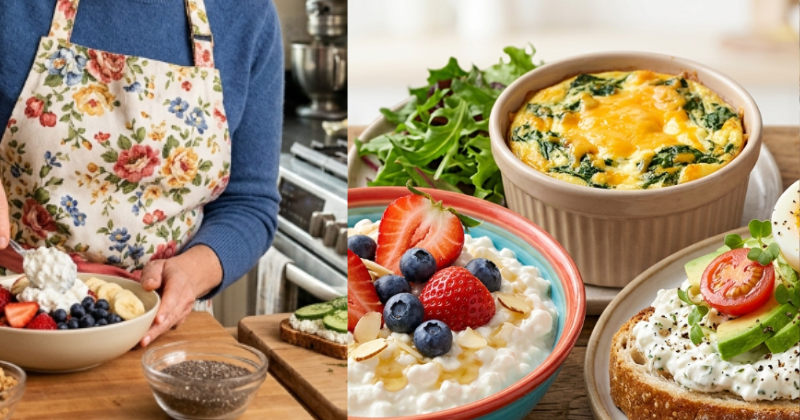
Cottage cheese sat in my refrigerator for years before I understood what to do with it. It was always there, purchased with good intentions, eaten reluctantly, and eventually replaced. Then something changed — not the ingredient, but how I used it. Recipes using cottage cheese, approached with a little more thought, turned out to be among the most practical things I could keep in regular rotation: high in protein, genuinely versatile, easy to digest, and quietly good for the gut in a way that accumulated over weeks rather than announcing itself.
A note on the gut health framing: cottage cheese is a real source of protein, calcium, and in some live-culture varieties, beneficial bacteria. If you’re dealing with serious digestive issues, a doctor is the right first call. What these recipes offer is consistent, nourishing food built around an ingredient that supports digestive comfort for many people. That’s worth something.
What Makes It Worth Making
- Cottage cheese does the work of protein, creaminess, and bulk simultaneously — one ingredient replacing several in recipes that would otherwise require more effort.
- Live-culture cottage cheese contains active bacterial strains. Not all brands carry them; check the label for « live and active cultures. »
- It keeps for up to a week refrigerated, which makes it among the most practical meal prep proteins available.
- The flavor is neutral enough to move in any direction — sweet, savory, spiced, or plain — without fighting the other ingredients.
The Ingredients
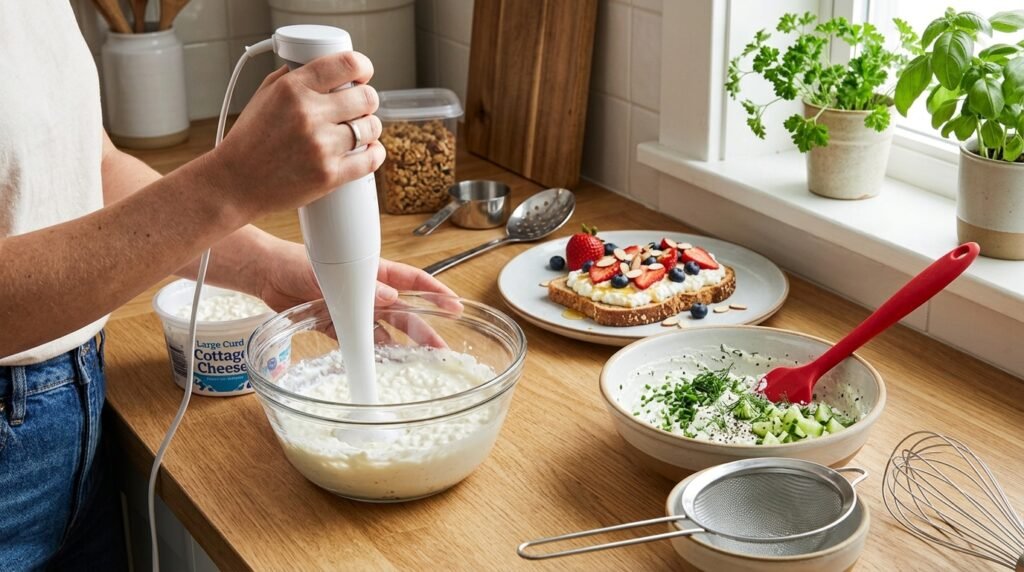
The core pantry for these recipes is short. Stock these and the recipes follow naturally.
Full-fat cottage cheese: The base of everything here. Full-fat versions have better texture and a creamier mouthfeel than low-fat. They also blend more smoothly when recipes call for it. Substitute: low-fat works but produces a thinner result in dips and sauces.
Eggs: Used in the protein pancakes and egg scramble variations. They bind and add structure where cottage cheese alone would be too soft.
Olive oil: A finishing element in savory preparations. Used lightly.
Lemon: Juice and zest both appear across these recipes. Brightness that keeps savory dishes from tasting flat.
Fresh herbs — dill, chives, parsley: Dill especially is a natural companion to cottage cheese. Used as a finishing element, not cooked in.
Garlic: Used raw in dips, roasted in warmer preparations. Raw garlic is sharper; roasted is gentler and sweeter.
Honey: For the sweet variations. A small amount. The cottage cheese itself has a mild natural sweetness that doesn’t need much support.
Oats: Rolled oats appear in the overnight bowl variation. They add fiber, slow digestion slightly, and extend satiety.
Frozen or fresh fruit: Blueberries, sliced banana, or whatever is in season. Used in sweet preparations as flavor and texture contrast.
Seeds — chia, flax, hemp: Optional additions to sweet bowls and smoothies. Each adds fiber and fat without changing flavor meaningfully.
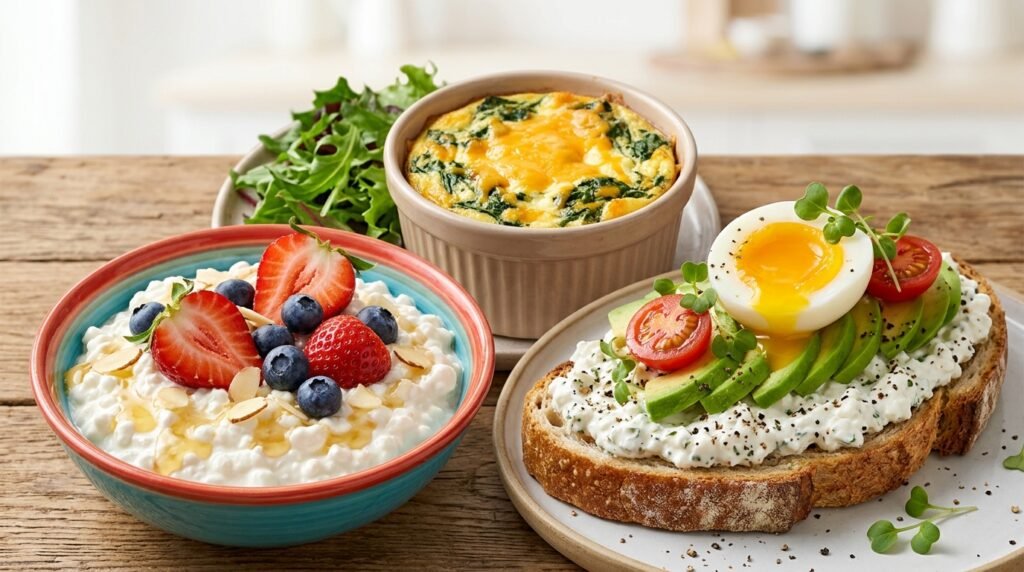
The Recipes: How to Make Them
Recipe 1: Whipped Cottage Cheese Dip with Herbs
Prep: 10 min | Cook: 0 min | Total: 10 min | Serves: 4
Ingredients:
- 2 cups full-fat cottage cheese
- 2 tbsp fresh dill, chopped
- 2 tbsp fresh chives, chopped
- 1 small garlic clove, grated
- Juice of half a lemon
- 2 tbsp olive oil
- Salt and black pepper
- Add cottage cheese to a blender or food processor. Blend 45–60 seconds until completely smooth. It will look like a thick, pale cream. Stop and scrape the sides once.
- Transfer to a bowl. Fold in dill, chives, and garlic by hand — the herbs go in after blending so they stay visible and fresh.
- Add lemon juice. Season with salt and pepper. Taste.
- Drizzle olive oil over the top before serving. Serve cold with vegetables, crackers, or toasted bread.
Recipe 2: Cottage Cheese Protein Pancakes
Prep: 5 min | Cook: 15 min | Total: 20 min | Serves: 2
Ingredients:
- 1 cup full-fat cottage cheese
- 2 large eggs
- 1/2 cup rolled oats
- 1/2 tsp vanilla extract
- 1/2 tsp cinnamon
- Pinch of salt
- Neutral oil or butter, for the pan
- Add all ingredients to a blender. Blend until smooth — about 30 seconds. The batter will be thinner than standard pancake batter. That’s correct.
- Heat a non-stick skillet over medium-low. Add a small amount of butter or oil.
- Pour batter in small rounds — about 3 tablespoons each. These are more delicate than flour-based pancakes. Keep them small.
- Cook until bubbles form across the surface and the edges look set — about 2 minutes. Flip carefully. Cook 1 minute more.
- Serve with fresh fruit and a drizzle of honey.
Recipe 3: Savory Cottage Cheese Scrambled Eggs
Prep: 5 min | Cook: 8 min | Total: 13 min | Serves: 2
Ingredients:
- 4 large eggs
- 1/2 cup full-fat cottage cheese
- 1 tbsp butter
- Salt and black pepper
- Fresh chives or dill, to finish
- Whisk eggs with a pinch of salt until just combined. Don’t overwork them.
- Melt butter in a non-stick pan over low heat. Add eggs.
- Stir slowly and continuously with a rubber spatula, pulling the eggs from the edges. The goal is large, soft curds.
- When the eggs are about 70 percent set — still visibly wet — fold in cottage cheese. The cold cheese slows the cooking and adds creaminess.
- Pull from heat while they still look slightly underdone. Finish with herbs and black pepper.
Recipe 4: Overnight Cottage Cheese Oat Bowl
Prep: 5 min | Rest: 8 hours | Total: 8 hours 5 min | Serves: 1
Ingredients:
- 1/2 cup rolled oats
- 1/2 cup full-fat cottage cheese
- 1/2 cup milk (any kind)
- 1 tbsp chia seeds
- 1 tsp honey
- 1/2 tsp vanilla extract
- Fresh or frozen blueberries, to top
- Combine oats, cottage cheese, milk, chia seeds, honey, and vanilla in a jar or container. Stir well.
- Seal and refrigerate overnight, or a minimum of 6 hours.
- In the morning, stir once. Add a splash more milk if the texture is thicker than you want.
- Top with blueberries. Eat cold.
Recipe 5: Cottage Cheese Pasta Sauce
Prep: 5 min | Cook: 15 min | Total: 20 min | Serves: 4
Ingredients:
- 1.5 cups full-fat cottage cheese
- 2 cloves garlic, minced
- 1/2 cup reserved pasta water
- 1/4 cup grated parmesan
- 1 tbsp olive oil
- Salt, pepper, and red pepper flakes
- 12 oz pasta of choice
- Fresh basil or parsley, to finish
- Cook pasta in well-salted water. Reserve 1/2 cup pasta water before draining.
- While pasta cooks, blend cottage cheese, garlic, parmesan, and olive oil until very smooth — at least 60 seconds.
- Pour blended sauce into the warm (not hot) pasta pot. Add pasta. Toss over low heat, adding pasta water gradually until the sauce coats the noodles and moves fluidly.
- Season. Finish with herbs. Serve immediately.
Recipe 6: Blended Cottage Cheese Smoothie Bowl
Prep: 5 min | Cook: 0 min | Total: 5 min | Serves: 1
Ingredients:
- 3/4 cup full-fat cottage cheese
- 1/2 frozen banana
- 1/2 cup frozen blueberries
- 1 tbsp flax seeds
- 1/4 cup milk
- Toppings: granola, fresh fruit, honey
- Blend cottage cheese, banana, blueberries, flax, and milk until completely smooth. The mixture should be thick enough to eat with a spoon.
- Pour into a bowl.
- Top with granola, fresh fruit, and a light drizzle of honey. Eat immediately — it softens as it sits.
A Few Things Worth Knowing
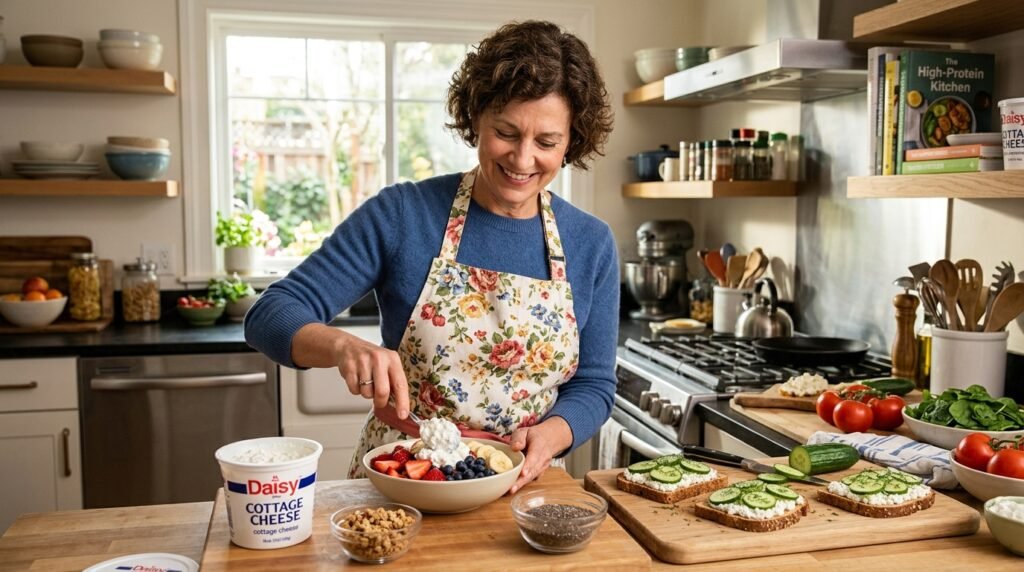
Blend it when texture is a barrier. Many people resist cottage cheese because of the curds. Blended smooth, it becomes something else entirely — closer to ricotta or thick Greek yogurt. This step is easy to skip. Don’t, especially in sauces and dips.
Check the label for live cultures. Not every cottage cheese brand contains them. Good Culture and Nancy’s are two widely available options that do. The nutritional content is otherwise similar across brands.
The pasta sauce breaks if the pan is too hot. Add the blended cottage cheese off direct high heat and keep the temperature low when tossing. Overheating causes the proteins to seize and the sauce to become grainy. Low and slow keeps it creamy.
The pancakes improve with smaller sizing. Larger rounds are harder to flip without breaking. Keep them to three tablespoons of batter and work in a patient, unhurried way.
The result is better cold the next day — specifically the oat bowl and the whipped dip, both of which develop flavor and texture overnight. Make both on Sunday and use through the week.
Salt is the variable most people under-adjust. Cottage cheese is mildly salty but not aggressively so. In savory preparations, taste and adjust at the end — the final seasoning is what determines whether the dish feels complete.
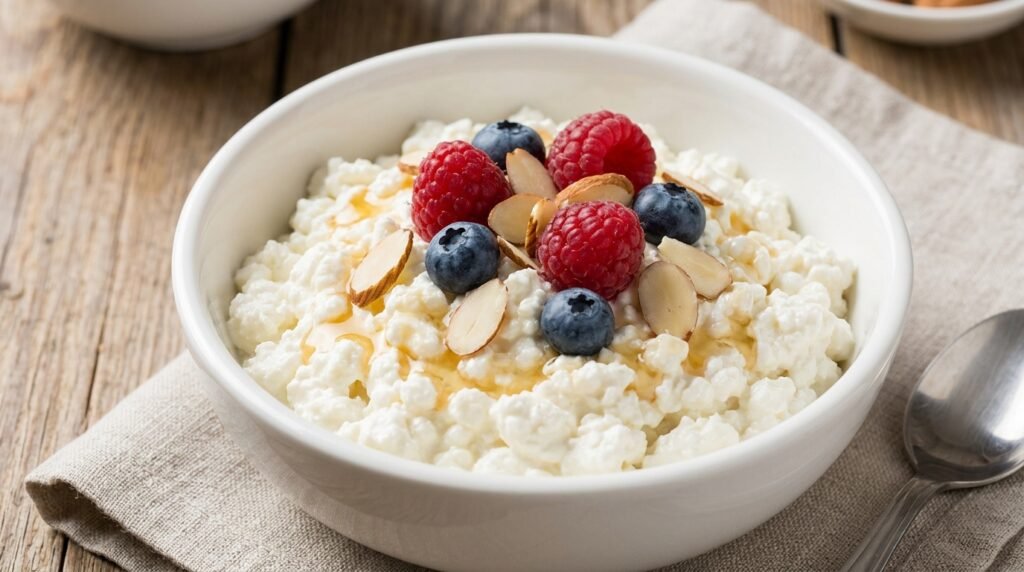
How to Serve It
The whipped dip alongside sliced cucumber, radishes, and toasted sourdough — simple and clean on a small board.
Protein pancakes with sliced banana and a small amount of honey, nothing more required.
Scrambled eggs on toast, with the herbs scattered visibly on top — the presentation matters less than the temperature, which should be warm but not hot.
The pasta sauce with a short noodle — rigatoni or penne — where the sauce can catch in the ridges.
The smoothie bowl as breakfast, eaten at the table rather than in transit, because texture-forward foods deserve a moment of attention.
For drinks: black coffee alongside the sweet preparations; sparkling water with lemon beside the savory ones.
Worth Noting Nutritionally
Cottage cheese is a dense protein source — roughly 25 grams per cup, depending on brand. It is also a meaningful source of calcium, phosphorus, and B vitamins.
Full-fat versions contain more saturated fat than low-fat, though the quantities used across these recipes are moderate. For those monitoring saturated fat intake, low-fat cottage cheese substitutes directly in every recipe here, with minor texture differences.
These recipes using cottage cheese are naturally gluten-free with the exception of the pasta dish, which adapts easily with gluten-free pasta. The pancakes use oats — certified gluten-free oats for those with celiac disease.
For lactose sensitivity: cottage cheese is lower in lactose than most dairy due to the culturing process. Many people who are mildly lactose-sensitive tolerate it without issue. Those with more significant sensitivity should approach cautiously.
A Few Questions
Does the brand of cottage cheese matter? For nutrition purposes, most brands are comparable. For texture in blended applications, full-fat versions from brands like Good Culture or Daisy blend more smoothly than lower-fat options. For gut health specifically, only brands listing live and active cultures on the label provide that benefit — this is worth checking before you buy.
How long do these recipes keep? The whipped dip keeps four days refrigerated. The overnight oats keep three days. The pancakes and scrambled eggs are best fresh but reheat adequately within a day. The pasta sauce does not keep well — make it to order. The smoothie bowl is a same-day preparation.
Can I use cottage cheese in place of ricotta? In most applications, yes. Blended cottage cheese is a direct substitute for ricotta in pasta dishes, lasagna, and baked applications. The flavor is slightly tangier and the texture slightly looser, but the difference is minor. Use a 1:1 ratio.
I made the pancakes and they fell apart. What went wrong? Most likely one of two things: the pan was too hot, or the pancakes were too large. Medium-low heat and small rounds — no more than three tablespoons — give the batter time to set before flipping. A non-stick pan is necessary here, not optional.
Start with one recipe this week. The rest will follow on their own.