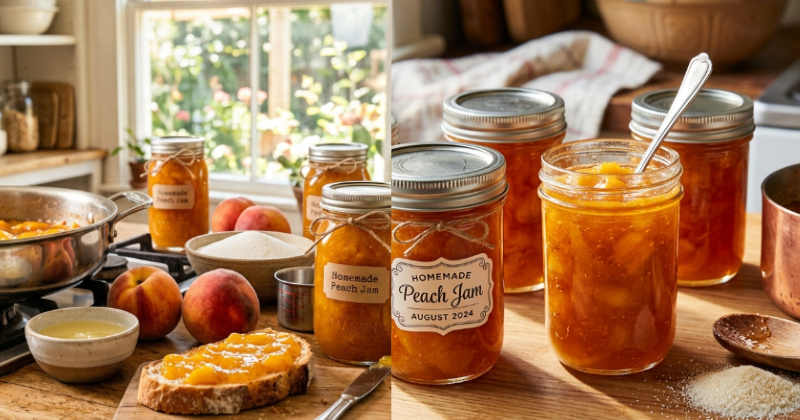
Peach jam needs very little help. That’s the point, and also the reason these seven peach recipes jam twists work as well as they do — each one starts from a place of restraint and adds exactly one thing that changes the character of the whole jar. A spice. An herb. A second fruit. The base is classic; the twist is what makes it yours.
These aren’t novelty combinations. Each pairing here was chosen because it deepens or clarifies what a ripe peach already does well. Make one this summer. It keeps, it travels, and it uses fruit at the moment it most deserves to be used.
What Makes It Worth Making
- Peach jam at its best requires only three ingredients — fruit, sugar, and acid. The twists add one more. That ratio stays intact.
- The shelf life of properly processed jars is twelve months, which means summer’s best fruit extends well into the seasons that follow.
- Each variation here produces a jam that is distinctly different in flavor profile from the others — seven jars, seven genuinely different results.
- The technique is the same across all seven. Learn it once. Apply it seven ways.
The Ingredients
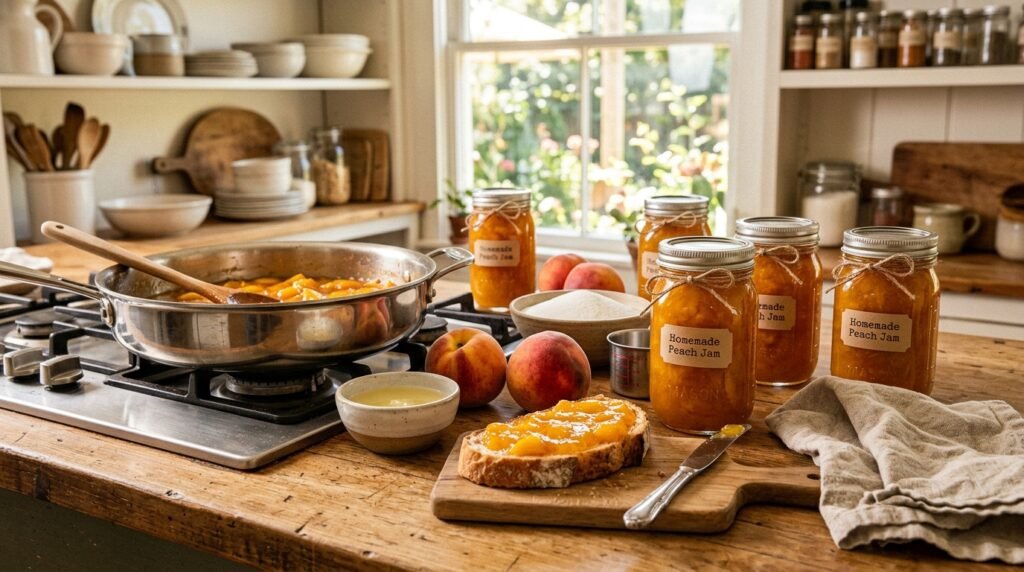
Ripe peaches: The single most important variable. Underripe peaches produce flat, starchy jam. Overripe peaches are soft and fermented-tasting. The right peach gives slightly when pressed at the shoulder, smells like itself from a foot away, and releases juice immediately when cut. Freestone varieties are easier to pit. White peaches produce a paler, more delicate jam; yellow peaches are more assertive.
Sugar: Granulated white sugar is standard. It preserves, sweetens, and helps the jam set. The ratio here is roughly 3:2 fruit to sugar by weight — less sweet than many commercial jams, which allows the peach flavor to stay in front.
Lemon juice: Acid that both brightens flavor and activates the natural pectin in the fruit. Use fresh. Bottled lemon juice is more acidic and less nuanced; it works but produces a slightly harsher result.
Lemon zest: Added in the base recipe for depth. It disappears into the jam but leaves something behind that straight juice doesn’t.
Pectin (optional): Natural pectin from the peach skin and lemon does the setting work if you cook the jam long enough. Commercial pectin shortens cook time and produces a firmer set. Either approach is correct. These recipes work with or without it.
The twists — one per variation:
- Vanilla bean: Seeds scraped from one pod, added with the sugar. Warm, floral, and quiet behind the peach.
- Fresh ginger: Two tablespoons grated, added at the start. It mellows as it cooks but leaves a slow heat.
- Cardamom: One teaspoon ground, added with the sugar. Aromatic in a way that makes the jam feel considered.
- Bourbon: Two tablespoons, added in the final five minutes of cooking. The alcohol cooks off; the oak and caramel stay.
- Rosemary: Two sprigs, steeped in the hot jam and removed before jarring. Resinous and savory at the edge.
- Raspberry: One cup added with the peaches. It darkens the color and sharpens the flavor considerably.
- Jalapeño: One pepper, seeded and minced, added at the start. The heat is present but not dominant — it arrives after the sweetness.
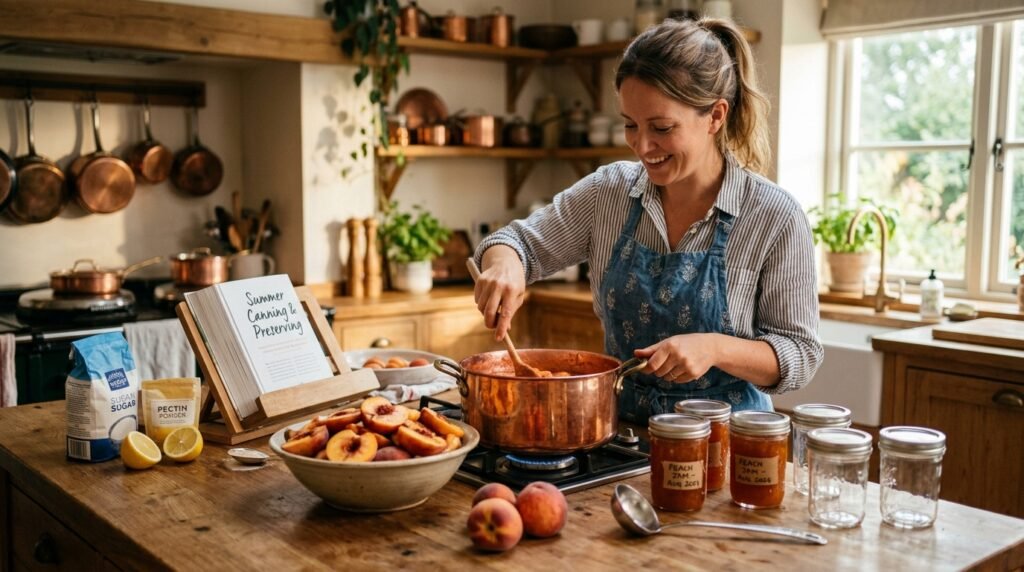
How to Make It: The Base Method (Applied to All 7)
Prep time: 30 min | Cook time: 35–45 min | Total time: 1 hour 15 min | Makes: approximately 4 half-pint jars
Base ingredients (per batch):
- 3 lbs ripe peaches (about 6–8 medium), peeled, pitted, and chopped
- 2 cups granulated sugar
- 2 tbsp fresh lemon juice
- 1 tsp lemon zest
- Twist ingredient of choice (see above)
To peel peaches: Score an X at the base of each peach. Submerge in boiling water 30–60 seconds. Transfer to ice water. The skin slips off cleanly. This step is easy to skip. Don’t — peach skins become tough and stringy in jam.
- Combine chopped peaches, sugar, lemon juice, and lemon zest in a wide, heavy-bottomed pot. Add your twist ingredient now if it’s a spice, herb, ginger, jalapeño, or second fruit. Stir to combine.
- Let the mixture sit 15 minutes. The sugar will begin drawing liquid from the fruit. The pot will look significantly wetter than when you started. This is correct.
- Place the pot over medium-high heat. Stir frequently as it comes to a boil. Once boiling, reduce to a steady, active simmer — not a rolling boil, not a gentle bubble. Something in between that requires occasional stirring.
- Cook 30–40 minutes, stirring every few minutes and more frequently as the jam thickens. It will foam in the first 10 minutes; this subsides. Skim the foam if it bothers you; it doesn’t affect flavor.
- Test for set: place a small plate in the freezer when you begin cooking. After 30 minutes, spoon a small amount of jam onto the cold plate. Push it with your finger after 30 seconds. If it wrinkles and holds its shape, it’s set. If it runs, cook 5–10 minutes more and test again.
- If using bourbon or vanilla: add in the final 5 minutes of cooking. If using rosemary sprigs: add them 10 minutes before the end and remove before jarring.
- Ladle hot jam into sterilized jars, leaving 1/4 inch headspace. Wipe the rims clean. Apply lids and rings fingertip-tight.
- Process in a boiling water bath for 10 minutes. Remove and let cool undisturbed on a towel for 12 hours. Properly sealed lids will not flex when pressed. Any that do should be refrigerated and used within three weeks.
A Few Things Worth Knowing
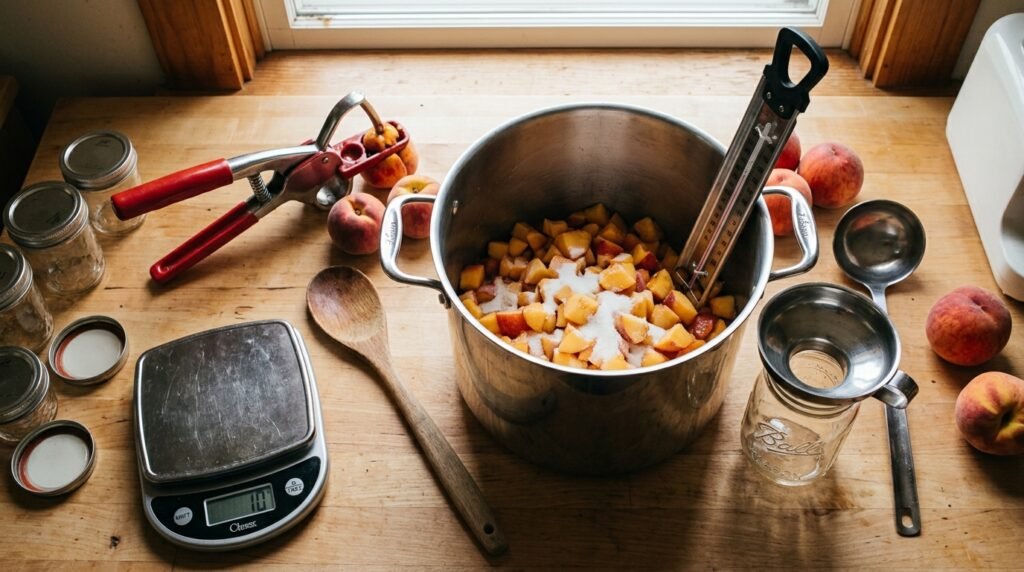
The wide pot is not optional. Surface area is how jam loses moisture and concentrates. A narrow pot takes significantly longer and produces uneven results. Use the widest heavy-bottomed pot you have.
Don’t double the batch. It’s tempting. The math doesn’t translate — a larger volume of fruit takes longer to reduce, which overcooks the pectin and produces a jam that is darker, less bright in flavor, and sometimes doesn’t set properly. Make two separate batches instead.
The set test is more reliable than the clock. Cook times vary depending on the water content of the fruit, the width of the pot, and the intensity of your burner. Use the frozen plate. Trust it over the timer.
The result is better the next day. Freshly made jam straight from the jar is good. The same jam 24 hours later, after the flavors have settled and the set has firmed, is noticeably better. This applies to all seven variations.
Bourbon and jalapeño are easy to over-add. The quantities listed here are deliberate. More bourbon makes the jam taste boozy rather than complex. More jalapeño overwhelms the peach. Start with what’s written; adjust in the next batch if you want more.
Sterilize the jars properly. Run them through the dishwasher on the hottest cycle, or submerge in boiling water for 10 minutes. This step determines shelf stability. It takes ten minutes and matters entirely.
How to Serve It
On toasted sourdough with salted butter — the salt and tang of the bread against the sweet jam is the clearest way to taste what you’ve made.
Alongside a soft cheese plate: brie, camembert, or a mild chèvre. The jalapeño variation is especially well-suited here.
Stirred into plain yogurt in place of commercial fruit additions.
As a glaze: thin with a small amount of warm water and brush over roasted chicken or pork in the last 10 minutes of cooking. The vanilla and rosemary variations work particularly well this way.
Spooned over vanilla ice cream, especially the bourbon variation, which behaves like a sauce in that context.
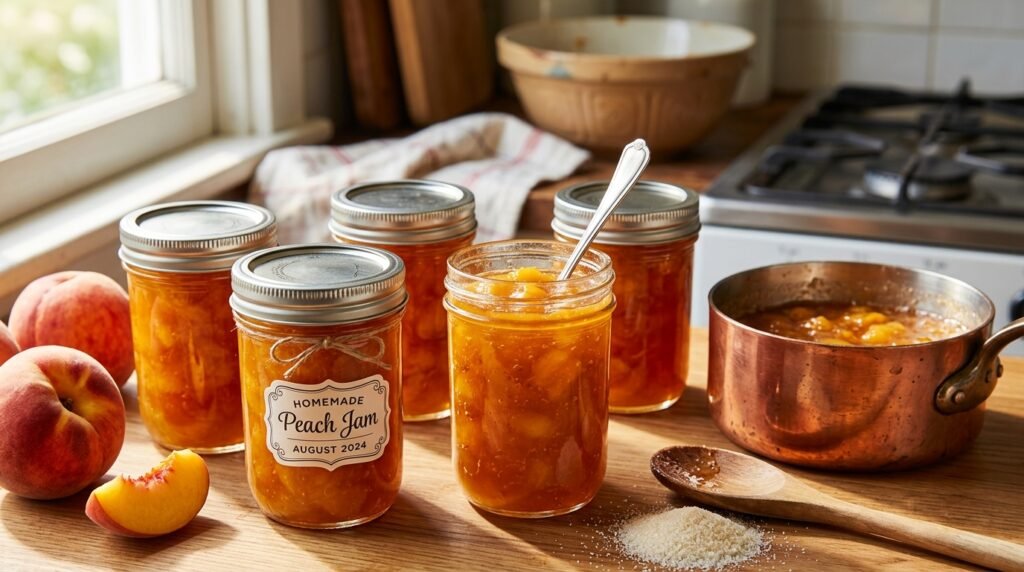
In a small jar tied with string, given to someone who will use it — the most direct form the effort takes.
For drinks: strong black tea alongside toast and jam in the morning; a cold glass of sparkling water in the afternoon.
Worth Noting Nutritionally
Jam is a preserved fruit product with meaningful sugar content — roughly one tablespoon per serving contains around 50 calories and 12 grams of sugar. The fruit itself contributes fiber, vitamin C, and potassium, though cooking reduces some of the vitamin content.
These peach recipes jam variations use less sugar than many commercial or traditional recipes. The result is a spread that is less sweet by design, which also means it is more dependent on proper technique for setting.
There is no meaningful way to make jam sugar-free using standard methods — sugar is both the sweetener and the preservative. Low-sugar pectin products exist and allow a reduction of roughly 50 percent; the texture and shelf life differ from standard jam but the result is usable.
These recipes are naturally vegan, gluten-free, and dairy-free.
A Few Questions
Can I use frozen peaches? Yes, with adjustments. Frozen peaches release more water than fresh, which extends cook time and can dilute flavor. Thaw completely and drain excess liquid before measuring. The result is good, particularly in winter when fresh stone fruit is unavailable, though the flavor is milder than peak-season fresh peaches.
How do I know if my jars sealed correctly? After the jars have cooled for 12 hours, press the center of each lid. A properly sealed lid is concave and does not move when pressed. An unsealed lid will flex and may make a popping sound. Unsealed jars go directly into the refrigerator and should be used within three weeks — the jam itself is fine, just not shelf-stable.
My jam didn’t set. What do I do? It can be rescued. Return the jam to the pot, bring back to a simmer, and cook an additional 10–15 minutes before testing again. Alternatively, treat it as a sauce rather than a spread — it works well over yogurt, ice cream, or as a meat glaze in that looser form. Under-set jam is rarely a loss.
Can I halve the recipe? Yes, and it’s often the smarter approach for a first attempt. A half batch reduces cook time slightly and gives you two jars rather than four — enough to evaluate the variation before committing to a full batch. The technique is identical.
Make one jar this week while the peaches are worth making it from.