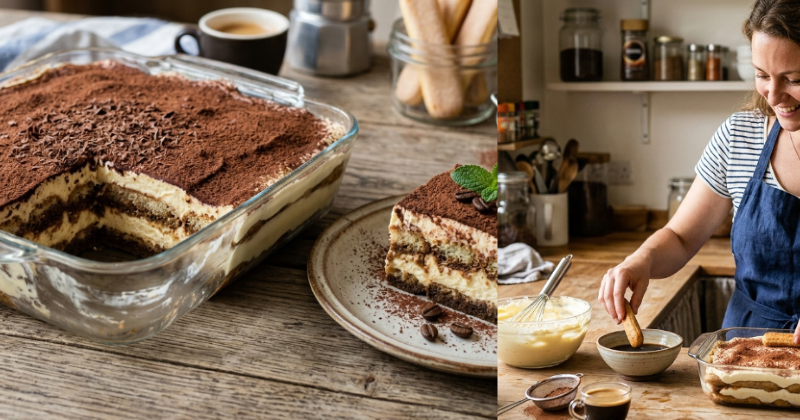
5 Genius Dessert Recipes Tiramisu Lovers Need for a Perfect Party
Some desserts belong at every table. Tiramisu is one of them.
The classic is perfect. But there is a version of perfection that arrives early, sits in the refrigerator overnight, and still looks composed when you bring it out at the end of a dinner party. These five dessert recipes for tiramisu lovers do exactly that — each one built on the original’s logic of coffee, cream, and restraint, each one scaled and structured for a gathering where you need the dessert to handle itself.
Prep Time: 25–35 minutes | Chill Time: 4–8 hours (overnight preferred) | Total Time: 5–9 hours | Servings: 8–12 per recipe
What Makes It Worth Making
- The structure is the point. Tiramisu does not require baking, tempering, or precision equipment. It requires patience — specifically, the patience to let it chill long enough for the layers to set into something that slices cleanly.
- It improves with time. Made the night before a party, the flavors integrate in a way that same-day assembly cannot replicate.
- The base technique is transferable. Once you understand the mascarpone cream and the soak, every variation on this list follows naturally.
- It scales without drama. Double the recipe, use a larger dish, and the result is proportionally identical. Few party desserts can claim the same.
The Ingredients
For the mascarpone cream (base for all five recipes):
- Mascarpone (500g, full-fat): The structural and flavor core. Do not substitute cream cheese — the texture is firmer and the flavor is sharper, producing a cream that is denser and less nuanced. If mascarpone is unavailable, a 3:1 blend of cream cheese and heavy cream is the most workable alternative, with honest trade-offs in both texture and taste.
- Egg yolks (4 large): Whipped with sugar, they create a pale, ribbon-stage zabaglione that gives the cream its body and richness. Room temperature yolks incorporate more air than cold ones.
- Granulated sugar (100g): Dissolved into the yolks over heat. The heat is not optional — it partially cooks the yolks, producing a stable, food-safe base without raw egg risk.
- Heavy cream (200ml, cold): Whipped separately to soft peaks, then folded into the mascarpone mixture. Cold cream whips faster and holds its structure longer than cream at room temperature.
- Pure vanilla extract (1 teaspoon): Background note. It is present but not the point.
For the coffee soak:
- Espresso or strong brewed coffee (300ml, cooled): Strong is non-negotiable. Weak coffee produces a soak that tastes diluted even after the savoiardi have absorbed it overnight. Use real espresso if possible; a stovetop Moka pot is a workable alternative.
- Coffee liqueur — Kahlúa or Tia Maria (2 tablespoons, optional): Adds depth and a slight bitterness that complements the cream. Omit for an alcohol-free version without meaningful loss of flavor.
For the layers:
- Savoiardi (ladyfinger biscuits, 200–250g): The structural element. They absorb the soak while maintaining enough integrity to hold a layer. Do not substitute sponge cake — it absorbs too quickly and collapses. Gluten-free ladyfingers are available and perform adequately.
- Good cocoa powder (for dusting): Dutch-process cocoa is less acidic and produces a deeper, less bitter surface flavor. Applied immediately before serving, not during assembly — it becomes damp and loses its appearance if applied too early.
How to Make It
Base Recipe — Classic Tiramisu for a Party (Serves 12)
- Bring a small saucepan of water to a simmer. Combine egg yolks and sugar in a heatproof bowl set over the water, ensuring the bowl does not touch the surface. Whisk continuously for 5–7 minutes until the mixture is pale, thick, and holds a ribbon for 3 seconds when the whisk is lifted. Remove from heat and cool for 10 minutes.
- Whisk mascarpone until smooth — 30 seconds with a hand mixer or by hand. Fold the cooled zabaglione into the mascarpone until fully combined. No streaks.
- In a separate cold bowl, whip the heavy cream to soft peaks. Fold it into the mascarpone mixture in two additions, using a spatula and a light hand. Overmixing deflates the cream and produces a dense, less aerated result.
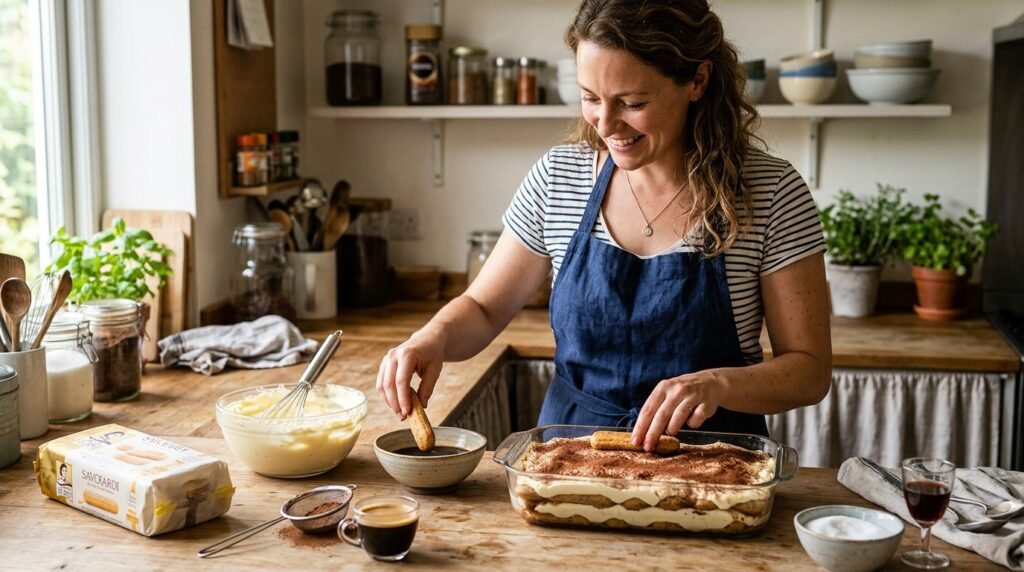
- Combine cooled espresso and liqueur in a shallow bowl. Dip each savoiardo for 2 seconds per side — no longer. What’s happening is controlled absorption: too brief and the center stays dry; too long and the biscuit disintegrates. It should feel just saturated, not soggy.
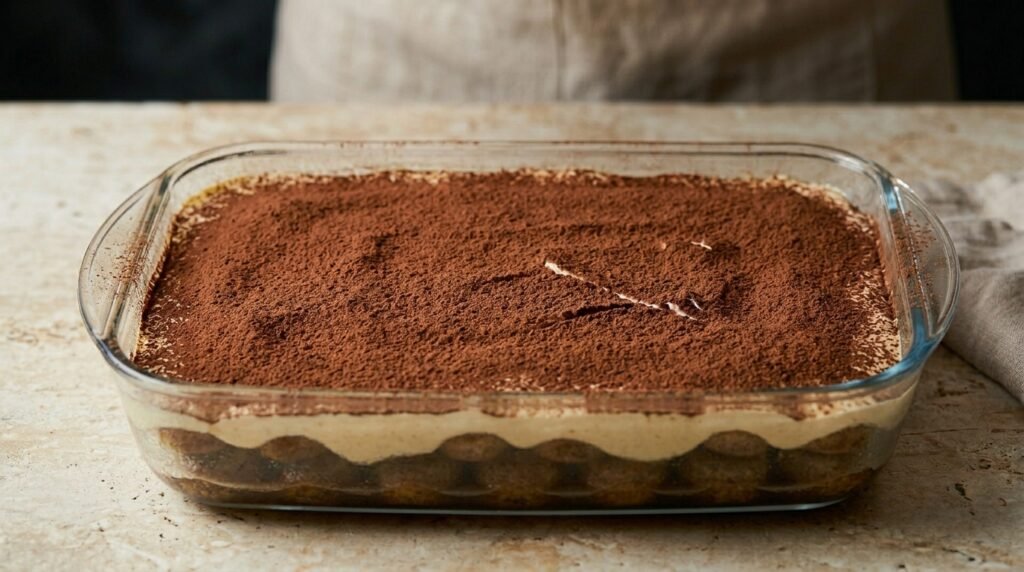
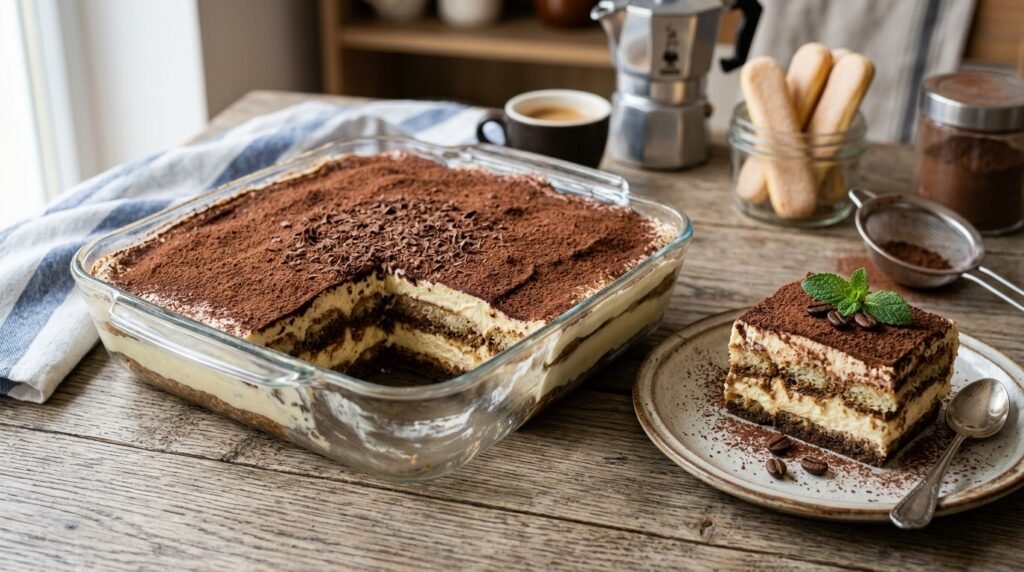
- Arrange a single layer of soaked savoiardi in a deep rectangular dish (roughly 30 x 20cm). Press gently to fit without gaps. Spread half the mascarpone cream over the top in an even layer. Repeat with a second layer of soaked biscuits and the remaining cream.
- Smooth the top. Cover with plastic wrap and refrigerate for a minimum of 4 hours. Overnight is better.
- Dust with cocoa powder immediately before serving. Use a fine-mesh sieve for even coverage.
The 5 Tiramisu Variations
1. Classic Party Tiramisu (above): The benchmark. Serves 12, assembled in a single large dish, sliced at the table.
2. Individual Tiramisu Cups: Assemble in small glasses or ramekins — one layer of soaked savoiardi broken to fit, one layer of cream, repeated. No slicing required. Guests serve themselves. Dust each cup individually before bringing out. Scales to any number without effort.
3. Matcha Tiramisu: Replace the espresso soak with 2 teaspoons of ceremonial-grade matcha whisked into 300ml of warm water with 1 teaspoon of honey, cooled. The mascarpone cream remains unchanged. The result is quieter and more delicate than the original — less bitter, more floral. Dust with matcha powder instead of cocoa.
4. Chocolate Hazelnut Tiramisu: Add 3 tablespoons of good-quality hazelnut spread to the mascarpone mixture before folding in the cream. Use a dark chocolate soak: strong coffee plus 1 tablespoon of cocoa powder dissolved in while warm. Layer with finely chopped toasted hazelnuts between the cream layers. Dust with cocoa and finish with a few whole hazelnuts placed deliberately on top.
5. Lemon Ricotta Tiramisu: A departure from coffee entirely. Replace the espresso soak with a lemon syrup: 200ml water, 100g sugar, and the juice of 2 lemons, simmered 3 minutes and cooled. Replace half the mascarpone with full-fat ricotta (blended until smooth before incorporating). Add the zest of 1 lemon to the cream. This version is lighter, brighter, and fits naturally at a spring or summer table. No cocoa — finish with candied lemon zest or a fine dusting of icing sugar.
A Few Things Worth Knowing
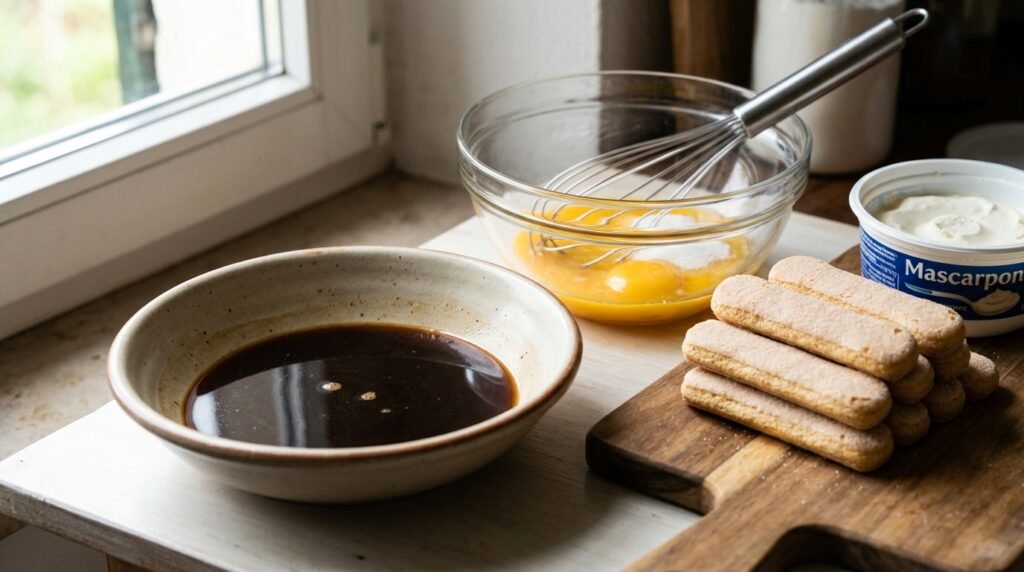
The zabaglione must cool before it meets the mascarpone. Warm yolks added to cold mascarpone cause it to seize and become lumpy. Ten minutes on the counter is enough. This step is easy to skip. Don’t.
The soak timing is the most common error. Two seconds per side per biscuit. Count it. Under-soaked savoiardi leave a dry, crumbly center layer. Over-soaked ones collapse during assembly and make the final dish watery.
Overnight refrigeration is the actual recipe. Four hours produces an acceptable result. Eight hours produces a clean-slicing, fully integrated tiramisu that looks and tastes like something considered. If you can make it the night before, do.
Folding is a technique, not a shortcut. Use a large spatula, a slow circular motion from the bottom of the bowl upward. Stop as soon as the mixture is uniform. Residual streaks of cream are fine — they will integrate without further mixing. Overmixing collapses the air that makes the cream light.
Dust cocoa only at the last moment. Applied too early, it absorbs moisture from the cream surface and darkens into an uneven, wet-looking layer. A fine-mesh sieve held 20–30cm above the dish distributes it evenly.
For larger parties, use two dishes rather than scaling into one. A deeper dish insulates the bottom layers from the cold, meaning the center may not set fully. Two standard-depth dishes chill more evenly and are easier to serve.
How to Serve It
Alongside an espresso or ristretto: the bitterness extends the coffee note in the dish naturally.
With a glass of Marsala or Vin Santo: the traditional Italian approach, and a good one.
Served cold, directly from the refrigerator: do not let it sit at room temperature for more than 20 minutes before serving — the cream softens quickly.
For plating: a sharp knife wiped clean between cuts. Serve in wide, shallow dessert bowls rather than on flat plates — the edges hold the portion together and the presentation looks considered without effort.
Fresh raspberries alongside the lemon ricotta variation: the acidity is complementary and the color provides contrast.
Worth Noting Nutritionally
Tiramisu is dairy-forward and moderately high in fat and sugar. A standard portion from this recipe runs approximately 350–420 calories, depending on the variation.
For lower sugar: Reduce the sugar in the zabaglione to 70g. The cream will be slightly less structured and less sweet — workable but noticeable.
For alcohol-free: Omit the liqueur entirely. The soak is sufficient without it. No substitute required.
For gluten-free: Use gluten-free savoiardi, available in most specialty food stores. The texture is slightly more fragile — reduce soak time to 1 second per side.
For egg-free: Replace the zabaglione with 2 tablespoons of sugar whisked directly into the mascarpone, then fold in the whipped cream. The result is less rich and less structured, but functional.
A Few Questions
Can I make tiramisu more than one day ahead? Yes, up to two days. Beyond that, the savoiardi begin to break down fully and the layers lose their definition. The flavor remains good; the texture becomes more unified and less layered. For a party, one day ahead is the reliable window.
What if I can’t find mascarpone? The closest workable substitute is a blend of three parts full-fat cream cheese to one part heavy cream, smoothed together before use. The flavor will be sharper and the texture slightly denser. It is not the same dessert, but it is a reasonable one. Do not use low-fat cream cheese — the water content is too high and the cream will not hold.
How do I transport tiramisu to a party? Assemble in the dish you plan to serve from, cover tightly with plastic wrap, and transport flat. Do not dust with cocoa until you arrive — the surface survives travel better without it. The individual cup variation is the most practical option for transport.
Is the raw egg a concern? The zabaglione method used here heats the yolks over simmering water to approximately 70°C, which is sufficient to address food safety concerns for most people. If serving to pregnant guests, young children, or immunocompromised individuals, the egg-free modification above is the appropriate choice.
Make it the night before. Dust it at the last moment. Let it speak for itself.