5 Top Tropical Smoothie Recipes for Summer 2026 — Clean, Cold, and Worth Making
Fruit, liquid, ice. That is all a good smoothie needs. These five do not ask much of you.
The 5 top tropical smoothie recipes for summer 2026 are built around what is actually available and good right now — ripe mango, pineapple, coconut, passion fruit, and papaya — and the combinations that make each one distinct rather than interchangeable. No protein powder, no hidden vegetables, no apology for being simple.
Prep time: 5 minutes | Blend time: 1–2 minutes | Total time: under 10 minutes | Servings: 2 per recipe
What Makes It Worth Making
- Frozen fruit does the work of both ice and flavor. No dilution, no watery finish.
- Each recipe uses five ingredients or fewer. The restraint is the point.
- They scale easily. Double the quantities, same result.
- The flavor is tropical in a specific, honest way — not artificial, not vague. Each recipe tastes like the fruit it leads with.
The Ingredients
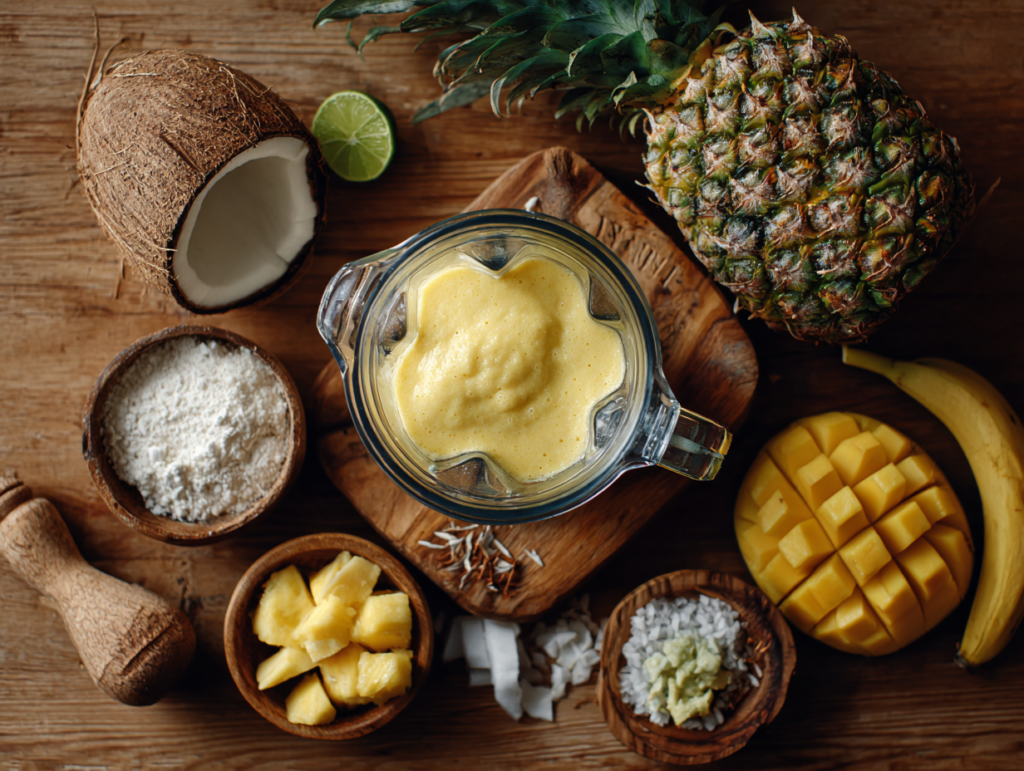
Frozen mango chunks (2 cups for recipes 1 and 2): The base of the two mango-forward recipes. Frozen at peak ripeness, mango blends into a thick, naturally sweet puree that needs nothing added for body. Fresh mango works but produces a thinner result.
Frozen pineapple (2 cups for recipe 3): Bright, acidic, and sharp in a way that mango is not. Pineapple smoothies need less added liquid — the fruit releases a lot of its own juice during blending.
Frozen papaya (2 cups for recipe 4): The mildest of the five fruits. Papaya’s flavor is delicate and slightly musky; it pairs best with lime and coconut to give it definition.
Passion fruit pulp, fresh or frozen (quarter cup for recipe 5): Intense, seedy, and deeply aromatic. A small amount carries the whole recipe. If using frozen pulp, thaw slightly before blending.
Full-fat coconut milk (half to three-quarters cup, varies by recipe): Creaminess without dairy. The fat content is what gives each smoothie its body. Light coconut milk produces a thinner, less satisfying result. Worth noting the difference.
Coconut water (half cup, as needed): Used in the lighter recipes where coconut milk would be too heavy. It adds subtle flavor and helps the blender move without diluting the fruit.
Fresh lime juice (1–2 tbsp, most recipes): Brightness. Added after blending if you want it sharp; blended in if you want it integrated. Both are correct depending on preference.
Fresh ginger, grated (1 tsp, recipes 1 and 5): Warmth without heat. Ginger lifts tropical fruit in a way that is immediately noticeable and worth including.
Honey or agave (1 tbsp, optional): Taste the smoothie before adding sweetener. Ripe frozen fruit usually needs none. Add only if the fruit is genuinely under-sweet.
Substitution notes: Oat milk works in place of coconut milk in any recipe — the flavor profile shifts away from tropical but the texture is comparable. Banana can supplement or partially replace any of the frozen fruit bases for added thickness and sweetness, though it tends to take over the flavor.
How to Make It
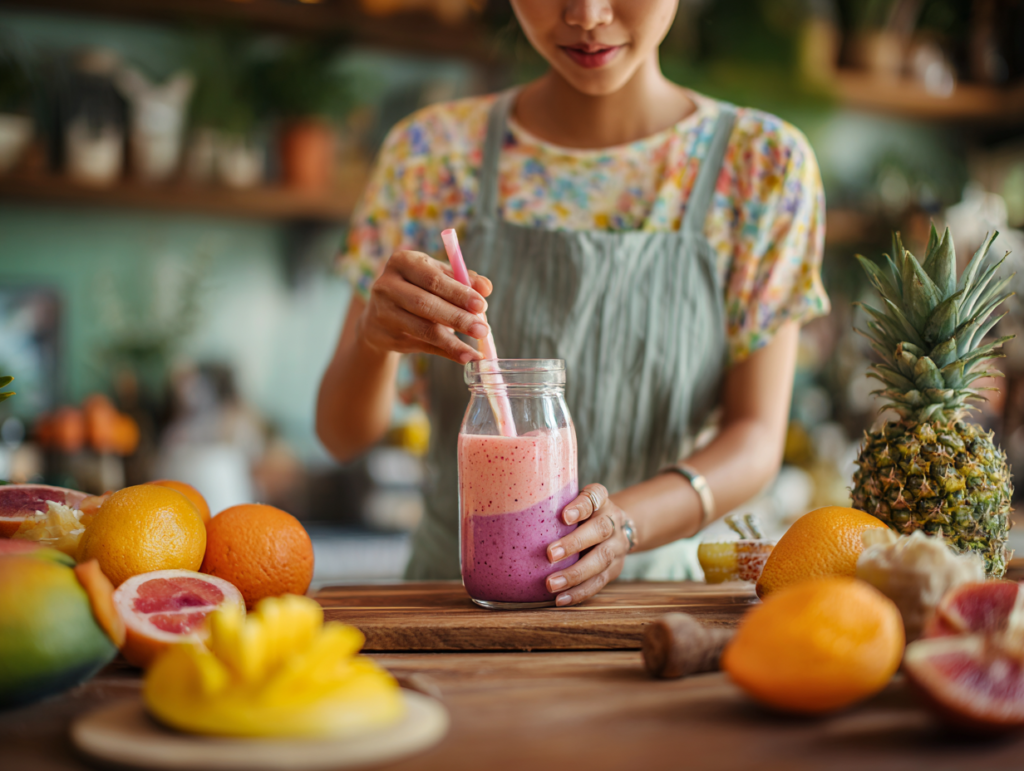
These instructions apply to all five recipes. The method is identical; only the ingredients change.
- Measure your frozen fruit. Two cups per recipe, straight from the freezer. Do not thaw — the frozen fruit is what creates the thick, cold texture that makes these worth drinking.
- Add liquid. Pour coconut milk or coconut water over the fruit in the blender. Start with less than the recipe calls for — you can always add more, and a smoothie that is too thin cannot be corrected without adding more frozen fruit.
- Add any fresh additions. Ginger, lime juice, and honey go in now if using. Passion fruit pulp goes in last, after the base is blended, for recipes where you want the seeds visible.
- Blend on high for 60 to 90 seconds. A high-powered blender produces a smoother result; a standard blender may need an extra 30 seconds and an occasional pause to scrape down the sides. You will know it is ready when the sound of the motor smooths out and there are no chunks visible through the jar.
- Taste before pouring. Adjust lime or sweetener here. This is the step most people skip. A smoothie that tastes flat is usually missing acid, not sweetness.
- Serve immediately. Pour into cold glasses. If the glasses have been in the freezer for five minutes prior, the smoothie stays cold longer.
The Five Recipes:
- Mango Ginger Coconut: 2 cups frozen mango, three-quarters cup coconut milk, 1 tsp fresh grated ginger, juice of half a lime. Thick, warm-spiced, the most versatile of the five.
- Mango Pineapple Sunrise: 1 cup frozen mango, 1 cup frozen pineapple, half cup coconut water, juice of 1 lime. Bright and sharp. The acid balance between the two fruits is the appeal.
- Pineapple Coconut Cream: 2 cups frozen pineapple, three-quarters cup full-fat coconut milk, half tsp vanilla extract. A piña colada without the rum. Add rum if the occasion warrants it.
- Papaya Lime Coconut: 2 cups frozen papaya, half cup coconut milk, juice of 1 lime, 1 tbsp honey. Papaya needs the lime and the sweetener. Do not skip either.
- Passion Fruit and Mango: 1.5 cups frozen mango, quarter cup passion fruit pulp, half cup coconut water, juice of half a lime. The most complex of the five. The passion fruit seeds add texture worth keeping.
A Few Things Worth Knowing
The liquid ratio determines everything. Too much and the smoothie is thin and forgettable. Too little and the blender struggles. Start with less, blend, and add in small increments.
Frozen fruit is not a shortcut. It is the correct choice. Fresh fruit plus ice produces a diluted, icy result. Frozen fruit produces a concentrated, thick one. The distinction matters.
This step is easy to skip. Don’t: tasting before you pour. Lime juice added at the end, after you taste, makes a noticeable difference versus lime juice blended in from the start. Both are valid but they produce different results.
Full-fat coconut milk separates in the can. Stir or shake before measuring. Using only the cream that rises to the top produces a richer smoothie; using the whole contents produces a lighter one. Either is intentional as long as it is deliberate.
The passion fruit recipe is better with some seeds left whole. Blend the mango base first, then stir in the passion fruit pulp by hand rather than blending it. The seeds provide texture and the visual contrast is worth preserving.
These do not keep well. A smoothie is a drink for right now. If you need to make it ahead, freeze the portioned fruit and liquid together in a bag and blend it fresh when needed. Pre-blended smoothies oxidize and separate within an hour.
How to Serve It
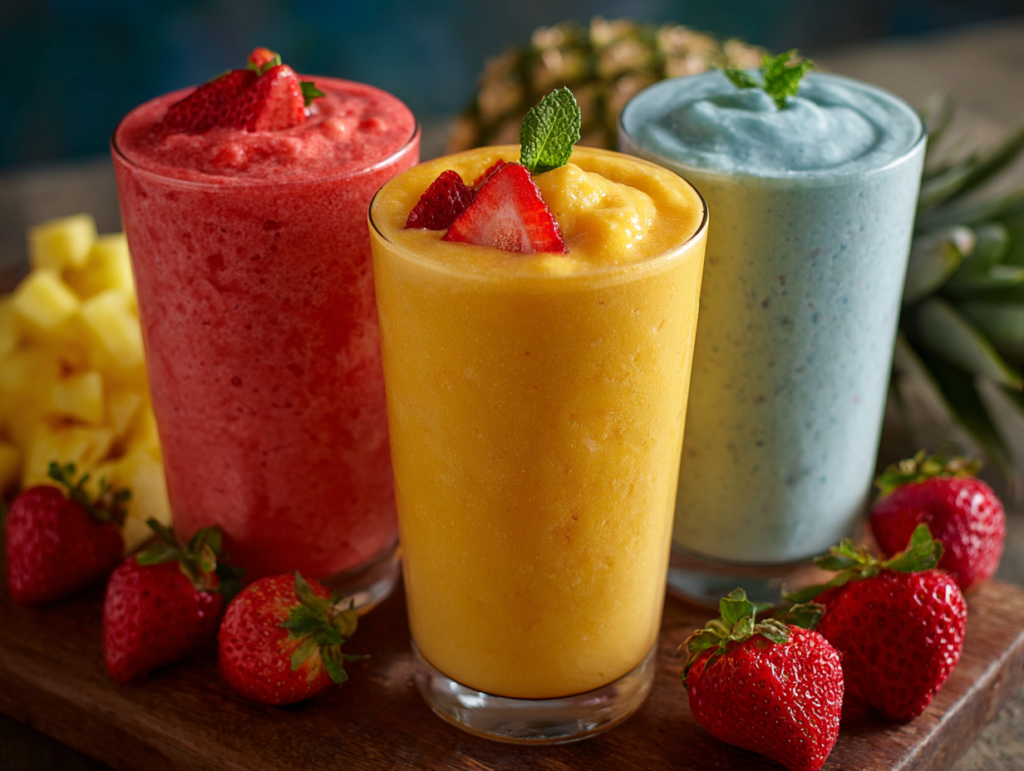
Pour into tall glasses with a wide opening — smoothies this thick need room.
A slice of fresh mango or a wedge of pineapple on the rim costs nothing and communicates what is inside.
These work as breakfast alongside something plain — toast, a boiled egg, plain yogurt. The sweetness of the smoothie and the neutrality of the food alongside it balance each other.
The Pineapple Coconut Cream recipe earns a splash of rum for an afternoon occasion. The Mango Ginger Coconut is good with a shot of espresso stirred in, if that sounds right to you.
Serve cold, immediately, in whatever glass you have.
Worth Noting Nutritionally
Mango and pineapple are high in vitamin C and manganese. Papaya provides significant vitamin A. Passion fruit is high in fiber, unusual for a fruit used in liquid form. Full-fat coconut milk adds medium-chain triglycerides and is satiating in a way that low-fat alternatives are not.
These recipes contain no added sugar unless you choose to add honey — the sweetness comes from the fruit itself. Each serving runs approximately 200–280 calories depending on the recipe and how much coconut milk is used.
For a lower-calorie version, swap coconut milk for coconut water throughout. The texture changes but the flavor remains tropical. For a higher-protein version, a plain, unflavored protein powder blends into any of these without significantly affecting the taste. Avoid vanilla-flavored additions — they compete with the fruit.
All five recipes are naturally vegan, gluten-free, and dairy-free.
A Few Questions
Can I use fresh fruit instead of frozen? You can, but add a full cup of ice to compensate for the temperature and thickness that frozen fruit provides. The result will be slightly thinner and less concentrated in flavor. If your fresh fruit is very ripe, the flavor difference is minimal. If it is not quite ripe, frozen will be better.
How do I keep the smoothie from being too sweet? Lime juice is the answer in almost every case. Add it a half tablespoon at a time, blend briefly, and taste again. A smoothie that tastes cloying is usually missing acid rather than needing something bitter or savory to counteract the sweetness.
My blender is not very powerful. Will these still work? Yes, with adjustments. Let the frozen fruit sit for three to four minutes before blending to soften slightly. Add liquid in smaller amounts and blend in shorter bursts to avoid overheating the motor. A less powerful blender may leave small chunks — that is acceptable in all five recipes, particularly the passion fruit one.
Can I make these into popsicles? Pour any of the five blended smoothies directly into popsicle molds and freeze for four hours minimum. The Mango Ginger Coconut and Pineapple Coconut Cream work especially well this way. Run the mold briefly under warm water to release.
Pick the one that sounds right. Make it this weekend.