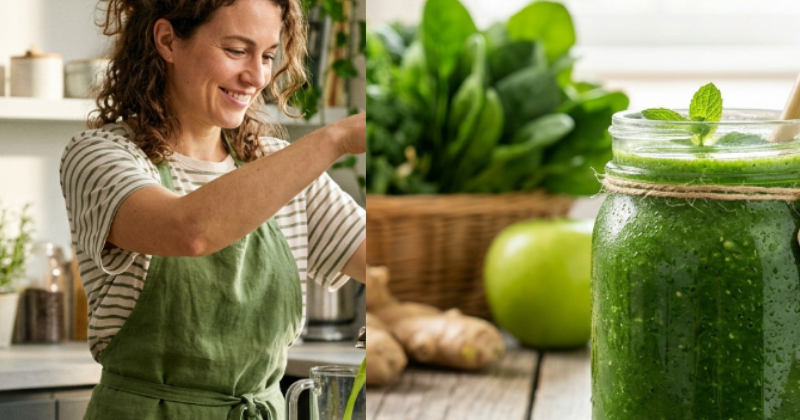
A week of green juice teaches you less about detoxing and more about what you actually want in the morning.
The word detox carries a lot of weight it has not entirely earned. The liver and kidneys handle that work efficiently without assistance. What these five detox juice recipes do offer is something more practical: concentrated vegetables and fruit in a form that is easy to consume before the day starts, with ingredients that support digestion, hydration, and energy in ways that are measurable and real. I made all five for seven consecutive days, rotating through them, paying attention. Here is what held up.
What Makes It Worth Making
- Fresh juice delivers micronutrients quickly and without significant digestive effort — useful in the morning before a meal.
- The ingredient combinations here are functional, not decorative. Each one is built around a specific purpose.
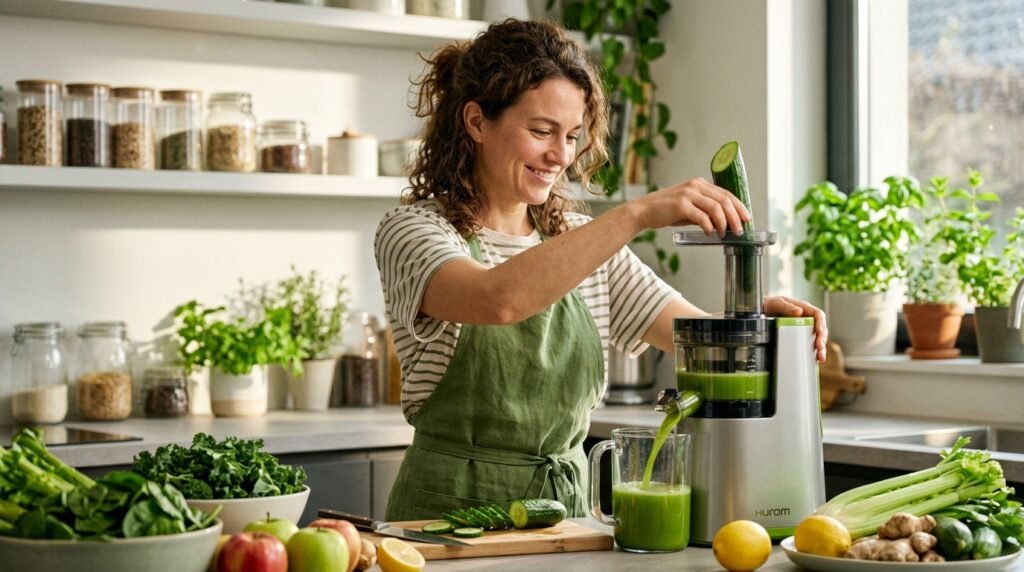
- All five detox juice recipes take under 10 minutes to prepare. The juicer does the work.
- The results are repeatable. These are not one-off experiments — they are recipes worth returning to weekly.
The Ingredients
The five recipes draw from a focused ingredient list. Most items appear across multiple juices.
Cucumber: The base of three recipes. High water content, mild flavor, and a cooling quality that balances sharper ingredients. English cucumber works best — fewer seeds, thinner skin, no peeling required.
Celery: Adds a clean, slightly saline note. Also high in water. Use the inner stalks for milder flavor. The leaves can go in — they are bitter but worth including in small amounts.
Green apple: Natural sweetness without the sugar spike of tropical fruit. Granny Smith adds tartness. Fuji or Gala add sweetness. The choice shifts the whole juice.
Lemon: Acid and brightness. Used in four of the five recipes. Always fresh — bottled lemon juice is flat in comparison and the difference is immediately apparent.
Ginger root (fresh): The most functional ingredient in the collection. Anti-inflammatory properties, digestive support, and a heat that wakes up everything around it. A thumb-sized piece goes a long way. More than that and the juice becomes difficult to drink.
Turmeric root (fresh): Earthy, slightly bitter, and intensely pigmented. Use gloves or accept stained fingers. Dried turmeric can substitute — use 1/4 teaspoon per inch of fresh root — but the flavor is less bright.
Spinach and kale: Used in the green juices. Spinach is mild and disappears into the flavor of other ingredients. Kale is more assertive and slightly bitter. Both deliver iron, folate, and vitamins C and K.
Beet (raw): The base of one recipe. Earthy, sweet, and deeply colored. Peel before juicing. It stains everything it touches, including the juicer basket — rinse immediately after use.
Carrot: Natural sweetness and beta-carotene. Use medium carrots and scrub rather than peel. The skin adds nutrients and the flavor difference is negligible.
Pineapple (fresh): Used in one recipe. Bromelain — the enzyme present in fresh pineapple — supports digestion and is deactivated by heat, which makes it relevant only in fresh juice, not canned.
Coconut water: Used as a liquid base in one recipe in place of additional fruit. Low in sugar relative to juice, high in electrolytes. Plain, unflavored, no added sugar.
Black pepper (a pinch): Added to the turmeric-forward recipe only. Piperine in black pepper increases curcumin absorption from turmeric by a significant margin. The flavor impact is minimal. The functional impact is not.
How to Make It
Equipment note: A centrifugal juicer works for all five recipes and is the most common home juicer. A cold-press (masticating) juicer produces more juice from leafy greens and a slightly higher nutrient retention — worth the investment if juicing is a regular habit. All timing below assumes a centrifugal juicer.
General prep for all recipes: Wash all produce. Cut ingredients to fit your juicer chute. Have a glass ready. Drink immediately or store in a sealed jar with minimal air at the top.
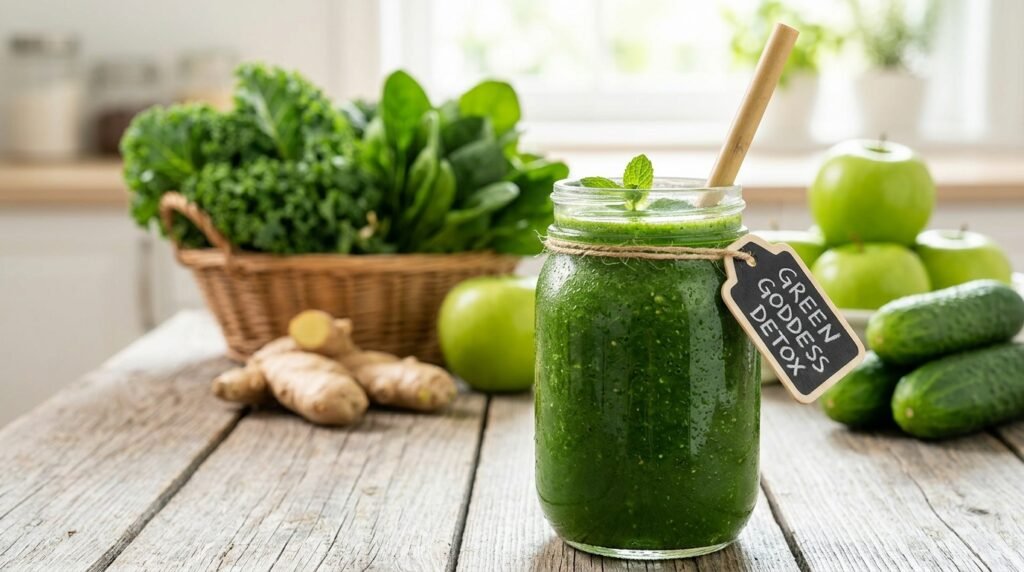
Juice 1: Classic Green Detox Juice
Prep time: 8 minutes | Total time: 8 minutes | Serves: 1 (approximately 12 oz)
Ingredients:
- 1 medium cucumber
- 3 stalks celery
- 1 green apple, cored
- 1 cup spinach
- 1/2 lemon, peeled
- 1-inch piece fresh ginger
- Feed cucumber through the juicer first. It produces the most liquid and helps pull subsequent ingredients through.
- Follow with celery, then spinach — pack the spinach tightly into the chute and push through with a harder ingredient behind it.
- Add the apple, then the ginger, then the lemon.
- Stir the juice briefly. The layers separate as they collect in the jug.
- Pour over ice or drink at room temperature. Consume within 20 minutes for peak nutrient content.
Juice 2: Golden Turmeric and Carrot Juice
Prep time: 8 minutes | Total time: 8 minutes | Serves: 1 (approximately 10 oz)
Ingredients:
- 4 medium carrots, scrubbed
- 1 orange, peeled
- 1-inch piece fresh turmeric
- 1/2-inch piece fresh ginger
- 1/2 lemon, peeled
- Pinch of black pepper (added to the glass after juicing)
- Juice the carrots first — they are dense and produce significant liquid.
- Follow with orange, turmeric, ginger, and lemon.
- Pour into a glass. Add a pinch of black pepper and stir. Do not skip this.
- The color will be a deep, warm amber. Drink immediately.
Juice 3: Beet, Apple, and Ginger Juice
Prep time: 10 minutes | Total time: 10 minutes | Serves: 1 (approximately 10 oz)
Ingredients:
- 1 medium beet, peeled and quartered
- 2 medium carrots
- 1 green apple, cored
- 1-inch piece fresh ginger
- 1/2 lemon, peeled
- Peel the beet and cut into pieces small enough for your juicer. Beet is dense — feed it slowly.
- Alternate beet pieces with carrot to help move it through.
- Add apple, ginger, then lemon.
- The juice will be a deep burgundy-red. Rinse the juicer basket immediately — beet stains set quickly.
- Stir and drink. The flavor is earthy and sweet with a sharp ginger finish.
Juice 4: Pineapple, Cucumber, and Mint Juice
Prep time: 8 minutes | Total time: 8 minutes | Serves: 1 (approximately 12 oz)
Ingredients:
- 1 cup fresh pineapple chunks
- 1 medium cucumber
- 1/2 lemon, peeled
- 10 fresh mint leaves
- 1/2-inch piece fresh ginger (optional)
- Juice cucumber first for liquid base.
- Feed pineapple through, then mint — pack mint tightly and push through with the last piece of pineapple behind it.
- Add lemon and ginger if using.
- This is the lightest and most approachable of the five. It works well as an introduction to fresh juicing.
- Serve over ice. The cold improves the mint’s presence.
Juice 5: Celery, Kale, and Lemon Juice
Prep time: 8 minutes | Total time: 8 minutes | Serves: 1 (approximately 10 oz)
Ingredients:
- 6 stalks celery, with leaves
- 2 large kale leaves, stems included
- 1 green apple, cored
- 1 lemon, peeled
- 1/2-inch piece fresh ginger
- Feed celery through first and steadily — it juices efficiently and sets up a good base.
- Fold kale leaves and push through firmly. The apple immediately after helps extract remaining kale juice.
- Add lemon and ginger.
- This is the most assertive of the five — green, slightly bitter, bright with lemon. It is the one that takes the most getting used to and the one that eventually feels most satisfying.
- Drink without ice if possible. The cold mutes the green flavor, which in this case is the point.
A Few Things Worth Knowing
Drink juice within 20 to 30 minutes of making it. Oxidation begins immediately after cutting and juicing produce. Nutrients degrade with exposure to air and light. If making ahead, fill the jar completely to minimize air contact, seal tightly, and refrigerate for no more than 24 hours.
This step is easy to skip. Don’t. Adding black pepper to the turmeric juice is a functional step, not a flavor preference. The absorption difference is meaningful and the taste impact is minimal. Stir it in every time.
Alternate hard and soft produce through the juicer chute. Soft items like spinach, kale, and mint do not juice efficiently on their own. Push them through sandwiched between harder items — apple, carrot, cucumber. The hard produce acts as a piston.
Clean the juicer immediately. Dried produce pulp, especially beet and carrot, requires significant effort to remove. Rinse the basket and bowl under running water as soon as the juice is poured. The entire process takes 90 seconds and saves 10 minutes later.
The result is more palatable cold. All five juices are better chilled. If your produce has been at room temperature, juice over ice or refrigerate the glass briefly before pouring.
Start with Juice 1 or 4 if this is new. The classic green juice and pineapple cucumber are the most approachable. The celery-kale juice and beet juice are an acquired preference — work toward them over several days rather than starting there.
How to Serve It
All five juices stand alone as a morning ritual before food — consumed on an empty stomach, around 20 minutes before breakfast.
Pair with a breakfast that includes protein and fat: eggs, Greek yogurt, avocado toast, or a handful of nuts. Juice alone does not sustain energy past mid-morning.
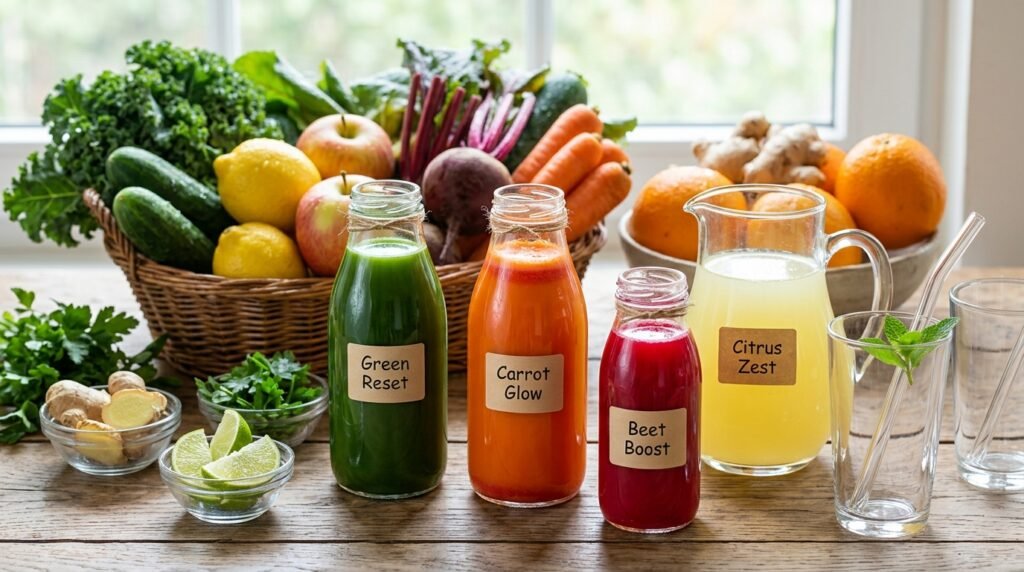
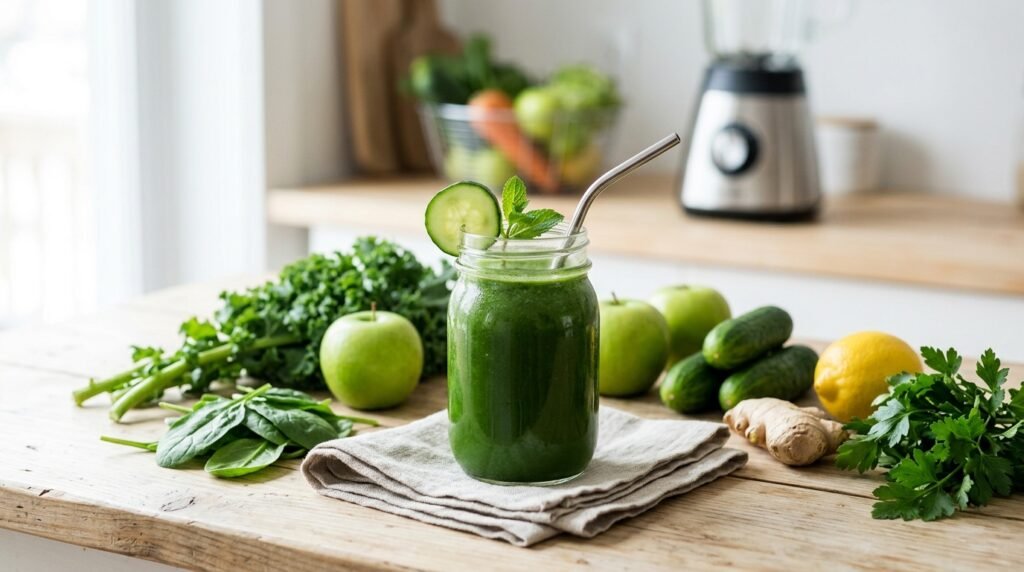
For presentation: a clear glass shows the color, which matters more than it sounds. The golden turmeric juice, the deep red beet juice, and the bright green of the classic each look distinct and intentional. A wide glass with a single ice cube and no straw is enough.
The celery-kale juice belongs in a short, simple glass. It is not a decorative drink. It is a functional one.
Worth Noting Nutritionally
Fresh juice retains water-soluble vitamins — primarily vitamin C and B vitamins — but removes most of the fiber present in whole produce. This is a meaningful distinction. Juice is not a replacement for whole vegetables and fruit. It is a supplement to them.
The five detox juice recipes here collectively provide meaningful amounts of vitamin C, potassium, folate, beta-carotene, and vitamin K. The beet juice contains dietary nitrates, which have documented associations with blood pressure and exercise performance. The turmeric juice provides curcumin, which has anti-inflammatory properties — enhanced significantly by the black pepper addition.
These recipes are naturally vegan, gluten-free, and free of added sugar. The sugar present comes entirely from fruit and beet — fructose in a fiber-free form, which means it is absorbed more quickly than sugar from whole fruit. This is worth knowing, not worrying about.
For lower sugar versions: reduce apple to half, substitute cucumber for pineapple where possible, and reduce carrot in favor of celery. The flavor shifts but the recipes hold.
A Few Questions
Do I need an expensive juicer? A centrifugal juicer in the $60 to $100 range handles all five of these recipes adequately. The limitation is leafy greens — centrifugal juicers extract less from kale and spinach than cold-press machines do. If leafy green juices are a priority, a cold-press juicer produces noticeably better yield and slightly more nutrients. It is a worthwhile upgrade if juicing becomes a consistent habit rather than an experiment.
Can I make these the night before? The juice can be stored for up to 24 hours in a completely full, airtight jar in the refrigerator. Fill the jar to the very top to minimize oxidation. Shake before drinking. Nutrient content will be somewhat lower than freshly made, but the practical difference for most people is minor. The flavor holds reasonably well, though the green juices may darken slightly.
What if I don’t have a juicer? A high-powered blender works as an alternative, though the result is a smoothie rather than a juice. Blend the ingredients with a small amount of water, then strain through a fine mesh strainer or nut milk bag. The process takes longer, yields less liquid, and retains more fiber — which is not a drawback, just a different outcome.
Which of the five had the most noticeable effect over the week? The celery-kale juice and the golden turmeric juice were the two that produced the clearest subjective difference — less morning sluggishness in the first case, less post-exercise inflammation in the second. These are observational notes, not clinical findings. Individual response to these detox juice recipes varies, and a week is a short window. What held across all five was the consistency of starting the morning with something intentional.
Pick one recipe, make it tomorrow morning, and see what a week of the same habit looks like from there.