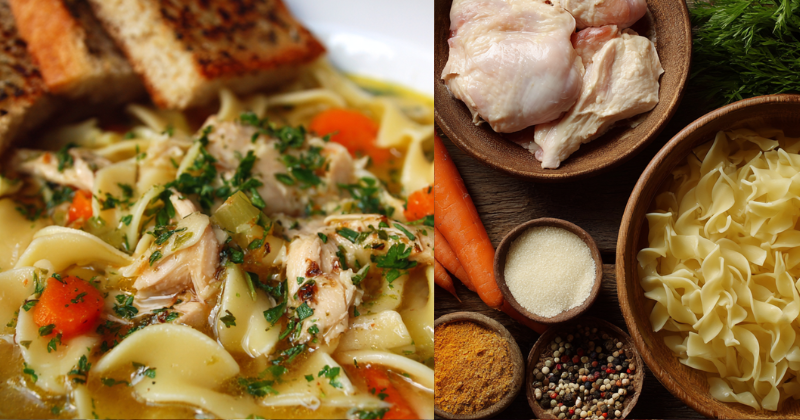
Some meals solve the problem before you have fully named it. Chicken noodle soup is one of them.
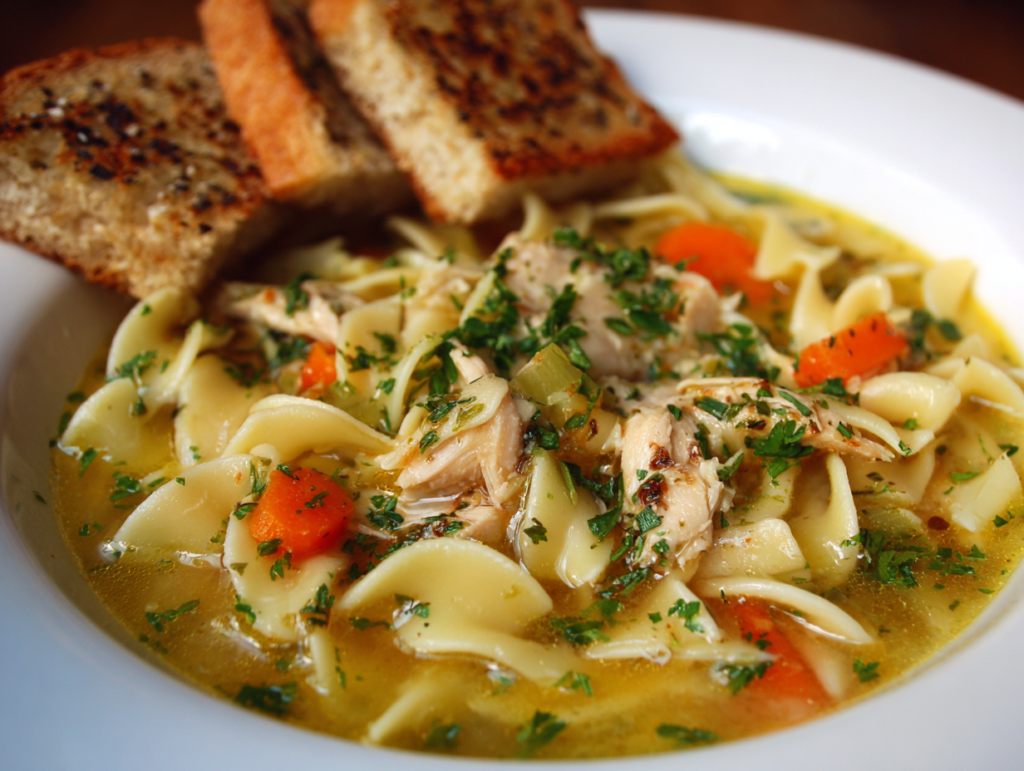
These three soup recipes — chicken noodle pots built for weeknight speed — come together in 20 minutes without shortcuts that cost you flavor. The broth is the base. The chicken and noodles do the rest. Each version is slightly different in character, but all three share the same logic: minimal prep, one pot, a result that tastes like it took longer than it did. If you have been reaching for a can on tired evenings, these are the recipes that replace that habit.
What Makes These Worth Making
- Twenty minutes is the real number, not an approximation. These recipes are designed around that constraint.
- One pot means one thing to clean. That is not a small consideration on a weeknight.
- The broth carries the dish. Use a good one and the soup asks very little else of you.
- All three variations use the same core method. Learn it once and the rest follows naturally.
The Three Recipes
Recipe 1: Classic Chicken Noodle Pot
Prep time: 5 min | Cook time: 15 min | Total: 20 min | Serves: 4
The original. Nothing removed that earns its place. Nothing added that does not.
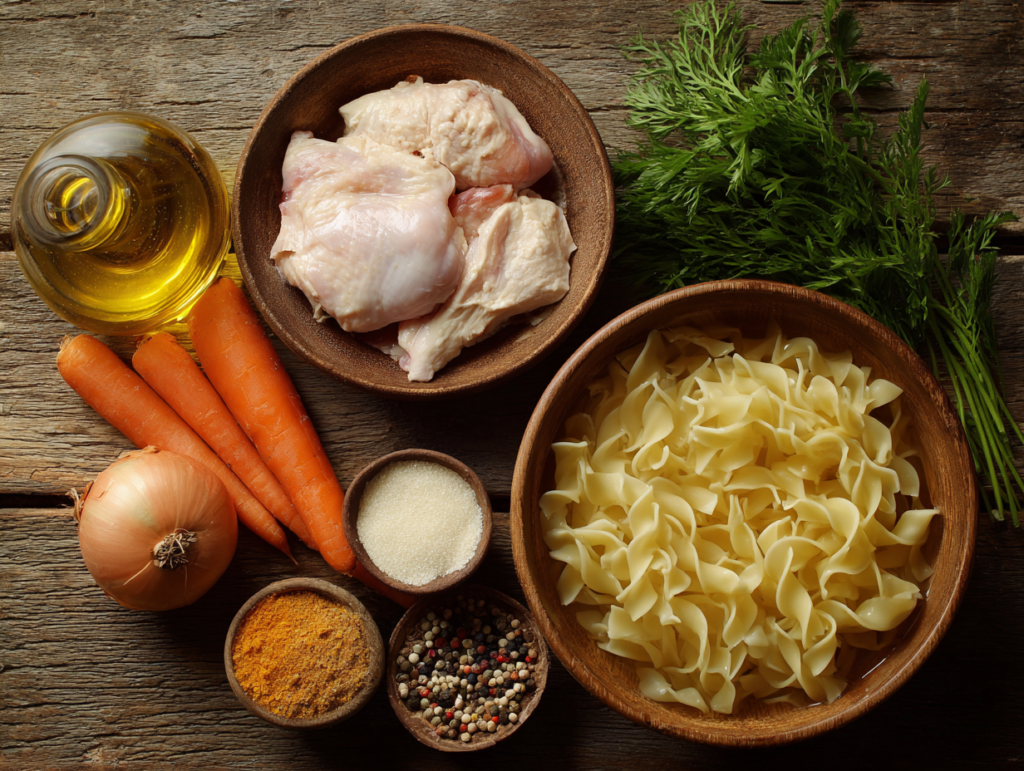
The Ingredients
- Olive oil, 1 tbsp — for sautéing the aromatics; butter works and adds richness
- Yellow onion, 1 small, diced — sweetness and body in the base
- Carrots, 2 medium, sliced into coins — color, texture, and mild sweetness
- Celery, 2 stalks, sliced — the classic aromatic trio; do not skip it
- Garlic, 3 cloves, minced — depth; added after the vegetables soften so it does not burn
- Low-sodium chicken broth, 6 cups — the foundation; quality matters here more than anywhere else in the recipe
- Cooked chicken, 2 cups, shredded — rotisserie chicken works perfectly and saves the most time
- Egg noodles, 2 cups dry — the noodle of record for this soup; wide egg noodles hold up without going soft
- Salt and black pepper — to taste, added at the end
- Fresh parsley, 2 tbsp, chopped — brightness at the finish; dried parsley is a pale substitute
On substitutions: Any cooked pasta works in place of egg noodles — rotini, ditalini, or small shells. Rice is a reasonable swap for a gluten-free version. The vegetable trio of onion, carrot, and celery is worth keeping intact; it is the flavor base that makes this a chicken noodle soup and not just chicken broth with noodles.
How to Make It
- Heat olive oil in a large pot over medium heat.
- Add onion, carrots, and celery. Cook 4 to 5 minutes, stirring occasionally, until the onion is translucent and the carrots have softened slightly.
- Add garlic. Stir and cook 30 seconds.
- Pour in chicken broth. Increase heat to medium-high. Bring to a gentle boil.
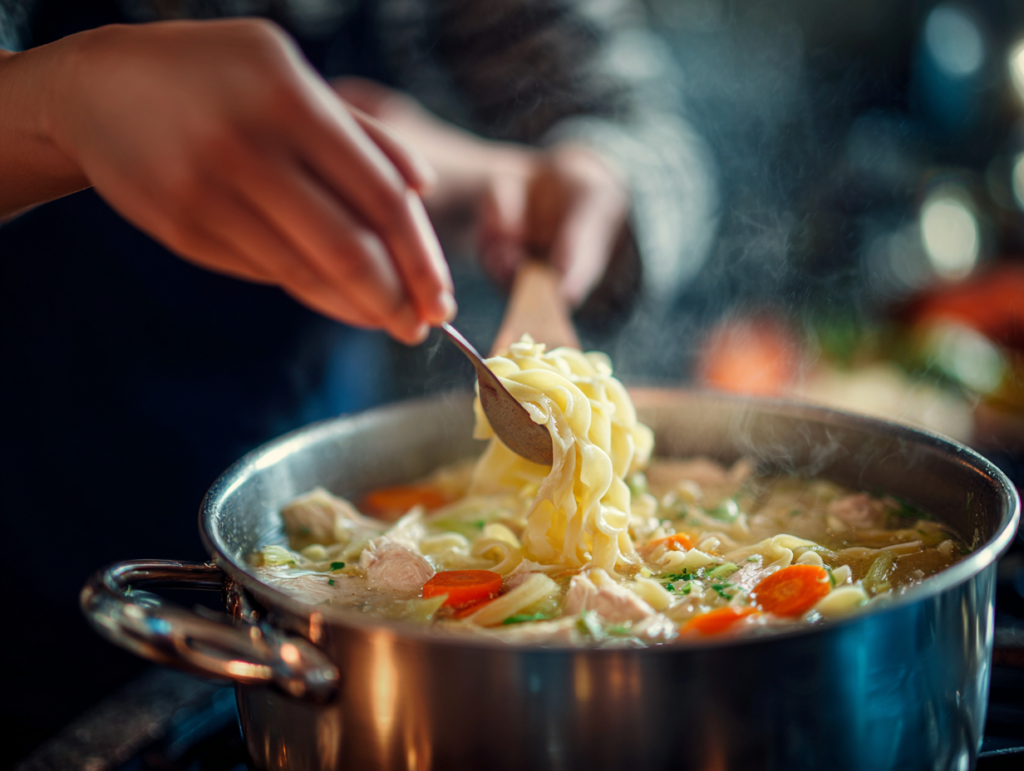
- Add egg noodles. Cook according to package directions — usually 6 to 8 minutes — until tender but not soft.
- Stir in shredded chicken. Cook 1 to 2 minutes until heated through.
- Season with salt and pepper. Taste before serving — broth brands vary in salt content.
- Ladle into bowls. Finish with fresh parsley.
Recipe 2: Lemon Herb Chicken Noodle Pot
Prep time: 5 min | Cook time: 15 min | Total: 20 min | Serves: 4
The same structure as the classic. A lemon and thyme finish changes the entire character of the broth — brighter, slightly more aromatic, better suited to spring evenings.
The Ingredients
Everything in Recipe 1, plus:
- Fresh thyme, 4 sprigs — added with the broth; removed before serving
- Lemon zest, 1 tsp — added at the very end; zest added earlier loses its brightness
- Lemon juice, 2 tbsp — stirred in off heat; adjusts acidity and lifts the whole bowl
- Baby spinach, 2 cups — wilted in at the end; adds color and makes the soup a slightly more complete meal
How to Make It
Follow Recipe 1 exactly through step 6. Add thyme sprigs with the broth in step 4 and remove them before serving. After turning off the heat, stir in spinach, lemon zest, and lemon juice. The spinach will wilt in about 60 seconds from the residual heat. No additional cooking required.
Recipe 3: Spiced Coconut Chicken Noodle Pot
Prep time: 5 min | Cook time: 15 min | Total: 20 min | Serves: 4
A departure from the classic in flavor, not in method. Coconut milk replaces part of the broth. Ginger and turmeric shift the profile toward something warmer and more complex. Rice noodles replace egg noodles. The result is a different soup that follows the same 20-minute logic.
The Ingredients
- Coconut oil, 1 tbsp — pairs with the other flavors; neutral oil works
- Yellow onion, 1 small, diced
- Carrots, 2 medium, sliced
- Garlic, 3 cloves, minced
- Fresh ginger, 1 tsp, grated — warmth and a mild heat; ground ginger is a substitute at half the quantity
- Turmeric, ½ tsp — color and a subtle earthiness
- Chicken broth, 4 cups
- Full-fat coconut milk, 1 can (14 oz) — body and richness; light coconut milk produces a thinner broth
- Cooked chicken, 2 cups, shredded
- Rice noodles, 3 oz dry — soak in hot water per package instructions before adding; they do not need to boil
- Lime juice, 2 tbsp — finish; essential, not optional
- Fresh cilantro — garnish; omit if it is not your preference
How to Make It
- Soak rice noodles in hot water according to package instructions while you prepare the soup. Drain and set aside.
- Heat coconut oil in a large pot over medium heat. Add onion and carrots. Cook 4 to 5 minutes.
- Add garlic, ginger, and turmeric. Stir and cook 1 minute.
- Add chicken broth and coconut milk. Bring to a gentle simmer over medium-high heat.
- Stir in shredded chicken. Cook 2 minutes.
- Add drained rice noodles. Stir to combine and heat through — about 1 minute.
- Remove from heat. Stir in lime juice. Taste and adjust salt.
- Serve with fresh cilantro and an additional lime wedge if desired.
A Few Things Worth Knowing
Rotisserie chicken is the right move here. These soup recipes are built for speed, and pre-cooked chicken is the single biggest time-saver. Pull the meat while the vegetables cook. It takes two minutes and the chicken is already seasoned.
Cook the noodles in the soup, not separately — with one exception. For Recipes 1 and 2, cooking the egg noodles directly in the broth adds starch that thickens the soup slightly and deepens the flavor. For Recipe 3, rice noodles are the exception. They go soft quickly and should be soaked separately and added at the end.
Broth quality is not negotiable. This step is easy to overlook. Do not. A watery, flat broth produces a watery, flat soup regardless of what else goes in. Low-sodium allows you to control salt. A good-quality store brand is sufficient.
Leftovers will thicken overnight. The noodles absorb liquid as the soup sits. This is not a flaw — it is just what happens. Reheat with a splash of broth or water to loosen it back to the right consistency.
Season at the end, not the beginning. Broth reduces slightly as it cooks. Salt added early can concentrate into something sharper than intended. Taste before serving and adjust then.
The lemon and lime finishes are not optional. Both are added off heat for a reason. Acid cooked into the broth mellows and loses its point. Added at the end, it lifts the entire bowl. This step is easy to skip. Do not.
How to Serve It
All three of these chicken noodle soup recipes are complete meals in a bowl. They do not require much alongside them.
Crusty bread — sourdough, a simple baguette, or a seeded loaf — is the natural companion. Something to dip into the broth. A simple green salad works if the meal needs extending.
For presentation, a wide, shallow bowl shows the noodles and vegetables more clearly than a deep one. A small pile of fresh herbs in the center is enough garnish. Do not overcrowd the bowl.
The classic and lemon versions pair well with a cold sparkling water with lemon, or a light white wine — a Pinot Grigio or unoaked Chardonnay. The coconut version works well with something slightly sweet and cold: a Thai iced tea, a ginger beer, or sparkling water with lime.
Worth Noting Nutritionally
Each serving of these chicken noodle soup recipes falls between 280 and 380 calories, depending on the version and portion size. The classic and lemon versions are lower in fat and higher in protein. The coconut version is higher in fat from the coconut milk — predominantly saturated fat — and slightly higher in calories.
All three are high in protein from the chicken. The vegetable base contributes fiber, potassium, and vitamins A and C. Using low-sodium broth keeps the sodium content manageable, particularly if you are monitoring it.
For gluten-free adaptations, replace egg noodles with rice noodles or a certified gluten-free pasta. The coconut version is already gluten-free as written. For a dairy-free version, all three recipes are dairy-free without modification.
A Few Questions
Can I use raw chicken instead of pre-cooked? Yes, with a time adjustment. Add raw, boneless chicken breasts or thighs to the broth in step 4, bring to a simmer, and cook 12 to 15 minutes until cooked through. Remove, shred with two forks, and return to the pot before adding noodles. This adds about 15 minutes to the total time but produces a richer broth from the chicken cooking directly in it.
How do I store leftovers? Refrigerate cooled soup in an airtight container for up to 4 days. The noodles will absorb liquid overnight — add a splash of broth when reheating. For longer storage, freeze the soup without noodles for up to 3 months. Cook fresh noodles when reheating and add them directly to the warmed soup.
Can I make these in a slow cooker or Instant Pot? The recipes as written are designed for stovetop speed, but both appliances work. In a slow cooker, combine everything except noodles and cook on low 6 to 8 hours or high 3 to 4 hours, then add noodles in the last 20 minutes. In an Instant Pot, use the sauté function for the aromatics, add remaining ingredients except noodles, pressure cook on high for 10 minutes, quick release, then add noodles and cook on sauté until tender.
Can I make a large batch and freeze it? Yes — with the noodle caveat noted above. Freeze the broth, vegetables, and chicken together. Noodles do not freeze well; they become mushy on reheating. Cook a fresh batch of noodles each time you reheat from frozen. The base freezes cleanly for up to three months.
Twenty minutes, one pot, three ways to make it your own — the only question is which one you make first.